💰 Budget
Datong is inexpensive by Chinese standards, and hotel rooms cost well below Beijing prices. Entry tickets to Yungang, the temples and the Hanging Temple are the main fixed costs, along with transport: the best sights are scattered across the countryside, and most visitors hire a car and driver for a day or join a tour.
- Daily Budget Midrange
- USD 70–130 (mid-range hotel, restaurant meals, entry tickets, a car and driver for Yungang or the Hanging Temple)
- Daily Budget Shoestring
- USD 25–50 (budget hotel or hostel, noodle houses, local buses, one or two entry tickets)
A hired car for a day covering the Hanging Temple and the Yingxian pagoda usually costs less than two separate bus trips in time and money; the Hanging Temple's walkways have a separate ticket from the site entrance.
📅 Best Time to Visit
Late May to early October is the comfortable season, with September the best month — dry, clear and mild. The city sits high and cools sharply at night even in summer. Winter is long, very cold and windy, and although the grottoes stay open it is hard going outdoors. Spring brings dust storms off the plateau.
⏳ Suggested Number of Days
Two days are enough for the grottoes and the temples of the old city at a reasonable pace, and three or four for anyone who also wants the cliff monastery, the wooden pagoda and the sacred mountain to the south-east. Distances between sights, not their size, decide the total.
- First Visit
- 2 days
- With Surroundings
- 3–4 days
🚆 Transportation
The old city is small enough to walk, and city buses and taxis connect it to the eastern districts and the stations. Buses run to Yungang from the city centre. For the Hanging Temple, Yingxian and Mount Heng, most visitors use a hired car with driver, a tour or long-distance buses from the coach station, since services are infrequent and the sites are far apart.
Agree a price and a route with a driver before setting out, and allow for slow going on rural roads in winter.
🛬 Airport & Station Connections
Datong South station, opened in 2019 on the high-speed line, lies south of the old city and links to Beijing in roughly two hours and to Taiyuan in about two. The older station north of the walls still handles conventional trains. Datong Yungang International Airport, east of the city, has flights to Beijing, Shanghai and other Chinese cities. Long-distance buses serve towns across northern Shanxi and Inner Mongolia.
🚶 Walkability
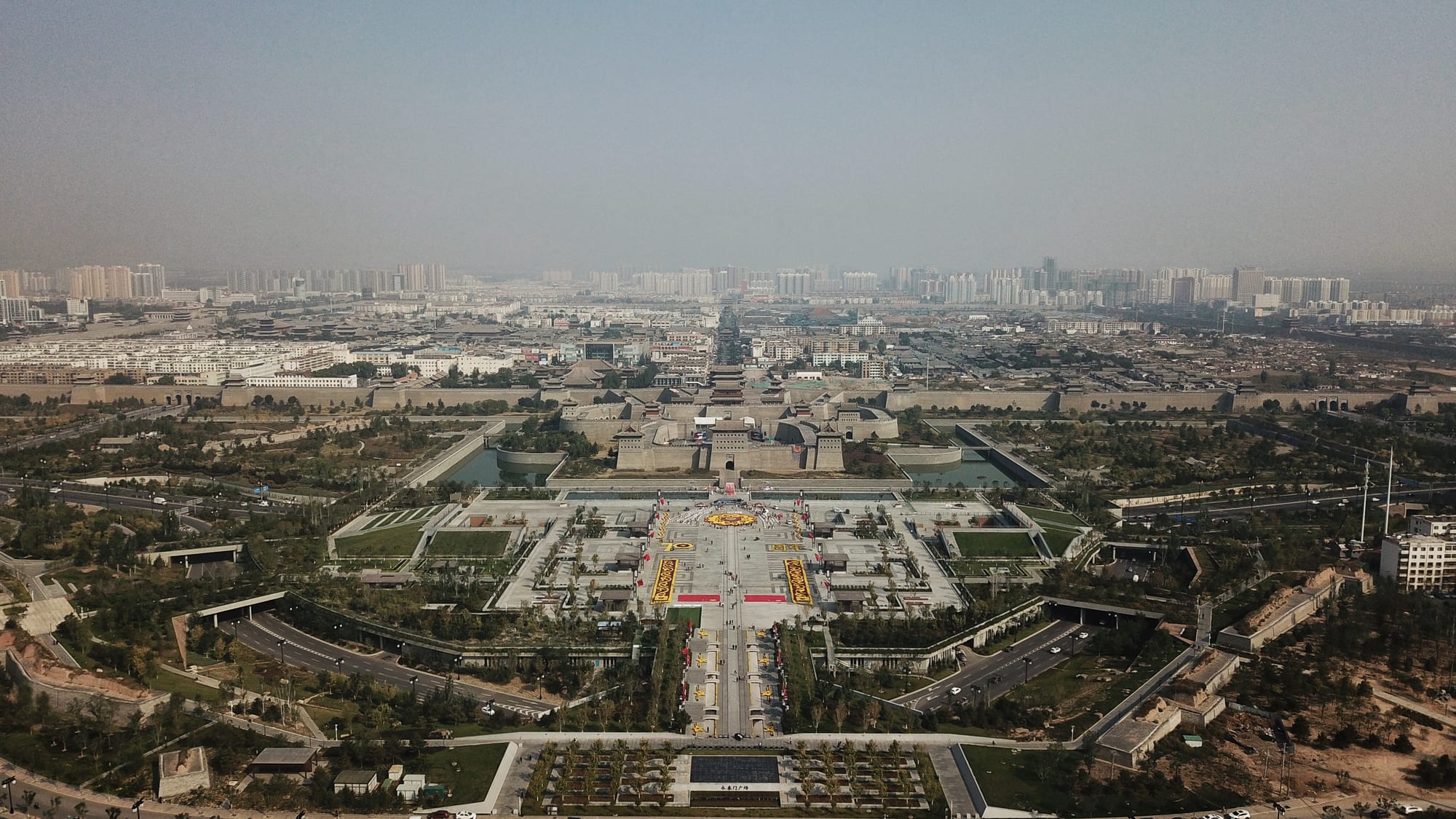
The walled old city is flat, compact and easy on foot, and the wall itself can be walked for long stretches. Beyond it the city is built to a much larger scale, with wide multi-lane avenues and long blocks that make crossing town on foot tiring; buses or taxis are better. Yungang and the sites outside need transport, though each is walked once reached.
🛡️ Safety
Datong is a safe city with little crime affecting visitors; the usual problems are unlicensed taxis and touts at the stations and occasional overcharging for car hire to the outlying sites. Physical hazards matter more: narrow plank walkways and drops at the Hanging Temple, steep steps at the grottoes and temples, winter ice and strong dusty winds in spring.
Use metered taxis or a ride-hailing app instead of drivers who approach in the station forecourt, take care on the cliff walkways, and dress for cold and wind from October to April. Check current official travel advice before travelling.
🌦️ Climate
A dry, continental climate at about 1,000 metres, with a large gap between day and night temperatures and most rain falling in July and August. Skies are clear for much of the year and spring is windy.
- Summer
- warm rather than hot, typically 25–30°C by day and cool after dark, with showers in July and August
- Winter
- long and severely cold, with January averages near −10°C, dry air and little snow
🤝 Local Customs
Tipping is not customary. Temples and the grottoes are religious sites as well as monuments: dress modestly, do not touch the carvings and follow posted rules, since photography with flash or tripods is restricted in some caves and halls. Meals are shared from communal dishes, and vinegar is on every table as it is across Shanxi.
Ask before photographing worshippers or monks, and carry a passport, which is needed to buy tickets at major sites as well as for hotels and trains.
💳 Common Payment Methods
The currency is the Chinese yuan (renminbi). Mobile payment apps are used almost everywhere and can be linked to foreign cards; international cards work at larger hotels but seldom in small restaurants, buses or ticket windows. ATMs at major banks in the city accept foreign cards, and carrying some cash is sensible for trips into the countryside.