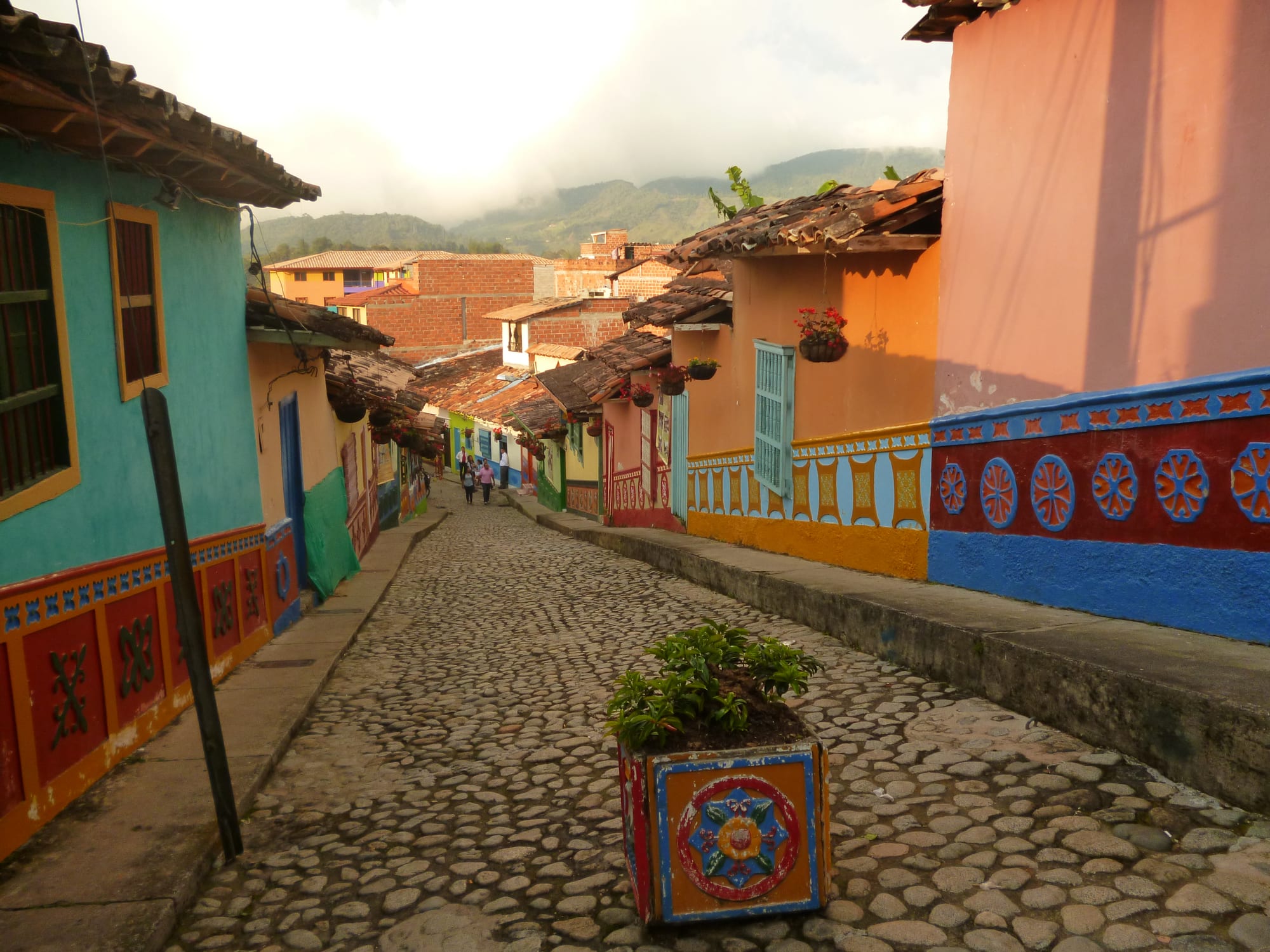
A cobbled street of brightly painted houses with tiled roofs and decorated zócalo panels, leading to green hills

Medellín & the Coffee Region, Colombia

Guatapé

A cobbled street of houses decorated with zócalos in Guatapé, Antioquia. (Aliman5040 / Wikimedia Commons · CC BY-SA 3.0)

A small town in eastern Antioquia, 79 km from Medellín, on the shore of the reservoir created for a hydroelectric scheme in the 1970s. Known as the Pueblo de Zócalos for the painted relief panels on its house-fronts, it stands beside the Peñón de Guatapé, a granite monolith climbed by a 708-step staircase, and is now a major tourist destination, especially for visitors from Medellín.

Neighbourhoods

  • The town centre
    • First-time visitors
    • Historic district

    The streets around the central park and the parish church, where most houses carry zócalos — sculpted, brightly painted panels along their lower walls. Restaurants and guesthouses cluster here, a few minutes' walk from the lake.

    Open in Maps
  • The malecón
    • Lakeside
    • Best for food

    The waterfront boardwalk on the reservoir, lined with restaurants, where boat trips leave for the lake. At weekends local vendors fill it with crafts, souvenirs and snacks, and it is the liveliest part of town.

    Open in Maps
  • The Peñón and the road to El Peñol
    • Views
    • Day trips

    The area around the base of the great rock, a short ride from town on the road towards El Peñol, with food and market stalls, viewpoints over the islands and arms of the reservoir.

    Open in Maps

Things to do

The town

  • Calle del Recuerdolandmark

    One of the town's most representative streets, its house-fronts covered in colourful zócalos.

    Open in Maps
  • Zócalo museummuseum

    A small museum of the town's zócalos, the painted relief panels that earned Guatapé its name of Pueblo de Zócalos.

    Open in Maps
  • Parish Church of Nuestra Señora del Carmenlandmark

    The parish church, whose patron's feast in mid-July is one of the town's celebrations.

    Open in Maps
  • The malecónattraction

    The lakeside boardwalk, busy at weekends with craft stalls, food vendors and boatmen offering trips on the reservoir.

    Open in Maps

The rock and the lake

  • El Peñón de Guatapéviewpoint

    A granite inselberg of the Antioquia Batholith rising up to 200 metres above its base, climbed by a staircase of 708 steps built into one side, with a shrine to the Virgin halfway and a three-storey viewing tower at the summit.

    Open in Maps
  • Boat trips to the Viejo Peñol crossattraction

    Boat tours from the malecón cross the reservoir to the cross that marks the site of the parish church of old El Peñol, the town drowned when the valley was flooded.

    Open in Maps

Short trips from the town

  • El Peñolattraction

    The neighbouring town, rebuilt several miles west of its original site after the old town was flooded for the reservoir, and long a rival claimant to the rock.

    Open in Maps

Seasonal events

  • Fiestas de la Virgen del Carmenmid-July

    The feast of Our Lady of Mount Carmel, to whom the parish church is dedicated, on 16 July.

  • Fiestas de los Zócalos, el Embalse y el TurismoOctober

    The town's festival of its zócalos, its reservoir and its visitors.

  • Jornadas navideñasDecember

    Christmas celebrations and a family festival in the run-up to Christmas Eve.

Eat and drink

Long-standing places and food districts in Guatapé. Hours, ratings and directions come from your maps app, always current.

Guatapé classics

  • Restaurants on the malecónneighborhood

    Lakeside restaurants known above all for fresh trout in many preparations, alongside bandeja paisa and other Antioquian dishes.

    Open in Maps
  • Central park restaurantsneighborhood

    Restaurants around the main square, serving Antioquian food and a range of other cooking for visitors.

    Open in Maps

Experience Guatapé

History

Before the Spanish arrived in the 16th century, the area was home to Indigenous groups, some of them led by a cacique named Guatapé, after whom the town is named; the name is often said to mean 'stones and water'. In 1714 the Indigenous people of the area were gathered into a settlement called San Antonio de Remolinos Peñol, and clay urns found at Alto Verde and several unstudied sites in the surrounding villages are traces of their presence. The town itself was founded on 4 October 1811 by the Spaniard Francisco Giraldo y Jiménez and became a municipality in September 1867.

For most of its history Guatapé was a farming town, living from cattle, crops and some mining, and many of the zócalos on its houses date from the early 20th century. In the 1970s the Medellín utility company EPM dammed the valley to build a large hydroelectric complex, making Guatapé one of the most important centres of electricity production in Colombia. The reservoir that filled behind the dam drowned the neighbouring town of El Peñol and rural parts of Guatapé, displacing thousands of people; a cross in the water marks the old parish church of El Peñol, and the reservoir covers about a quarter of Guatapé's territory.

The lake and the rock beside it turned the town towards tourism. The reservoir forced the town to change its economy to tourism, and today Guatapé is a major tourist attraction, especially for visitors from Medellín; in 2018 it launched its own tourism brand, 'Guatapé, a destination in full colour'.

Culture & Customs

The zócalos are Guatapé's signature. These sculpted, brightly painted panels run along the lower walls of the houses in the town centre, many of them depicting village life; many were made in the early 20th century, and newer ones continue the tradition. They earned the town its names of Pueblo de Zócalos and 'tourist paradise of Antioquia', and the Calle del Recuerdo is one of the most representative streets for them.

The Peñón de Guatapé is the other symbol, and a source of local rivalry: the town of El Peñol has long claimed the rock as its own, which is why it goes by several names — the Rock of Guatapé, the Stone of El Peñol, or simply La Piedra. A bronze statue at its base honours Luis Eduardo Villegas López, remembered as the first person to climb it.

Life follows the calendar of a Catholic Antioquian town, with the feast of the Virgen del Carmen in July, the festival of zócalos, reservoir and tourism in October, and Christmas celebrations in December.

Daily Life

Guatapé had about 9,100 inhabitants in 2023, about 6,100 of them in the town itself, at an altitude of about 1,890 metres. Its farms are known locally as 'las vegas', and the town is the gathering place for the rural families of the surrounding hills.

Electricity and tourism now dominate the economy. The hydroelectric complex built in the 1970s made the town nationally important for power, while the reservoir and the rock have turned much of the town over to restaurants, guesthouses, boat operators, craft shops and guiding. Farming continues in the countryside around it. The reservoir, the largest body of water in Antioquia, is used every day for motor boats, jet skis and other water sports, and local operators offer boat trips, a zip line over the lake, kayaking and horse riding.

The week has two rhythms. On weekdays the town is quiet, its streets left mostly to residents and a few visitors who stay the night. At weekends and on public holidays buses and cars arrive from Medellín, the malecón fills with stalls and the queues lengthen at the foot of the rock.

Food

Trout is the local speciality, served fresh in many preparations in the restaurants along the malecón and around the central park. The menú del día, a cheap set lunch, is what most locals eat at midday.

The cooking is otherwise Antioquian: bandeja paisa, with beans, rice, ground meat, chicharrón, egg, plantain and arepa on one platter, alongside plain white arepas, sancocho stews and fried snacks such as empanadas. At weekends vendors on the malecón sell snacks and sweets to the crowds, and the restaurants catering to visitors have widened the choice to pizza and Mexican food. Arepas accompany almost any meal; aguapanela, hot water sweetened with panela, unrefined cane sugar, is a typical drink; and mazamorra, maize boiled and served with milk and a small piece of panela, is a traditional paisa dish.

Coffee comes as tinto, small sweet black cups, and the local spirit, as across Antioquia, is aguardiente, flavoured with anise. Fresh fruit juices made with water or milk are sold everywhere.

Planning tools

Budget

Guatapé is busy with day-trippers from Medellín, and prices at the rock, on the malecón and in central guesthouses reflect it, but it remains cheaper than El Poblado. The rock's entrance fee, boat trips on the lake and any lakeside lodging are the main extras; set lunches and trout plates keep food costs moderate. Weekends and holidays are busiest and dearest.

Daily Budget Midrange
USD 80–160 (guesthouse or lakeside cabin, restaurant meals, a boat trip and a guided activity)
Daily Budget Shoestring
USD 35–55 (hostel bed, menú del día, buses and jeeps, the climb up the rock)

Stay overnight midweek: the town is far quieter once the day-trip buses leave for Medellín.

Best Time to Visit

The drier spells of December–February and July–August bring the clearest views from the rock. Weekends and public holidays are crowded, especially on the malecón; the town's own festivals fall in July, October and December.

Suggested Number of Days

Many visitors come for a single long day from Medellín, but one night allows the town to be seen without the crowds. Two or three days leave time for the lake and the countryside around it.

First Visit
1–2 days
With Surroundings
2–3 days

Transportation

The town is small and walkable. Buses and Willys jeeps run between Guatapé and El Peñol, passing the entrance to the rock, and boats cover the rest. Boat trips on the reservoir leave from the malecón.

Buy the return bus ticket to Medellín early at weekends, as buses fill quickly.

Airport & Station Connections

Guatapé is 79 km from Medellín, about one and a half to two hours by road. Direct buses leave Medellín's North terminal, pass through El Peñol and the entrance to the rock, on the way to Guatapé; many continue to San Rafael. The nearest major airport is José María Córdova International Airport at Rionegro, east of Medellín.

Walkability

The centre, the church and the malecón are all a few minutes apart on foot, on cobbled and sometimes steep streets. The rock is outside the town on the road to El Peñol, best reached by bus or jeep.

Safety

Colombia is far safer for visitors than its reputation, and the main cities and tourist regions are well travelled, but crime requires attention. Guatapé is a well-visited tourist town, and the risks are mostly ordinary ones — crowds, pickpockets at busy weekends, and care on the water and on the steep staircase up the rock. A magnitude 7.4 earthquake on 10 August 2026 damaged buildings and more than ten airports across the west and the coffee region, including Pereira and Armenia; aftershocks remain possible.

Take water and rest on the climb, which is steep and exposed, and keep valuables close on busy weekends. Check current official travel advice before travelling.

Climate

The town lies at about 1,890 metres, in the band Colombians call tierra templada, with a steady temperature all year rather than seasons. Rain falls often, mostly in heavy afternoon showers; the wetter months are broadly April–May and October–November.

Summer
the drier spells of December–February and July–August bring sunnier days, spring-like in the 18–24°C range of the temperate highlands
Winter
the wetter months stay within the same general 18–24°C band of the tierra templada but bring daily downpours and grey afternoons

Local Customs

Guatapé is a Catholic Antioquian town that welcomes large numbers of visitors from Medellín at weekends. The zócalos are people's homes: photographing the house-fronts is normal, but residents' doorways and windows deserve respect.

A 10 per cent service charge is generally added to the bill in better restaurants; drivers are not usually tipped. Dress modestly in the church.

Common Payment Methods

The currency is the Colombian peso (COP). Cash is needed for buses, jeeps, boat trips, market stalls and many restaurants; cards are accepted in some hotels and larger restaurants. Bringing cash from Medellín is sensible.