💰 Budget
Jacó is one of the cheaper bases on the central Pacific. Hostels, cabinas and sodas keep costs low, and board rental is inexpensive; beachfront condominiums, resort stays around Herradura and guided tours push the bill up. Weekends and Costa Rican holidays are busiest.
- Daily Budget Midrange
- USD 140–280 (beach hotel or condominium, restaurant dinners, a surf lesson or a guided tour to Carara)
- Daily Budget Shoestring
- USD 50–85 (hostel bed, soda meals, board rental, local buses)
Use official red taxis with a meter, or ride-hailing, and pick up a bus ticket at the terminal early for weekend returns to San José.
📅 Best Time to Visit
The dry months, from late December to early April, bring the most sunshine and the most visitors. August to early December is the wettest time, and the months in between see irregular rain. Surf runs all year, and the town is busiest on Costa Rican holidays and weekends.
⏳ Suggested Number of Days
Two or three days suit a beach and surf stay. Allow four or five to take in the national parks to the north and south as well; a surf course or a longer stay for the waves easily stretches that.
- First Visit
- 2–3 days
- With Surroundings
- 4–5 days
🚆 Transportation
Jacó is small enough to walk from end to end, and plenty of taxis, painted red, work the strip; ride-hailing is also available. Local buses run between Herradura and central Jacó. A car is useful for the beaches and parks along the coast highway, and buses from the terminal at the north end of town serve San José, Puntarenas and Quepos.
Ask for the meter — 'la maría' — in taxis, and avoid unofficial 'pirate' taxis.
🛬 Airport & Station Connections
Jacó is about 100 km from San José, a little under two hours by road on Route 34, and about an hour and a half from Juan Santamaría International Airport, the country's main gateway, near Alajuela. Buses from San José take around two and a half hours, and shuttle vans run from the airport and the capital.
🚶 Walkability
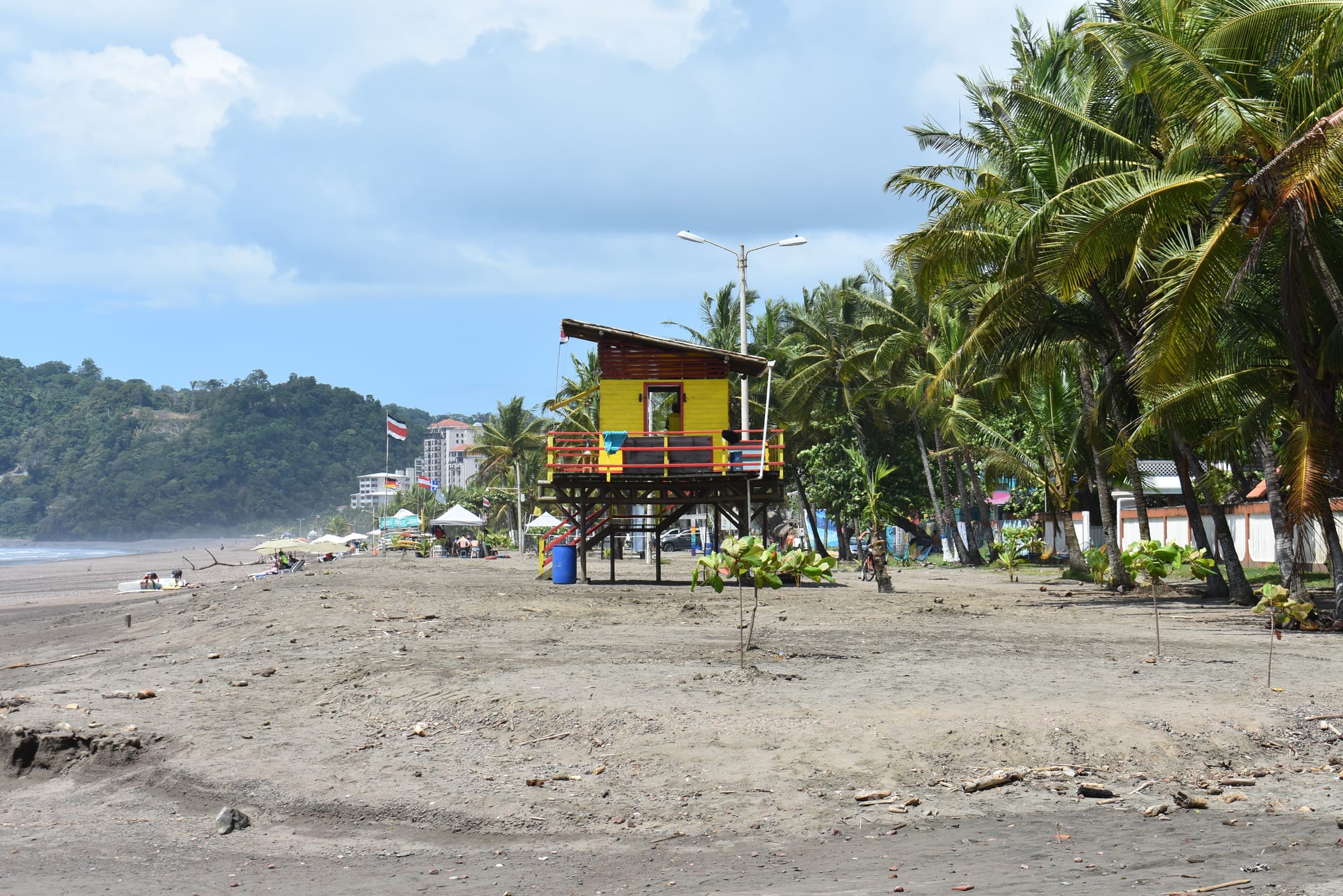
The town is a long, flat strip, easy to walk by day though hot at midday; the black sand also gets very hot in the afternoon sun. Taxis are the usual choice after dark or for Herradura and Playa Hermosa.
🛡️ Safety
Costa Rica still compares well with its Central American neighbours, and crime that reaches visitors is usually petty theft or the occasional armed robbery — break-ins to parked rental cars, bag-snatching on beaches, and pickpocketing in San José. Along the Pacific coast theft is the main risk, and Jacó is one of the places where bags are taken on the sand and where pickpocketing, petty crime and drug dealing are more visible than elsewhere on the coast. Rip currents are strong at Jacó, and the surf at Playa Hermosa is dangerous; crocodiles are sometimes seen in Herradura Bay, where rivers flow into it.
Leave valuables in the room rather than on the beach, watch bags on buses, swim only where lifeguards are present, and take a taxi at night. Check current official travel advice before travelling.
🌦️ Climate
Hot and humid all year, with relative humidity around 80 per cent, reaching 90 per cent in June. Day temperatures are typically 24–32°C and nights 24–26°C, and inland, away from the sea, the dry season can push past 35°C. The year divides into a dry and a wet season.
- Summer
- dry season (late December–early April): sunny and hot, 24–32°C by day on the coast
- Winter
- wet season (August–early December): frequent rain, still 24–32°C by day and around 24–26°C at night
🤝 Local Customs
Jacó is relaxed and informal, and beachwear is normal on the strip. Greetings in Spanish are appreciated even where English is spoken, and much of the town's life runs on surf, football on the bar televisions and weekend crowds from the capital.
Check whether a service charge is already on the bill before adding a tip, and ask before photographing residents.
💳 Common Payment Methods
The currency is the Costa Rican colón. US dollars are widely accepted on the strip, usually with change in colones, and cards are accepted in most hotels, supermarkets and restaurants. Banks and cash machines are in the centre; carry colones for buses, taxis and sodas.