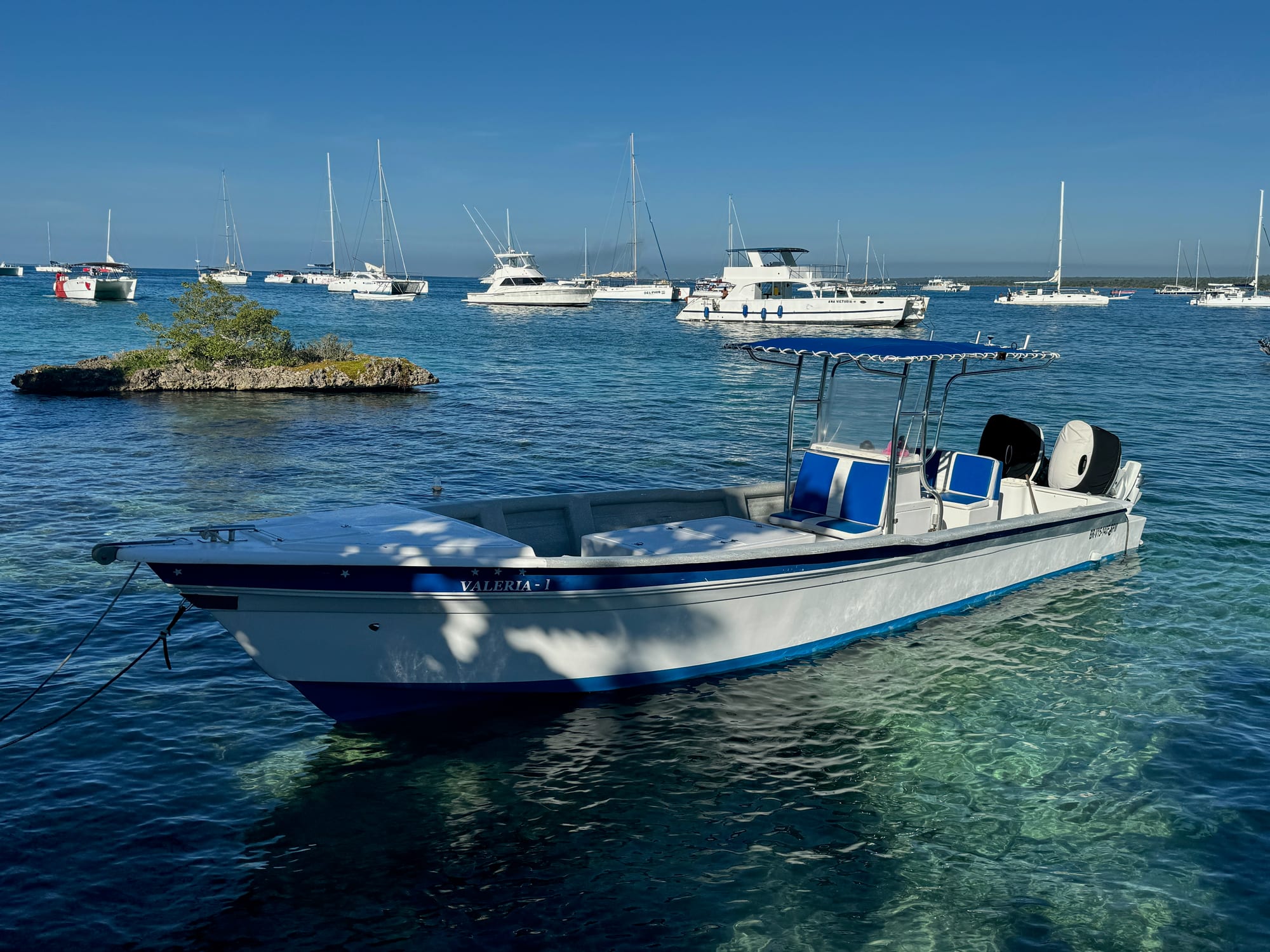
A white motor boat moored in clear blue-green water, with yachts, cabin cruisers and a small rocky islet behind

Punta Cana & the East, Dominican Republic

Bayahibe

Boats moored off Bayahibe, the harbour for trips to Saona and Catalina islands. (Oleg Yunakov / Wikimedia Commons · CC BY-SA 4.0)

A small town on the Caribbean coast east of La Romana, founded as a fishing village in 1874 by a family from Puerto Rico. It is now the country's leading dive centre and the harbour for boat trips to Saona and Catalina islands, on the edge of Cotubanamá National Park, with resorts spread along the beaches to the south.

Neighbourhoods

  • The village and harbour
    • First-time visitors
    • Diving
    • Best for food

    The old fishing village around Bayahibe Beach and the small harbour to its south, where excursion boats leave for the islands. Most dive shops, guesthouses, small restaurants and colmados are within a few streets of the water.

    Open in Maps
  • Dominicus
    • Beaches
    • Resorts
    • Families

    The beach a few kilometres south of the village where most of Bayahibe's large all-inclusive hotels stand, with white sand, clear calm water and plenty of shade.

    Open in Maps

Things to do

Beaches and the sea

  • Bayahibe Beachbeach

    The public beach in the village, the one most used by locals, with fine white sand, shallow warm water, little swell and coconut palms.

    Open in Maps
  • Dominicus Beachbeach

    The resort beach south of the village, with slightly coarser white sand, clear warm water and thick vegetation behind.

    Open in Maps
  • Bayahibe's dive sitesattraction

    More than 20 official dive sites lie off the town, all reached by dive boat, including the wrecks of the Atlantic Princess and the St George.

    Open in Maps

Cotubanamá National Park

  • Cotubanamá National Parkpark

    The national park beside the village, declared in 1975 as Parque Nacional del Este, with dry and humid forest, mangroves, beaches and caves full of Taíno pictographs, and reefs with manatees and dolphins offshore.

    Open in Maps

Short trips by boat

  • Saona Islandbeach

    The large island in the national park, ringed by beaches, sandbars and reefs, with the fishing village of Mano Juan and the country's most important sea-turtle nesting beaches.

    Open in Maps
  • Catalina Islandbeach

    A smaller island off the coast west of Bayahibe, with shallow sandbars offshore and waters rich in fish and birds.

    Open in Maps
  • Quedagh Merchant wreckattraction

    The remains of the merchant ship seized by William Kidd in 1698 and later burned, found off Catalina Island in 2007 and now an underwater living museum.

    Open in Maps

Short trips by road

  • Altos de Chavónlandmark

    A re-creation of a Mediterranean village above the Chavón River near La Romana, with a cultural centre, an archaeological museum and an amphitheatre.

    Open in Maps

Eat and drink

Long-standing places and food districts in Bayahibe. Hours, ratings and directions come from your maps app, always current.

Bayahibe classics

  • Seafood in the villageneighborhood

    Small restaurants near the beach and harbour serve the catch landed by Bayahibe's fishermen.

    Open in Maps
  • Village comedoresrestaurant

    Simple eateries serving la bandera, the Dominican lunch of rice, beans, stewed meat and salad, to residents and boat crews.

    Open in Maps

Experience Bayahibe

History

People have lived at Bayahibe since prehistoric times, drawn by freshwater springs, a good sheltered anchorage, coral reefs full of fish and shellfish, and mangroves and land that could be farmed. The name is Taíno, and although its meaning is uncertain it may combine baya, a clam-like shellfish that clings to rocks and mangrove roots, with jibe, a sieve of sticks used to sift cassava flour.

The first Europeans arrived on 14 and 15 September 1494, when Christopher Columbus, returning from Cuba and Jamaica on his second voyage, explored the south coast of Hispaniola. He named the island the Taíno called Labanea Catalina, and his companion Michele da Cuneo named the larger island Adamanay Bella Savonese, the origin of the name Saona. In 1699 William Kidd left a captured merchant ship anchored off Catalina; the men he left to guard it later burned it, and its remains were found in 2007.

The modern village was founded in 1874 by Juan Brito and his family, who came from Puerto Rico, and for a century it lived from fishing. The national park beside it was declared in 1975, large resorts were built along the beaches nearby, and Bayahibe grew into the departure point for Saona and the country's leading diving centre. Administratively it is a municipal district of San Rafael del Yuma.

Culture & Customs

Bayahibe still has the feel of a fishing village. Boats are pulled up on the beach, the fishermen's catch supplies the village restaurants, and life centres on the shore, the colmados and the small streets behind the beach. Locals use Bayahibe Beach, while the resort guests stay mostly at Dominicus.

The sea defines the town's identity. Diving is the most popular activity, with dive schools and boats working more than 20 sites, and there are shipwrecks, recreated 18th-century galleon wrecks and an underwater living museum built around the remains of Kidd's ship off Catalina. Deep-sea fishing and stand-up paddleboarding are also popular.

Bayahibe also has its own emblem from the land: the Bayahibe rose, a leafy cactus with pink flowers found only around the village and now threatened by the loss of its habitat. As in the rest of the east, the feast of the Altagracia in January and the baseball season mark the year, and merengue and bachata play from the colmados in the evenings.

Daily Life

The municipal district of Bayahibe had 5,618 people at the 2022 census, with just over half living in the town itself and the rest in the surrounding countryside. Many residents work in tourism: on excursion and dive boats, in the resorts at Dominicus, and in guesthouses, restaurants and shops in the village.

The harbour south of the village beach is the centre of working life, as the departure point for the excursion boats to Saona and Catalina and the base for the dive boats and the fishermen who still land their catch there.

The town lives beside a large protected area, and much of its income depends on the health of the reefs, beaches and islands of Cotubanamá National Park. Tourism has brought work but also pressure on the coast, water supply and housing, as in much of the east, and the rare Bayahibe rose is strongly threatened by the destruction of its habitat.

Food

Fish and shellfish are the heart of the village table. Seaside fishing villages across the country offer a wide variety of seafood, most often shrimp, marlin, dorado and lobster, and tostones, twice-fried slices of green plantain, are a common side. Coconut water is sold fresh on the beach.

In the comedores, the everyday lunch is la bandera, the Dominican plate of white rice, red beans, stewed meat and salad, and sancocho, a thick stew of several meats and root vegetables, is the dish many Dominicans see out the old year with. As across the country, fried snacks such as empanadas and yaniqueques, crisp rounds of fried dough, are everyday street food.

The resorts at Dominicus serve international buffets, while the village's small restaurants are the place for local fish. Presidente beer, rum and mamajuana, rum, red wine and honey steeped with bark and herbs, are the everyday drinks of the beach bars.

Planning tools

Budget

The village itself is cheaper than the Punta Cana coast, with guesthouses, small hotels and comedores, while the all-inclusive hotels at Dominicus are priced like other resorts. Boat trips to Saona and Catalina and dives are the main extra costs.

Daily Budget Midrange
USD 150–340 (beach hotel or resort, restaurants, a boat trip or dives)
Daily Budget Shoestring
USD 60–100 (guesthouse in the village, comedor meals, guaguas)

Book island trips and dives with licensed operators in the village rather than through distant resorts, and pay in pesos where possible.

Best Time to Visit

December to April is the driest and most comfortable time, and the peak season for boat trips. The calm Caribbean side is good for diving all year, but summer and autumn are hotter, with a hurricane risk that can cancel boat trips.

Suggested Number of Days

Two or three days cover the village beaches and one island trip. Divers and anyone wanting to see both islands and the national park's caves usually stay four to six days; bad weather can cancel boat trips, so a spare day helps.

First Visit
2–3 days
With Surroundings
4–6 days

Transportation

The village is small enough to walk; Dominicus is a short taxi or motoconcho ride away. The islands are reached only by boat, on organised excursions or dive trips leaving from the harbour, and guaguas link Bayahibe with La Romana.

Check that excursion boats carry life jackets and that the operator is licensed before setting out.

Airport & Station Connections

The nearest airport is La Romana International Airport, beside the city of La Romana to the west; Punta Cana's much busier airport is further east. Direct buses run from Santo Domingo, or travellers take a bus to La Romana and change there for Bayahibe; resorts arrange transfers.

Walkability

The village, its beach and the harbour are compact and easy on foot, with little traffic. The road to Dominicus has few footpaths, so a taxi is easier, and walks into the national park are best done with a guide and plenty of water.

Safety

The main tourist areas are heavily policed and generally safe, but the Dominican Republic has significant crime, and petty theft, scams, and occasional armed robbery affect visitors, particularly in Santo Domingo and Santiago. The resort zones of the east are heavily guarded and among the safest parts of the country, though theft from rooms and beaches, scams and overcharging on excursions happen, and traffic accidents are a real risk.

Use licensed excursion and dive operators, wear a helmet on motorbikes, and drink only from sealed bottles or trusted bars. Check current official travel advice before travelling.

Climate

Hot and sunny, on the calm Caribbean side of the east, among the driest and sunniest parts of the country's coast and a little hotter than the Atlantic shore at Punta Cana.

Summer
around Bayahibe, hot and humid, 30–32°C, with short showers and a hurricane risk from June to November
Winter
around Bayahibe, warm, 27–29°C by day, the driest and most comfortable time

Local Customs

Bayahibe is still a fishing community at heart, and people greet one another on the street; a 'buenos días' goes a long way. Beachwear belongs on the beach. Divers and boat passengers are expected not to touch coral, collect shells or feed fish in the national park.

Ask before photographing fishermen and residents, and buy no coral or turtle-shell souvenirs.

Common Payment Methods

The currency is the Dominican peso. Resorts, dive centres and many excursions quote in US dollars and take cards; small restaurants, colmados, guaguas and motoconchos need cash in pesos, and ATMs are limited in the village.