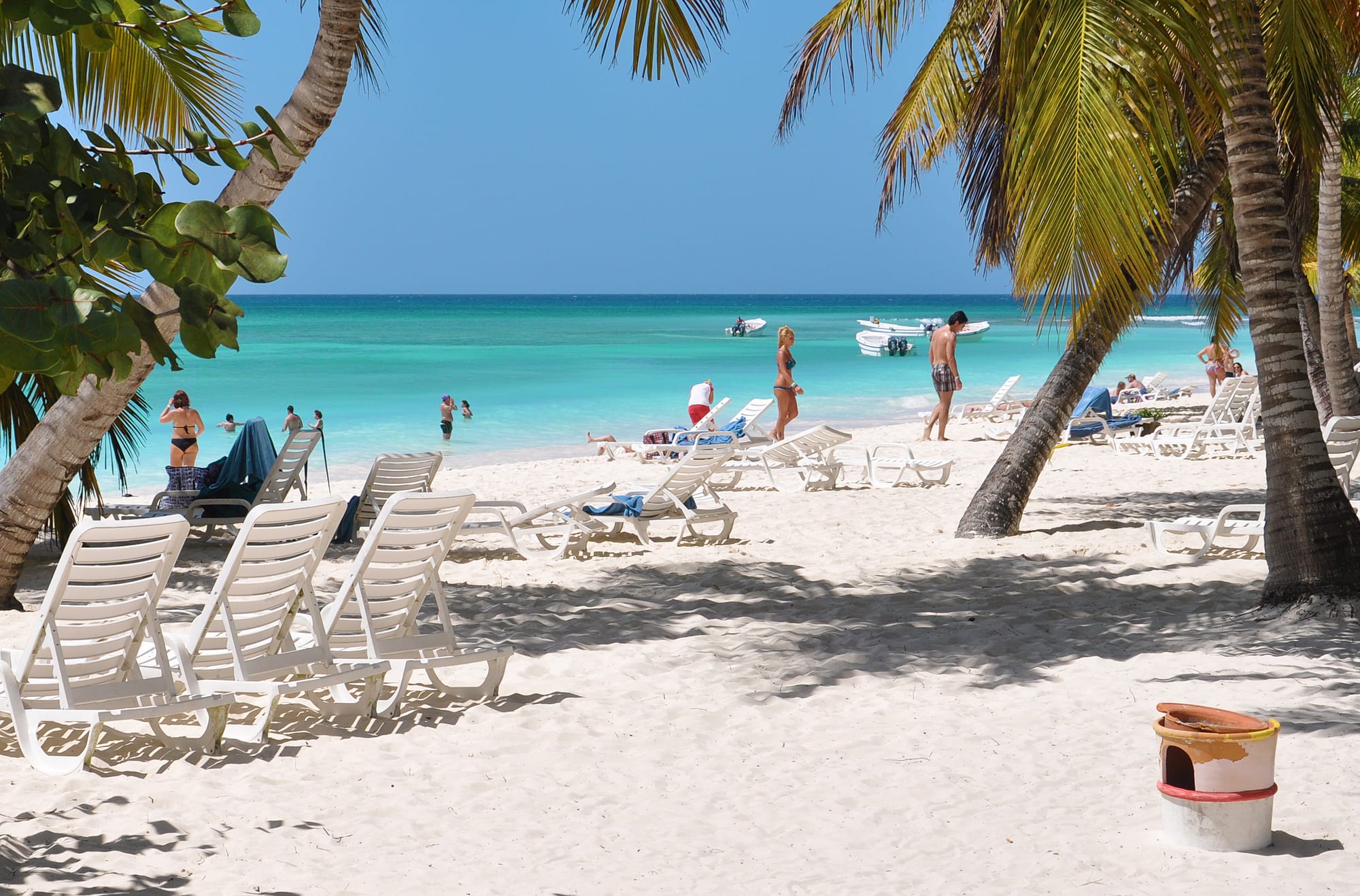
White sand beach with sun loungers under palm trees, facing clear turquoise water with boats moored offshore

Dominican Republic

Punta Cana & the East

A beach on Saona Island, part of Cotubanamá National Park off the south-east coast. (A.Miskovsky / Wikimedia Commons · CC BY 3.0)

The eastern end of the country, from the sugar city of San Pedro de Macorís past La Romana and Higüey to the long Atlantic beaches of Punta Cana and Bávaro — the heart of Dominican mass tourism, still framed by cane fields, cattle ranches and the protected coast and islands of the Cotubanamá park.

Explore Punta Cana & the East

History

The east was the Taíno chiefdom of Higüey, ruled at the time of the conquest by the cacique Cotubanamá. After a revolt, Governor Nicolás de Ovando sent troops in 1503 and 1504; Cotubanamá, who had taken refuge on Saona Island, was captured and executed in Santo Domingo, and the east was brought under Spanish control. Juan Ponce de León, a captain in the campaign, governed the conquered province and built a stone house near San Rafael del Yuma that still stands, before sailing to conquer Puerto Rico. Salvaleón de Higüey grew around the shrine of the Virgen de la Altagracia, whose painting has been venerated there since the 16th century.

For three centuries the east was open cattle country with few people. That changed in the late 19th century, when Cuban planters fleeing the Ten Years' War and foreign investors built sugar mills around San Pedro de Macorís and La Romana. The boom drew labourers from the English-speaking Caribbean islands, known as cocolos, and later from Haiti, and made San Pedro one of the most productive towns in the country. During the US occupation of 1916–1924, armed rural fighters known as gavilleros resisted the marines in the east.

Modern tourism began in 1969, when investors bought land at Punta Cana and later built a private international airport, which opened in 1984. Bávaro and Punta Cana then grew into the country's largest resort zone, and La Romana's sugar company added the Casa de Campo resort and Altos de Chavón.

Culture & Customs

The cocolo community of San Pedro de Macorís gave the region its most distinctive tradition: the Guloyas, or Cocolo Dance Drama, a street theatre of costumed dancers, drums and fifes performed at Christmas, the patron saint's feast and carnival, recognised by UNESCO as intangible cultural heritage. Cocolo descendants also founded Anglican and Moravian churches in the sugar towns.

Baseball arrived with the Cuban sugar men and has become the east's pride. San Pedro de Macorís has produced so many Major League players, including Sammy Sosa, that it is nicknamed the cradle of shortstops, and its Estrellas Orientales and La Romana's Toros del Este play in the winter league.

Religious devotion centres on Higüey, where pilgrims fill the basilica on 21 January for the feast of the Altagracia, and on El Seibo's patron saint's festival, which begins on 3 May and is the only one in the country with bullfights. The countryside of El Seibo and Hato Mayor keeps its ranching traditions.

Daily Life

Higüey, capital of La Altagracia, is the largest town, with over 400,000 people in its municipality, followed by San Pedro de Macorís, with around 217,000, and La Romana. The population of La Altagracia has grown quickly as workers from across the country, and from Haiti, move to the resort zone, and Bávaro and Verón have become sprawling towns of their own.

Tourism dominates the economy, employing tens of thousands in hotels, transport, construction and excursions. Sugar remains important around La Romana, home of the Central Romana mill, and around San Pedro, where a few mills still work; the bateyes, the workers' villages of the cane fields, are among the poorest communities in the country, with many residents of Haitian descent. Cattle and citrus farming run inland in El Seibo and Hato Mayor, and there are free-trade-zone factories in San Pedro and La Romana.

Life in the resort zone runs on shifts, with staff commuting by guagua and motoconcho; housing, water, rubbish and the pace of coastal construction are constant issues. In the older towns, evenings still centre on the park, the church and the ballpark.

Food

Resort buffets serve international food, but local tables stick to la bandera, sancocho and fried fish. Along the coast, fishermen at Bayahibe land snapper, lobster and conch, served fried or in a garlic or tomato sauce with tostones, and coconut water is sold at every beach.

San Pedro de Macorís keeps cocolo traditions in its kitchens, including johnny cakes, fried breads, and guavaberry, a liqueur made from a small wild berry and drunk at Christmas. Sugar cane is chewed fresh or pressed into guarapo, a sweet juice, around the mills.

Inland, the cattle ranches of El Seibo and Hato Mayor supply beef and fresh white cheese, and Hato Mayor's orange groves supply juice stands across the region. Mamajuana is sold in bottles to visitors all over Punta Cana, and Presidente beer and rum are the local drinks.

Attractions & Natural Wonders

At the eastern tip, Punta Cana and Bávaro form one long stretch of white sand and coconut palms, with reefs just offshore, and the Indigenous Eyes ecological reserve of freshwater lagoons. Further north, the beaches of Macao and Uvero Alto are wilder, and the coast around Miches in El Seibo is being opened to new resorts.

The south coast has Bayahibe, a diving and snorkelling village, and Cotubanamá National Park, formerly Parque Nacional del Este, with dry forest, caves with Taíno drawings and sea-turtle beaches. Boats cross from Bayahibe to Saona Island's beaches and the shallow sandbars on the way, and to the smaller Catalina Island off La Romana.

La Romana's Altos de Chavón, a replica 16th-century Mediterranean village built from 1976 on a cliff above the Chavón River, has a church, a design school, an archaeological museum and an amphitheatre for more than 5,000 people. Higüey's modern basilica, San Rafael del Yuma's Ponce de León house, San Pedro de Macorís's Victorian-era church and seafront, and the boat trips from Sabana de la Mar to Los Haitises round out the region.

Cities in Punta Cana & the East

Planning basics

Budget

The most expensive part of the country for independent travellers, because Punta Cana and Bávaro are built around all-inclusive resorts priced in US dollars; packages booked abroad are often the cheapest way to stay. Bávaro's town centre, Bayahibe, Higüey and the sugar towns have cheaper guesthouses and comedores. Excursions to Saona and catamaran trips add a lot to the bill.

Daily Budget Midrange
USD 150–340 (resort or beach hotel, restaurants, a boat excursion)
Daily Budget Shoestring
USD 60–100 (guesthouse in Bávaro or Bayahibe, comedor meals, guaguas)

Compare resort excursion prices with licensed operators in Bayahibe, and pay in pesos outside the resorts for better value.

Safety

The resort zones are heavily guarded and among the safest parts of the country, though theft from rooms and beaches, scams and overcharging on excursions happen. Rip currents on the Atlantic beaches cause drownings, and traffic accidents, including on ATV and buggy tours, are a real risk. San Pedro de Macorís and Higüey have ordinary urban crime.

Swim at guarded beaches and heed the flags, use licensed excursion operators, wear a helmet on buggies and motorbikes, and drink only from sealed bottles or trusted bars. Check current official travel advice before travelling.

Climate

Among the driest and sunniest parts of the country's coast, with steady trade winds on the Atlantic side at Punta Cana. The south coast around La Romana and Bayahibe is calmer and a little hotter, while the hills of El Seibo and Hato Mayor are greener and wetter. Seaweed (sargassum) can wash up on Atlantic beaches in the warmer months.

Summer
hot, 30–32°C, humid, with short showers and hurricane risk from June to November
Winter
warm and breezy, 27–29°C by day, the driest and most comfortable time

Transportation

Punta Cana International Airport handles more international arrivals than any other in the country, and La Romana has its own airport. A motorway runs from Santo Domingo past San Pedro de Macorís to La Romana, with onward roads to Punta Cana, and coaches and guaguas along it. Resorts arrange transfers, taxis are expensive, and boats to Saona leave from Bayahibe.

Punta Cana is several hours by road from Santo Domingo, so most visitors fly straight into Punta Cana's airport.

Best Time to Visit

December to April for the driest weather, which is also the peak season for prices. Pilgrims crowd Higüey on 21 January for the feast of the Virgen de la Altagracia. May to November is cheaper and hotter, with a hurricane risk from August to October and sargassum on some Atlantic beaches in summer.