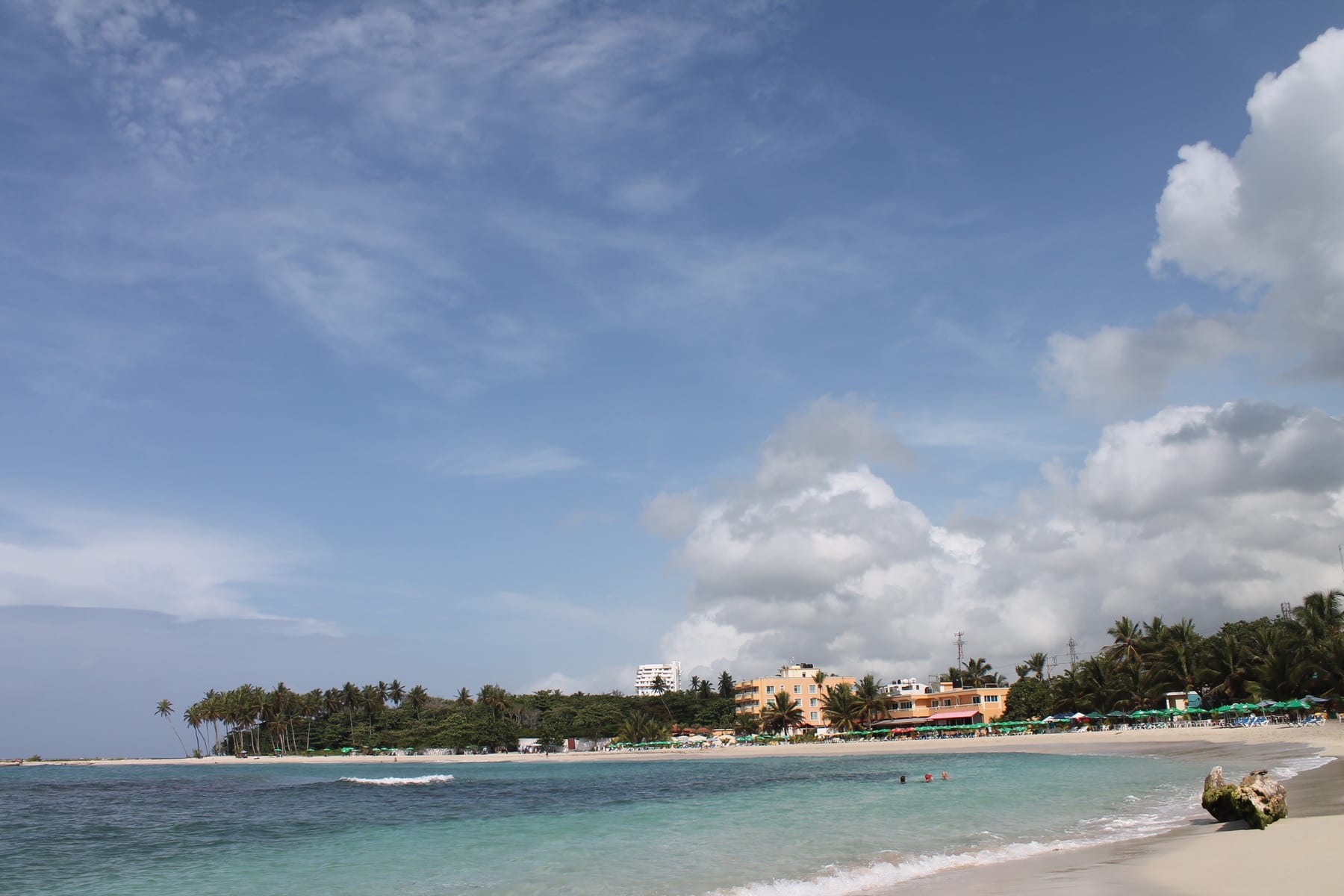
A curving pale sand beach with turquoise water, green umbrellas, palm trees and low beachfront buildings under white clouds

Punta Cana & the East, Dominican Republic

Juan Dolio

The public beach in the centre of Juan Dolio, on the Caribbean coast east of Santo Domingo. (Fanarchiv / Wikimedia Commons · CC BY-SA 3.0)

A seaside community on the south coast in San Pedro de Macorís province, between Santo Domingo and the provincial capital. A small fishing village that had become a pioneer of the country's hotel industry by the late 1980s, it lost most of its hotels after Hurricane Georges in 1998 and is now a quieter strip of reef-sheltered beaches, apartments and condominiums.

Neighbourhoods

  • Central Juan Dolio
    • First-time visitors
    • Beaches
    • Best for food

    The heart of the community around the public beach, Playa Juan Dolio, with public access, parking, food and drink stalls and beach bars along Calle Principal. The centre and beachfront are easy to walk, with good pavements.

    Open in Maps
  • Villas del Mar and the east end
    • Quiet and residential
    • Apartments
    • Golf

    Villas del Mar, the newer part of Juan Dolio, and the eastern end, where high-rise apartments and condominiums line the half-moon of Playa Real and the beaches beyond, with a golf course nearby. Building has boomed here as old hotels gave way to apartment projects.

    Open in Maps

Things to do

Beaches and diving

  • Playa Juan Doliobeach

    The public beach in the centre of the community, a stretch of white sand, coconut palms and turquoise water with food stalls serving seafood nearby.

    Open in Maps
  • Playa Realbeach

    A half-moon beach on the eastern side of Juan Dolio, separated from the main road by tall apartment buildings, whose private security often limits free access.

    Open in Maps
  • Playa Hemingway and Playa Marbellabeach

    Two of the reef-protected beaches strung east along the shore of Juan Dolio and Villas del Mar.

    Open in Maps
  • Juan Dolio's dive sitesattraction

    Six good dive sites lie off the coast, including the wreck of the Tanya, a 195-foot cargo ship.

    Open in Maps

Short trips along the coast

  • Boca Chicabeach

    The busy beach town to the west, with a popular beach about 30 km east of Santo Domingo.

    Open in Maps
  • San Pedro de Macorísattraction

    The provincial capital to the east, a sugar city famous for its baseball players, with the San Pedro Apóstol cathedral of 1910 and a Malecón where people gather for music and drinks.

    Open in Maps
  • Estadio Tetelo Vargasattraction

    San Pedro de Macorís's 8,000-seat baseball stadium, built in 1959 and home of the Estrellas Orientales in the winter league.

    Open in Maps
  • Cueva de las Maravillas National Parkpark

    A cave on the road from San Pedro de Macorís to La Romana with about 500 Taíno paintings and engravings, a national park since 1997.

    Open in Maps
  • Ciudad Colonial, Santo Domingoneighborhood

    The walled historic centre of the capital, a UNESCO World Heritage Site and the oldest continuously inhabited European settlement in the Americas.

    Open in Maps
  • Los Tres Ojos National Parkpark

    An open-air limestone cave with three lakes in Santo Domingo Este, one of the country's most popular attractions.

    Open in Maps

Eat and drink

Long-standing places and food districts in Juan Dolio. Hours, ratings and directions come from your maps app, always current.

Juan Dolio classics

  • Seafood stalls at Playa Juan Doliomarket

    Food and drink stalls near the public beach serve typical dishes of fish and seafood.

    Open in Maps
  • Bars on Calle Principalneighborhood

    The beach bars and restaurants along Calle Principal near Playa Juan Dolio, where most of the community's eating and drinking outside the resorts happens.

    Open in Maps

Experience Juan Dolio

History

Long before tourism, the bay at Juan Dolio was the site of a pre-Columbian Indigenous settlement known as El Corral, because the bay that served as a harbour for its canoes was sheltered by a coral reef. Later the shore was home to a small fishing village on the coast between Santo Domingo and San Pedro de Macorís.

By the late 1980s Juan Dolio had become a pioneer of the Dominican hotel industry, a favourite of European tourists, and new hotels were built along the shore through the following years. Hurricane Georges in 1998 changed its course. The storm's damage hit the local economy hard and led to the closure of most of the beach hotels, while the large hotel chains moved further east to Bávaro and Punta Cana.

Some of the older hotels were converted into property developments, and the area has since been reshaped by a building boom of apartments and condominiums, especially in the newer part known as Villas del Mar. Juan Dolio is less popular with international visitors than it once was, but its beaches remain well used by both Dominicans and foreign tourists. It is a community within the municipality of Guayacanes, in San Pedro de Macorís province.

Culture & Customs

Juan Dolio's character is shaped by its closeness to the capital and by its history as a pioneer of the country's hotel industry. Its beaches are well used by Dominicans as well as foreign tourists, and the mix of local beachgoers, apartment residents and hotel guests gives the strip a less international feel than the big resorts further east.

The wider province has strong traditions. San Pedro de Macorís, the provincial capital to the east, is the home of the cocolo community, descended from workers who came from the English-speaking Caribbean islands in the sugar boom, whose Guloyas dance drama is recognised by UNESCO as intangible cultural heritage. The province is famous for baseball, and San Pedro has produced so many Major League players that it is called the cradle of shortstops; its Estrellas Orientales play in the winter league.

As across the country, merengue and bachata are the sound of the beach bars. Visitors are expected to respect the private apartment blocks along the shore, whose security staff often control who uses the beaches in front of them.

Daily Life

Juan Dolio had 2,488 inhabitants in 2010 and belongs to Guayacanes; its visitors and part-time apartment residents add many more in the holiday season.

The economy depends on tourism and property. Hotels, apartment rentals, beach bars and restaurants, a golf course, dive centres and the building trade provide most jobs, and the conversion of old hotels into apartment projects has turned much of the shore into a residential resort. Together with Villas del Mar, its newer part, Juan Dolio is the biggest tourist centre on the south coast, and a building boom continues to turn the old all-inclusive strip into apartments, golf and marinas.

Life is quiet compared with the big resorts of the east. The coastal motorway connects the community with Santo Domingo, San Pedro de Macorís and La Romana. Along Playa Real, where high-rise apartments stand between the road and the sand, private security staff often limit free access to the beach.

Food

Seafood is the strength of Juan Dolio's table. The food and drink stalls near the public beach serve typical dishes made with fish and seafood, and seaside fishing villages across the country offer a great variety of seafood, most commonly shrimp, marlin, mahi-mahi and lobster. Dominican cooking is more mildly spiced than that of other parts of the West Indies, relying mainly on red onions, garlic, cilantro, cubanelle pepper and oregano.

Away from the beach the food is the everyday Dominican kind. Stewed meat is one of the components of la bandera, the traditional Dominican lunch, and sancocho, a stew of several meats, is the national soup. Empanadas are a common snack, and tostones, fried plantains, are a familiar side.

The province's cocolo heritage adds yaniqueques, or johnny cakes, a dish brought by sugar-cane workers from the Lesser Antilles over a century ago, and guavaberry, a liqueur made from the guavaberry fruit, drunk at Christmas and associated with San Pedro de Macorís. Presidente beer, rum and mamajuana, a spiced drink of rum, red wine and honey infused with bark and herbs, are the drinks of the beach bars.

Planning tools

Budget

Juan Dolio is cheaper and quieter than Punta Cana, with a mix of all-inclusive hotels, apartment rentals and guesthouses, within easy reach of Santo Domingo. Apartments with kitchens keep costs down; golf and diving are the main extras.

Daily Budget Midrange
USD 150–300 (beach hotel or all-inclusive, restaurants, a dive or a day trip)
Daily Budget Shoestring
USD 50–90 (guesthouse or simple apartment, beach-stall meals, guaguas)

Apartments with a kitchen are good value for longer stays; agree taxi and motoconcho fares before setting off.

Best Time to Visit

December to April is the driest and most comfortable season and the busiest for visitors. May to November is hotter and wetter, with a hurricane risk; Hurricane Georges in 1998 did lasting damage to the resort here.

Suggested Number of Days

Two or three days are enough for the beaches and a dive. Allow four to six to use Juan Dolio as a base for the capital and the towns along the south coast, which are close enough for day trips.

First Visit
2–3 days
With Surroundings
4–6 days

Transportation

The centre and beachfront are walkable, with well-kept pavements, and motoconchos cover longer distances. Guaguas run along the coastal motorway between Santo Domingo, San Pedro de Macorís and La Romana, and taxis and hire cars are the easier way to make day trips.

Wear a helmet on motoconchos, and avoid driving the motorway at night.

Airport & Station Connections

Las Américas International Airport, the country's second busiest, near Boca Chica, is about a 30-minute drive west, and the capital about 60 km away. La Romana's airport lies to the east. The motorway from Santo Domingo to La Romana passes Juan Dolio, with coaches and guaguas along it.

Walkability

The central beachfront and the streets around it are easy and pleasant on foot, with good pavements. The strip is long, though, and the eastern apartment areas and golf course are spread out, so a motoconcho or taxi helps for longer distances.

Safety

The main tourist areas are heavily policed and generally safe, but the Dominican Republic has significant crime, and petty theft, scams, and occasional armed robbery affect visitors, particularly in Santo Domingo and Santiago. The resort areas of the east are heavily guarded, though theft from rooms and beaches, scams and overcharging on excursions happen, and traffic accidents are a real risk.

Keep valuables out of sight on the beach, use licensed dive and excursion operators, wear a helmet on motorbikes, and drink only from sealed bottles or trusted bars. Check current official travel advice before travelling.

Climate

Hot and sunny on the sheltered Caribbean coast, with a drier season from December to April and a hotter, wetter season from May to November that overlaps the hurricane season.

Summer
across the east of the country, hot and humid, 30–32°C, with short showers and a hurricane risk from June to November
Winter
across the east of the country, warm, 27–29°C by day, the driest and most comfortable time

Local Customs

Juan Dolio's beaches are well used by Dominicans as well as foreign visitors, and the public beach has food and drink stalls. Greetings matter — a 'buenos días' goes a long way — and beachwear belongs on the beach. Respect the private security of apartment blocks, which may restrict beach access.

Ask before photographing people, and do not touch coral or take shells when diving or snorkelling on the reefs.

Common Payment Methods

The currency is the Dominican peso. Hotels, resorts and larger restaurants take cards and often quote in US dollars; beach stalls, guaguas and motoconchos need cash in pesos.