💰 Budget
Prices are higher than in Dominican towns away from the coast but lower than in the big resort zones. Holiday rentals and guesthouses suit long stays, local comedores are cheap, and watersports lessons and equipment hire are the main extra cost.
- Daily Budget Midrange
- USD 100–200 (beach hotel or rental, restaurants, kitesurfing lessons or equipment hire)
- Daily Budget Shoestring
- USD 40–70 (guesthouse, comedor meals, guaguas and motoconchos)
Watersports lessons and gear hire make up much of a visit's cost; compare what is included before booking a course.
📅 Best Time to Visit
For wind, June to August is best, followed by January to March, when the trade winds blow steadily. The coast can be rainy from November to January, and the hurricane season runs from June to November.
⏳ Suggested Number of Days
Three or four days give a feel for the town and a taste of the water. Those learning to kitesurf or windsurf usually need a week or more, and time for the neighbouring coast towns adds a few days.
- First Visit
- 3–4 days
- With Surroundings
- 1–2 weeks
🚆 Transportation
The town stretches along the main coast road, Camino Cinco, known locally as Calle Principal. Motoconchos are the usual way to get around and are cheap by day; guaguas and taxis run along the coast to Sosúa and Puerto Plata.
Use taxis rather than motoconchos at night, and arrive in daylight when coming from the airport.
🛬 Airport & Station Connections
Gregorio Luperón International Airport, also called Puerto Plata Airport, lies to the west in the municipality of Sosúa, about 18 kilometres away, and taxis run from there to the town. Santiago and Santo Domingo airports are longer journeys inland and south.
🚶 Walkability
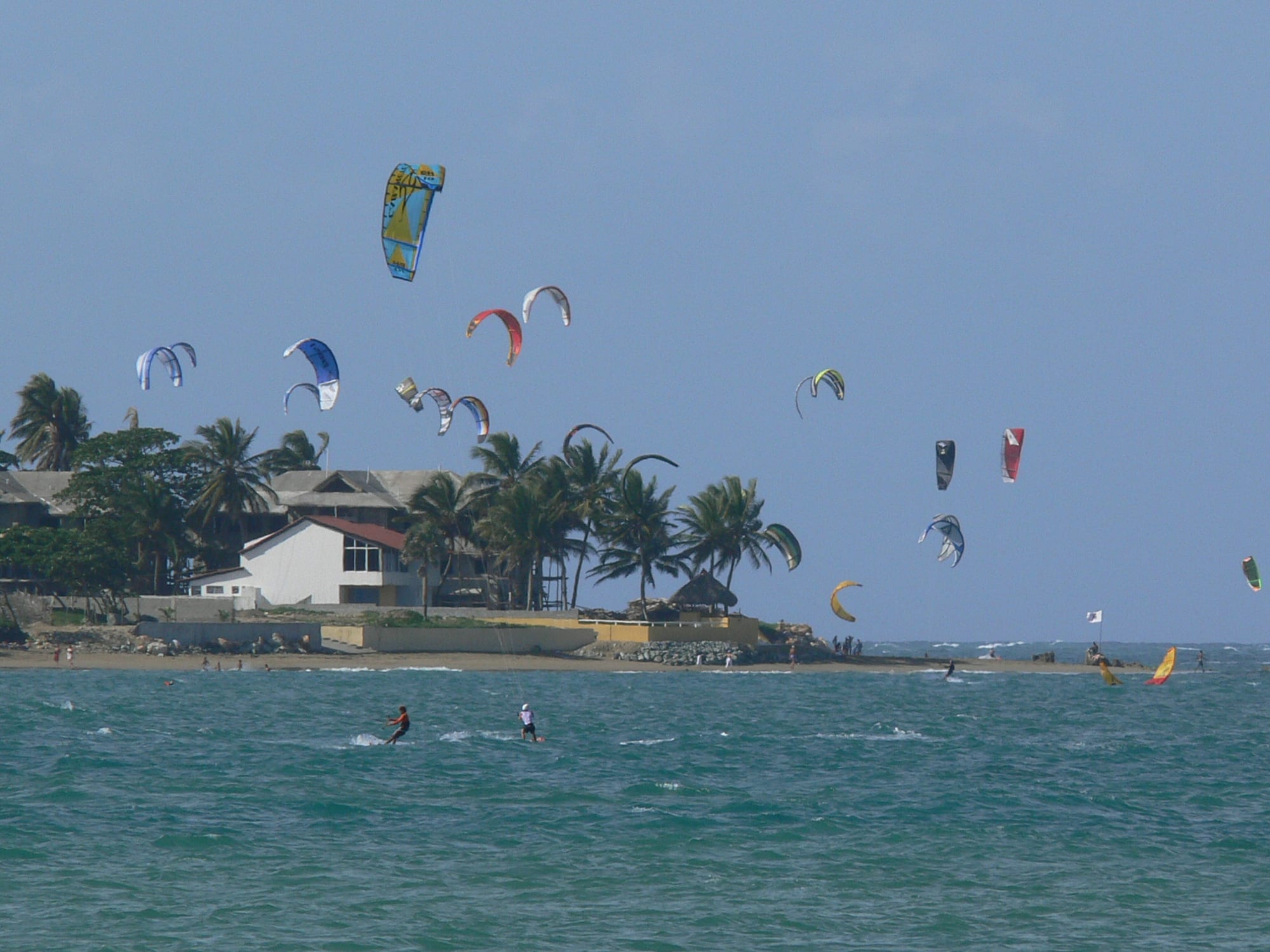
The centre is compact, and the beach makes a pleasant walking route along the bay. Kite Beach is a walk away, but Playa Encuentro and the other towns need a motoconcho or taxi.
🛡️ Safety
The main tourist areas are heavily policed and generally safe, but the Dominican Republic has significant crime, and petty theft, scams, and occasional armed robbery affect visitors, particularly in Santo Domingo and Santiago. The north coast resort towns see petty theft and scams. On the water, Cabarete's winds and currents demand experience, and heavy rain can bring flash floods.
Take kitesurfing lessons only from certified schools, keep valuables out of sight on the beach, and use taxis at night. Check current official travel advice before travelling.
🌦️ Climate
Tropical, with trade winds blowing much of the year. The Atlantic coast from Puerto Plata to Cabarete is wetter than the south, with rain spread through the winter months when northerly fronts arrive.
- Summer
- hot, around 30–34°C on this coast, with the strongest winds from June to August
- Winter
- warm — around 26–29°C across most of the country in the drier months, with showers from northern fronts on this coast
🤝 Local Customs
Cabarete is relaxed and international, with many foreign residents and long-stay visitors, but it is still a Dominican town. Swimwear belongs on the beach, a greeting comes before any request, and a service charge is often added to restaurant bills, with a little extra left for good service.
Ask before photographing people, and keep clear of kitesurfers' lines on the beach.
💳 Common Payment Methods
The currency is the Dominican peso (RD$). Many restaurants, bars and services also accept US dollars, Canadian dollars and euros, usually at a poor exchange rate. Cards work in larger businesses, but cash in pesos is needed for motoconchos, guaguas and small shops.