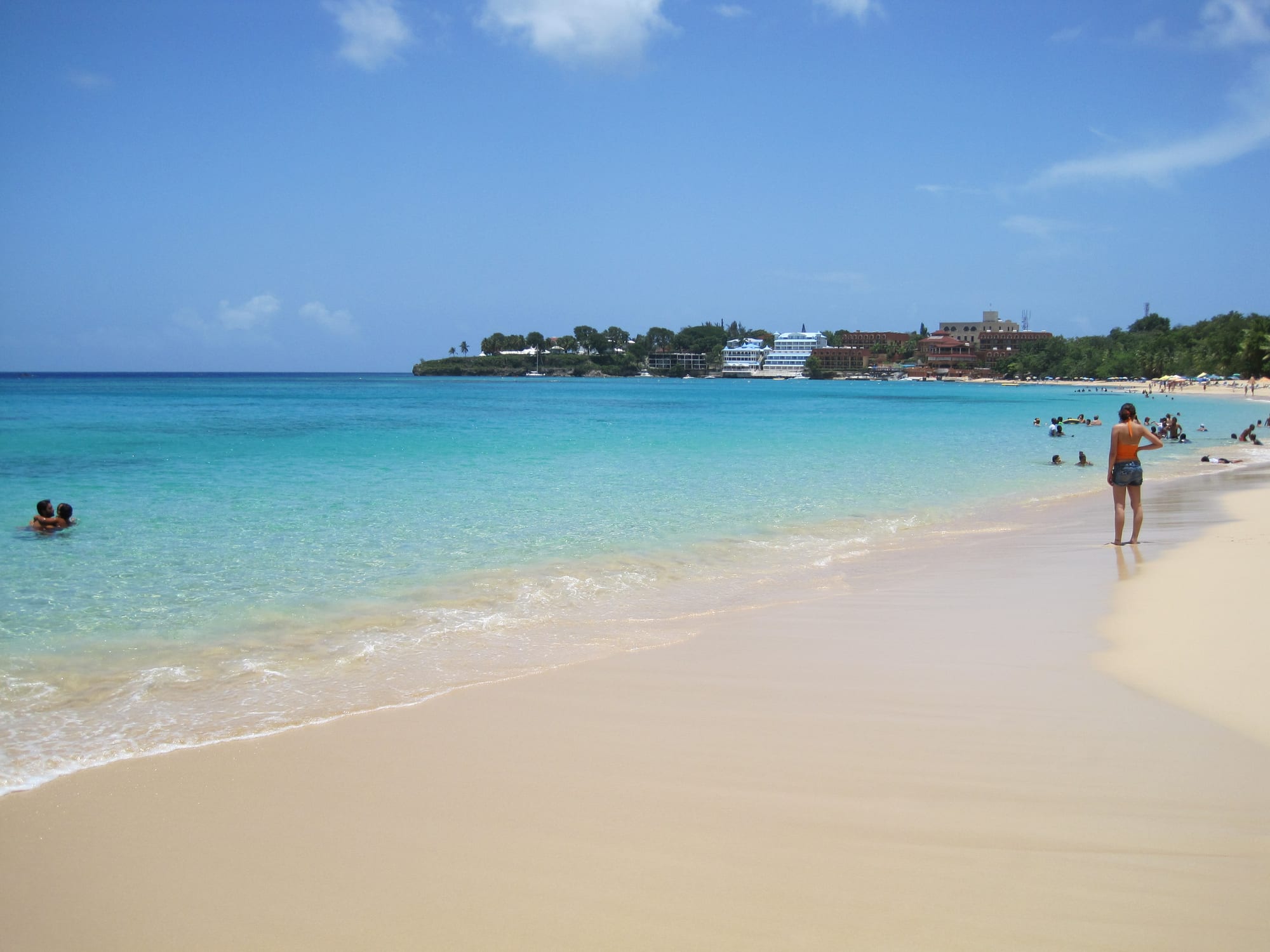
Pale sand curving round clear turquoise water at Sosúa, with swimmers and a green headland of hotels beyond

Santiago, Puerto Plata & the Cibao, Dominican Republic

Sosúa

The crescent beach of Sosúa Bay on the north coast. (stupiddingo (Flickr) / Wikimedia Commons · CC BY 2.0)

A beach town on the north coast of Puerto Plata province, set around a sheltered crescent bay with reefs offshore. Once a banana port, it was settled from 1940 by Jewish refugees from Nazi Germany and Austria, who built a dairy and meat industry; since the 1980s it has been a resort town of beaches, dive boats and busy nightlife.

Neighbourhoods

  • El Batey
    • First-time visitors
    • Beaches
    • Nightlife

    The main tourist quarter on the east side of Playa Sosúa, built where the refugee settlers lived and named after the banana company's workers' settlement. Most hotels, shops, restaurants and bars are here, with the Jewish museum and synagogue and the bar strip of Pedro Clisante street.

    Open in Maps
  • Los Charamicos
    • Local life
    • Nightlife

    The densely populated local barrio at the west end of the beach, livelier and more run-down than El Batey, known for its bars and dancing. The main streets are fine by day, but its alleyways are best avoided alone.

    Open in Maps
  • Sosúa Abajo
    • Quiet and residential
    • Near the airport

    The mainly rural northern part of town towards the airport, where many of the workers who staff the hotels of El Batey, Cabarete and Playa Dorada live.

    Open in Maps

Things to do

Beaches and the bay

  • Playa Sosúabeach

    The town's main beach, a crescent about a kilometre long protected by coral, with a row of food, drink and souvenir shacks along the back and calm water for swimming.

    Open in Maps
  • Sosúa Bay reefsattraction

    Sheltered water with reefs and many kinds of fish, the reason the town has dive centres; snorkellers can swim out to the reef from the main beach.

    Open in Maps
  • Playa Aliciabeach

    A quieter beach just north of the bay, formed naturally after a storm around 2002 where there had been only rocky cliffs.

    Open in Maps

History

  • Jewish museum and synagoguemuseum

    A small museum telling the story of the refugees who settled Sosúa from 1940, beside the synagogue they founded, which still holds occasional services.

    Open in Maps

Short trips from the town

  • Cabareteattraction

    The neighbouring beach town to the east, known for kitesurfing and windsurfing, reached by guagua along the coast road.

    Open in Maps
  • Puerto Plataattraction

    The provincial capital to the west, with the colonial Fortaleza San Felipe, Victorian architecture and a cable car up Pico Isabel de Torres.

    Open in Maps

Eat and drink

Long-standing places and food districts in Sosúa. Hours, ratings and directions come from your maps app, always current.

Sosúa classics

  • Beach shacks of Playa Sosúaneighborhood

    The row of shacks behind the main beach sells food, cold drinks and souvenirs.

    Open in Maps
  • Pedro Clisante streetneighborhood

    El Batey's main street of restaurants and expatriate bars near the beach, turning into discos and nightclubs further along.

    Open in Maps
  • Los Charamicos comedoresneighborhood

    Simple Dominican eateries in the local barrio at the west end of the beach.

    Open in Maps

Experience Sosúa

History

In the early 20th century Sosúa was banana country. The United Fruit Company kept a workers' settlement, a batey, here — the origin of the name El Batey — and a private railway carried bananas from the plantations down to a small port built on the beach for export to the United States.

In 1938 Trujillo bought the whole property to house Jewish refugees. At the Évian Conference he had offered to take up to 100,000 of them; in the event about 800 German and Austrian Jews fleeing Nazi Germany received Dominican visas between 1940 and 1945 and settled in Sosúa, under an agreement with Jewish businessmen in New York. The government gave them land and resources, and after failed attempts at several crops they turned to dairy farming and meat, founding a food factory and company, Productos Sosúa. Many later moved on to the United States, but descendants still live in the town, among them a former mayor, Ilana Neumann.

Tourism arrived with the rise of the Puerto Plata coast in the 1980s and turned the quiet farming settlement into a resort. In the late 1990s and 2000s the town also became known as a destination for sex tourists from Europe and North America. In January 2026 the local government announced RD$50 million for renovating the Jewish museum and its synagogue, and in August 2026 President Luis Abinader announced plans for a new museum building.

Culture & Customs

Sosúa's identity is a mixture. The refugee settlers left the town its synagogue, its museum and its dairy and meat industry, and descendants remain an important part of the community, although it has grown small: an officiant leads Shabbat services about once a month. El Batey, where they lived, is now the tourist quarter, with expatriate bars and restaurants run by residents from Europe and North America.

Los Charamicos, at the other end of the beach, is the Dominican side of town, known for its nightlife, bars and dancing. Nightlife is a large part of the town's reputation, and the bar strip along Pedro Clisante street, with its discos and clubs, is busy most evenings.

By day life turns to the bay. The sheltered water and coral reefs have made Sosúa a diving and snorkelling centre, and the main beach, with its line of food and souvenir shacks, is where residents and visitors alike come to swim.

Daily Life

The municipality of Sosúa had about 57,000 people at the 2022 census, most of them living outside the town in rural areas; the urban population was about 16,600. The town has three parts: El Batey, the tourist quarter on the east side of the beach; Los Charamicos, the crowded local barrio on the west; and Sosúa Abajo to the north towards the airport, where many hotel workers live.

Tourism dominates the economy, alongside the dairy and meat production introduced by the refugee settlers, which is still an important driver of the local economy. Many people commute along the coast to jobs in Cabarete's beach hotels and the Playa Dorada resorts near Puerto Plata, and Gregorio Luperón International Airport lies inside the municipality.

Daily life follows the coast highway, where guaguas and motoconchos carry people between towns. Sosúa remains a destination for sex tourism, although an effort to crack down on it from the late 2000s brought a decline.

Food

Sosúa eats like the rest of the north coast, with a European twist. On the beach, the shacks behind the sand sell food and cold drinks, Presidente beer among them. In Los Charamicos comedores serve la bandera — rice, red beans, stewed meat and salad — and the Cibao favourites, mangú with fried cheese, salami and eggs, and chicharrón.

The refugee settlers' legacy is in the dairy and meat products: Productos Sosúa, the company the settlers founded, gave the town its dairy and meat industry, which remains important today. In El Batey, restaurants run by long-settled foreigners cook for visitors and expatriates, and Pedro Clisante street has bars serving everything from fish and chips to tapas.

Beer and rum, often in mixed drinks, are the drinks of the beach bars, and fresh fruit is sold from small fruit stores in town. Restaurants in town also serve German, Italian and English food alongside Dominican cooking.

Planning tools

Budget

Sosúa has everything from all-inclusive resorts and holiday rentals in El Batey to cheap guesthouses and local comedores. Diving, excursions and nights out are the main extras, and beach vendors add a commission when they fetch chairs, food or drinks.

Daily Budget Midrange
USD 100–200 (beach hotel, restaurants, a dive or an excursion)
Daily Budget Shoestring
USD 40–70 (guesthouse, comedor meals, guaguas)

Agree a price before accepting help from beach vendors, and use guaguas rather than taxis for trips along the coast.

Best Time to Visit

The drier, sunnier months on this coast follow the wet season, which here runs from about November to January, when northerly fronts bring showers. Summer is hot, with a hurricane risk from June to November.

Suggested Number of Days

Two or three days suit the beaches, the bay and the town's history. A week allows time for diving and for trips along the north coast and into the mountains; many visitors simply stay longer for the beach.

First Visit
2–3 days
With Surroundings
5–7 days

Transportation

The town is small enough to walk. Motoconchos wait on every corner, and guaguas — shared minibuses — run along the main coast highway to Cabarete, Puerto Plata and Río San Juan for much less than a taxi. Caribe Tours coaches link Sosúa with Santiago and Santo Domingo.

Taxis cost far more than guaguas; agree the fare before any taxi or motoconcho ride.

Airport & Station Connections

Gregorio Luperón International Airport, also called Puerto Plata Airport, lies in the western part of Sosúa's own municipality, a short taxi ride from town; it is the country's fourth-busiest airport, with many charter flights. Coaches arrive at a station on the highway, a 10–15 minute walk from the centre.

Walkability

El Batey, the beach and Los Charamicos are all within a short walk of each other. The main streets are fine by day, but care is needed at night, and the alleys of Los Charamicos are best avoided alone.

Safety

The main tourist areas are heavily policed and generally safe, but the Dominican Republic has significant crime, and petty theft, scams, and occasional armed robbery affect visitors, particularly in Santo Domingo and Santiago. The north coast resort towns see petty theft and scams, and Sosúa has a reputation for sex tourism.

Take care on the streets at night, avoid the alleyways of Los Charamicos alone, and think twice about riding pillion on a motoconcho. Check current official travel advice before travelling.

Climate

Warm all year on the Atlantic coast, which is wetter than the south, with most rain from about November to January when northerly fronts arrive.

Summer
hot, around 30–34°C on the coast, with a hurricane risk from June to November
Winter
warm, around 26–29°C across most of the country in the drier months, with showers on this coast

Local Customs

Sosúa mixes Dominican residents with long-settled foreigners from Europe and North America, so English and other languages are widely heard. Beachwear belongs on the beach; cover up in town and at the synagogue.

Ask before photographing people, and check with the museum before attending a service at the synagogue.

Common Payment Methods

The currency is the Dominican peso (RD$), and US dollars are widely accepted in the tourist area, often at a poor rate. Cards work in hotels and larger restaurants; carry pesos for guaguas, motoconchos and beach stalls.