💰 Budget
Narva is markedly cheaper than Tallinn for rooms and meals, and the main sights are close together. Choice is narrower than in the capital or Tartu: there are fewer restaurants and a small number of places to stay, so a day trip from Tallinn or an overnight stop is the usual pattern.
- Daily Budget Midrange
- USD 100–180 (central hotel, restaurant meals, castle museum, a taxi to Narva-Jõesuu)
- Daily Budget Shoestring
- USD 45–75 (guesthouse or simple hotel, café meals, train or bus from Tallinn)
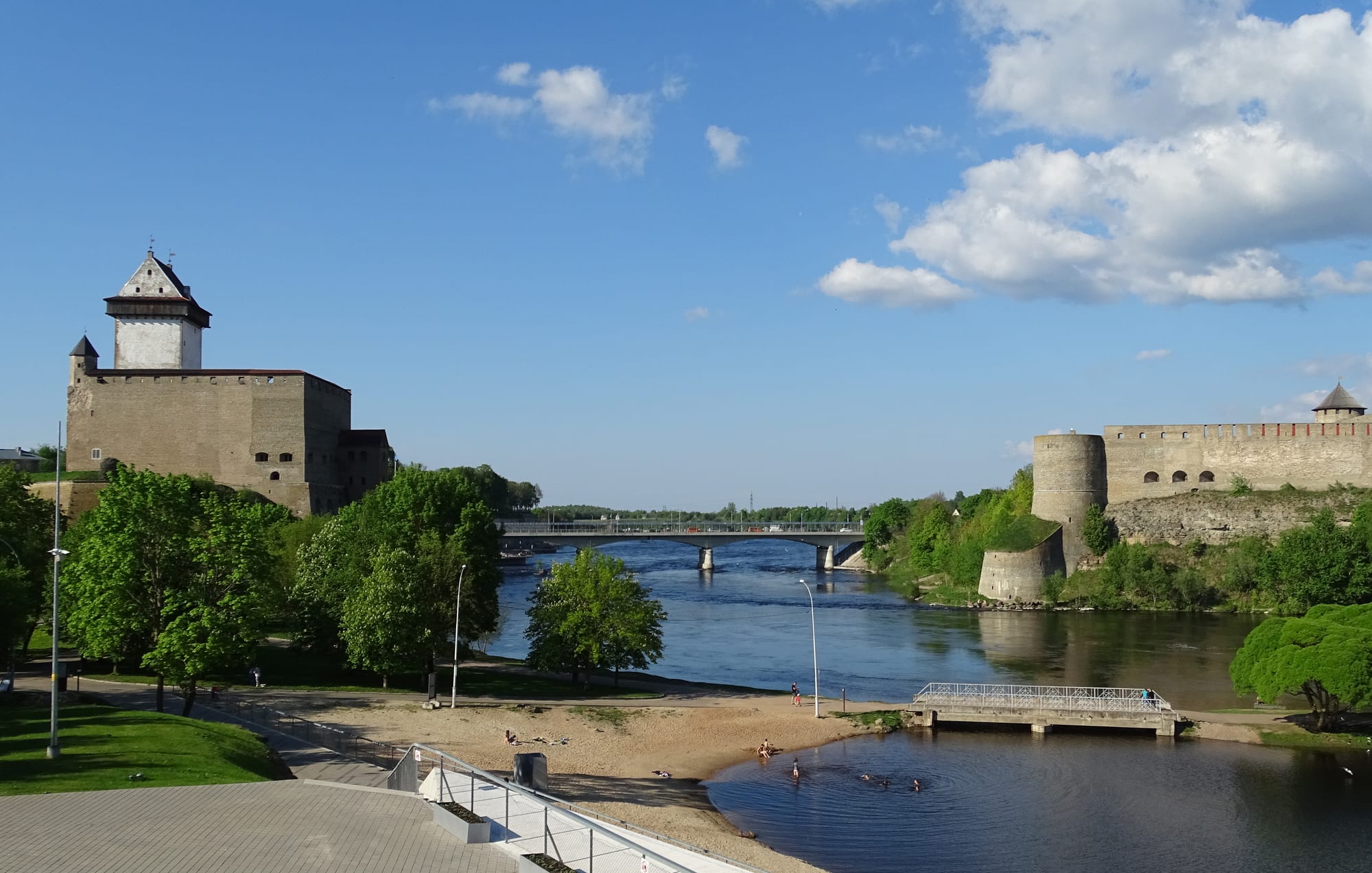
The park around Hermann Castle and the views of Ivangorod across the water cost nothing.
📅 Best Time to Visit
May to September, when the riverside is pleasant, the castle courtyard hosts open-air shows and the beach at Narva-Jõesuu is open for summer. The town's festivals fall in May, July and August. Winters are long and cold, and the city is quiet.
⏳ Suggested Number of Days
The castle, the bastions and the riverside fit into a single long day, which is how many visitors see the city from Tallinn. Two or three days allow time for the beach resort at the river mouth and the coast to the west.
- First Visit
- 1 day
- With Surroundings
- 2–3 days
🚆 Transportation
Narva can be explored on foot, and the main sights sit within a short walk of the castle. Local buses and taxis cover the outer districts and the road north to Narva-Jõesuu, and a car is the easiest way to reach the coast to the west.
Since 1 February 2024 the bridge to Ivangorod has been open only to pedestrians, and crossing rules can change at short notice; check the current position before planning any travel to Russia.
🛬 Airport & Station Connections
Narva is about 200 kilometres east of Tallinn. Elron trains run several times a day from Tallinn's Baltic Station, the fastest in about two and a half hours, and buses from Tallinn and Tartu take around three hours. The railway and bus stations stand next to each other south-east of the centre. Passenger trains to Russia stopped in 2020 and have not resumed.
🚶 Walkability
The centre is compact and flat, and the castle, town hall, bastions and riverside are all close together. The Kreenholm district is a longer walk south along the river. Pavements can be icy in winter.
🛡️ Safety
Estonia is a safe country with low levels of violent crime. Narva has higher crime than most Estonian towns. The river is the external frontier of the EU and NATO: the border strip and its installations are not to be photographed or approached.
Keep to public areas near the river, do not photograph border posts or guards, and carry a passport near the crossing. Check current official travel advice before travelling.
🌦️ Climate
A humid continental climate, with mild to warm, rainy summers, cool nights and cold, cloudy, snowy winters. Narva is one of the coldest towns in Estonia, at the country's far north-east corner.
- Summer
- mild to warm and rainy, with cool nights — across Estonia summer days are usually near 20°C and July averages about 18°C
- Winter
- cold, cloudy and snowy — across Estonia February averages from −1.4°C on the islands to −5.3°C inland, and Narva is one of the country's coldest towns
🤝 Local Customs
More than nine in ten residents are native Russian speakers, and Russian is the everyday language of shops and streets; younger people often understand English, but proficiency varies. Tipping of about 10 per cent is usual in restaurants. Feelings about history run deep on both sides of the river, and Soviet-era memorials have been a sensitive subject in recent years.
A few words of Russian help; be discreet with cameras near the border, and treat war memorials respectfully.
💳 Common Payment Methods
The currency is the euro. Cards and contactless payment are widely accepted, and ATMs are found in the centre and the shopping centres. Russian roubles are not used.