💰 Budget
Erfurt is one of the cheaper cities in Germany for rooms, meals and beer, noticeably less expensive than Munich, Hamburg or Frankfurt. Beds are scarcer and dearer on Advent weekends, when the Christmas market draws large crowds, and during trade fairs. The old town, the Krämerbrücke and the citadel ramparts cost nothing to explore.
- Daily Budget Midrange
- USD 130–220 (mid-range hotel, restaurant dinners, museum tickets, a theatre or concert evening)
- Daily Budget Shoestring
- USD 55–95 (hostel or simple guesthouse, bratwurst and bakery food, trams)
Book early for Advent weekends; Weimar is close enough by train to visit from an Erfurt base.
📅 Best Time to Visit
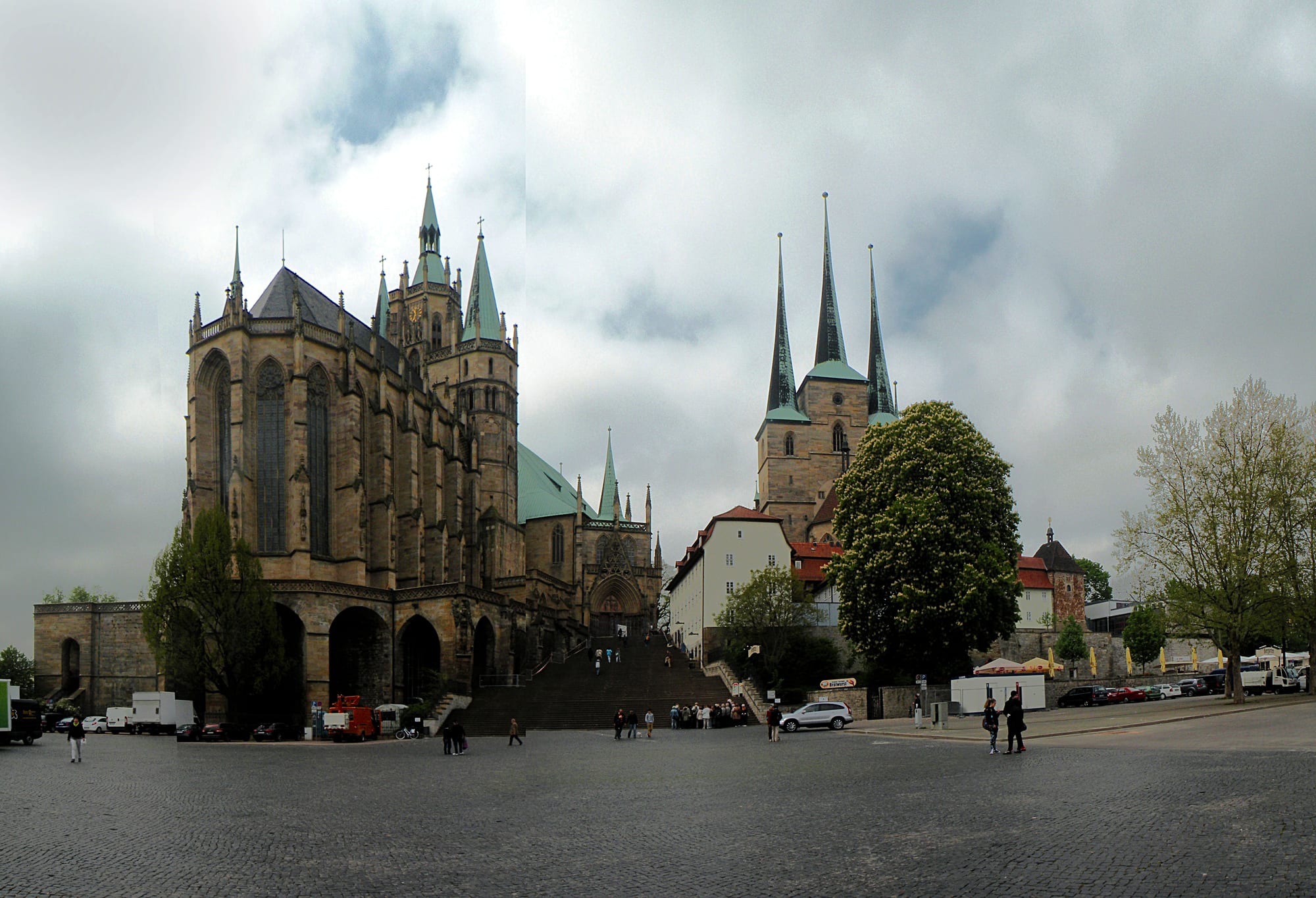
May to September brings outdoor terraces, the Krämerbrückenfest in June and the DomStufen festival on the cathedral steps; spring and early autumn are quieter for the old town and the egapark. Advent is a season of its own, with the Christmas market on the Domplatz. Winter outside the markets is cold, grey and quiet.
⏳ Suggested Number of Days
One or two days suit the compact old town. Three or four allow time for the neighbouring towns of the Thuringian cities chain, all reached easily by regional train. A festival or the Christmas market may add a night.
- First Visit
- 1–2 days
- With Surroundings
- 3–4 days
🚆 Transportation
Trams and buses run from morning until late evening, with a night service after midnight, and link the main station with the Anger, the old town and the suburbs. Cycling has grown since good cycle tracks were built from the 1990s. A car is of little use in the old town.
Use the tram between the station and the Domplatz; regional trains reach Weimar in about a quarter of an hour.
🛬 Airport & Station Connections
Erfurt Hauptbahnhof, rebuilt in 2007, is on the ICE network: Leipzig is about 45 minutes away, Berlin about an hour and a half, Dresden about two hours and Frankfurt and Munich about two and a half. The old town begins just north of the station. Erfurt–Weimar Airport, 5 kilometres west of the centre, is mainly used for seasonal charter flights; most visitors fly into Frankfurt or Leipzig/Halle and continue by train.
🚶 Walkability
The old town is compact and best explored on foot: the station, the Anger, the Krämerbrücke, the Fischmarkt and the Domplatz lie within a short walk of each other along largely pedestrian streets. The climb to the Petersberg is steep but short. The zoo and the egapark lie further out, on the northern and western edges of the city.
🛡️ Safety
Germany is a safe country with low levels of violent crime. In Erfurt, as in any city, it is sensible to watch belongings in crowds such as those at the Christmas market.
Keep bags closed in market crowds and stay out of marked cycle lanes on foot. Check current official travel advice before travelling.
🌦️ Climate
The city lies in the Gera valley, which forms a basin within the Thuringian Basin; annual precipitation is only about 535 mm. Winter nights can be very cold under temperature inversions, and air can be still and close in summer; June is the wettest month.
- Summer
- warm and sometimes humid — average highs around 23°C, lows around 12°C
- Winter
- relatively cold — average highs around 2°C, lows around -3°C
🤝 Local Customs
Service is included in restaurant prices, and rounding up the bill is the usual way to tip. Most of the population belongs to no church, but the cathedral, St Severus and the Augustinian monastery are working places of worship, so visitors keep quiet during services. Shops close on Sundays.
Dress modestly and stay quiet in churches during services, and wait for the green signal at pedestrian crossings.
💳 Common Payment Methods
The currency is the euro. Cards and contactless payment are widely accepted in shops and most restaurants, but bratwurst grills, market stalls and some small pubs prefer cash, so carrying some is useful. Cash machines are easy to find around the Anger and the station.