💰 Budget
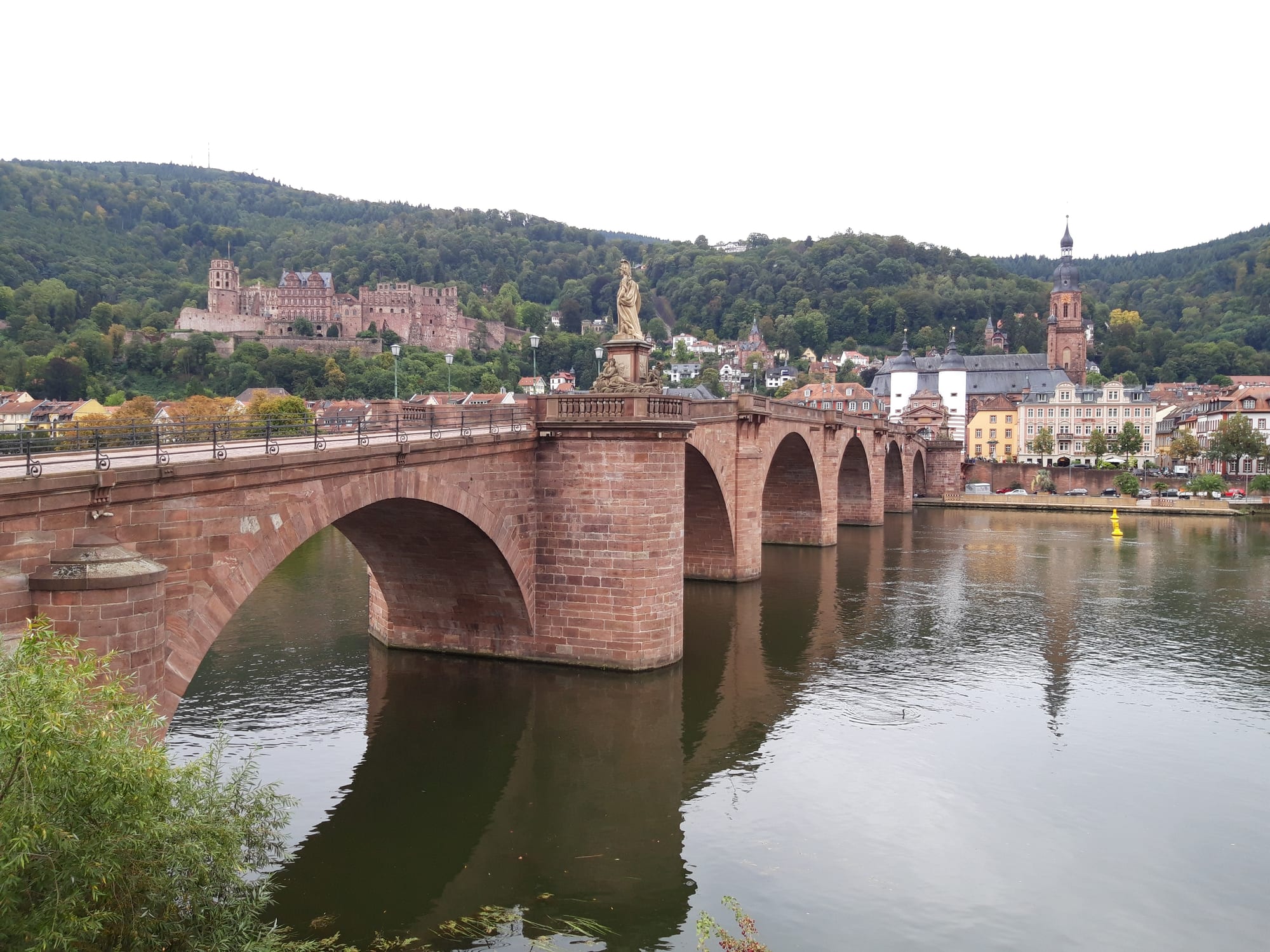
Heidelberg is one of Baden-Württemberg's pricier cities, with hotel rooms in the old town in heavy demand in summer and during the Christmas market. The large student population keeps food and drink reasonable in the bars, bakeries and the university canteen, and the bridge, the Philosophers' Walk and the old town streets cost nothing.
- Daily Budget Midrange
- USD 160–280 (mid-range hotel, restaurant dinners, castle and funicular tickets, museum entry)
- Daily Budget Shoestring
- USD 70–110 (hostel, bakery pretzels, canteen meals and student bars, trams and buses)
Staying in Mannheim, a short train ride away, is a cheaper alternative when Heidelberg's hotels are full.
📅 Best Time to Visit
Spring starts early here, often by mid-February, and summer, from June to September, is usually stable and warm, with the castle festival, the illuminations and evenings on the Neckar meadow. September and October bring the old-town autumn festival and harvest season; Advent brings the Christmas market. Fog becomes more common from late October.
⏳ Suggested Number of Days
Two days cover the old town, the castle and the hills at an easy pace. Three or four allow trips to the palaces, cathedrals and monasteries of the surrounding plain and hills, all within easy reach by train or car.
- First Visit
- 2 days
- With Surroundings
- 3–4 days
🚆 Transportation
Trams and buses, run by Rhein-Neckar-Verkehr, cover the city from the main station and the Bismarckplatz hub; the tram network has been extended again since 2006. The Bergbahn funicular climbs from the Kornmarkt to the castle, the Molkenkur and the Königstuhl. Much of the city is flat and cycling is common.
Pedestrians should stay off the marked cycle lanes, which are busy with students.
🛬 Airport & Station Connections
Heidelberg Hauptbahnhof is on the Rhine Valley Railway, with ICE and EuroCity trains and direct services to Frankfurt, Stuttgart, Karlsruhe and Mannheim; Mannheim, about 15 minutes away by S-Bahn, has frequent high-speed connections to the rest of Germany. Frankfurt Airport is the nearest intercontinental airport, reached by train with a change in Mannheim or Frankfurt. The A5 motorway links the city with Frankfurt and Karlsruhe.
🚶 Walkability
The old town is made for walking, with the Hauptstraße running its length and the bridge, the Marktplatz and the university close together. The castle and the Philosophers' Walk involve steep climbs — the funicular helps on the castle side — and the main station is a tram ride or a longer walk west of the old town.
🛡️ Safety
Germany is a safe country with low levels of violent crime. Heidelberg is a very safe city even by German standards; the usual risks are pickpockets in the summer crowds on the Hauptstraße and the bridge, late-night drinking in the student quarter, and bicycles. The Neckar is often affected by floods.
Keep bags close in crowds, stay out of marked cycle lanes on foot, and take care on the steep paths of the Heiligenberg after rain. Check current official travel advice before travelling.
🌦️ Climate
An oceanic climate in a sheltered valley, among the warmest in Germany, with an average annual temperature of 11.1°C for 1971–2000; almond, fig, palm and olive trees grow in the city, and it was the warmest place in Germany in 2009. Spring starts early, summers are mostly stable with thunderstorms, and winters are the wettest season.
- Summer
- June to September; July averages 20.1°C, with day temperatures of around 30°C typical and up to 40°C in heatwaves
- Winter
- mostly mild and rainy; January averages 2.5°C, with light night frosts and rare snow
🤝 Local Customs
Tipping is usual in restaurants, bars and taxis but rarely more than 10 per cent; most people round the bill up and say the total when paying. Roughly a quarter of residents are students, which sets a relaxed, international tone, and the city has long voted Green. The Church of the Holy Spirit and other churches are working places of worship.
Respect quiet hours in residential streets late at night, and dress modestly in churches during services.
💳 Common Payment Methods
The currency is the euro. Cards are widely accepted in hotels, shops and restaurants, but Germany remains fond of cash, and some bakeries, bars and small cafés take only cash. ATMs are easy to find along the Hauptstraße and at the station.