💰 Budget
Ioannina is a working university city with fair prices, inexpensive by Greek standards; student cafés and grill houses keep everyday eating cheap. Mountain guesthouses fill up at busy times, and a hire car is the largest single cost for anyone heading into Zagori.
- Daily Budget Midrange
- USD 110–200 (mid-range hotel, taverna dinners, museum tickets, the island boat, a hire car for a day trip)
- Daily Budget Shoestring
- USD 50–80 (simple room, pies, grill-house meals and bakery breakfasts, city buses and KTEL coaches)
Visit Zagori and the mountain villages midweek for better guesthouse rates.
📅 Best Time to Visit
May, June, September and October are best: warm enough for the lake and the island, and good months for walking in Zagori. July and August can be hot and are the busiest months in the mountain villages. Winter is wet and cold, with frequent frosts, and snow covers the mountain villages.
⏳ Suggested Number of Days
Two days are enough for the city, the castle and the island. Allow four or five to add the surrounding caves, the ancient sites and the mountain villages, which are spread out and slow to reach by bus; a hire car makes the longer stay more productive.
- First Visit
- 2 days
- With Surroundings
- 4–5 days
🚆 Transportation
The castle, the old centre, the lakefront and the boat to the island are all within walking distance of each other. City buses and taxis cover the outer districts and the airport. KTEL coaches link Ioannina with the rest of Epirus and with Athens and Thessaloniki, but services into Zagori are sparse and a car is close to essential there.
In winter carry snow chains for mountain roads to Metsovo and Zagori.
🛬 Airport & Station Connections
Ioannina National Airport, named "King Pyrros", is about four kilometres from the city centre and has flights from Athens of about 45 minutes. The drive from Athens takes about four and a half hours and the bus about six. The Egnatia motorway links the city with the ferry port of Igoumenitsa, for Corfu and Italy, and east towards Thessaloniki; the Ionia Odos runs south towards the Rio–Antirrio bridge.
🚶 Walkability
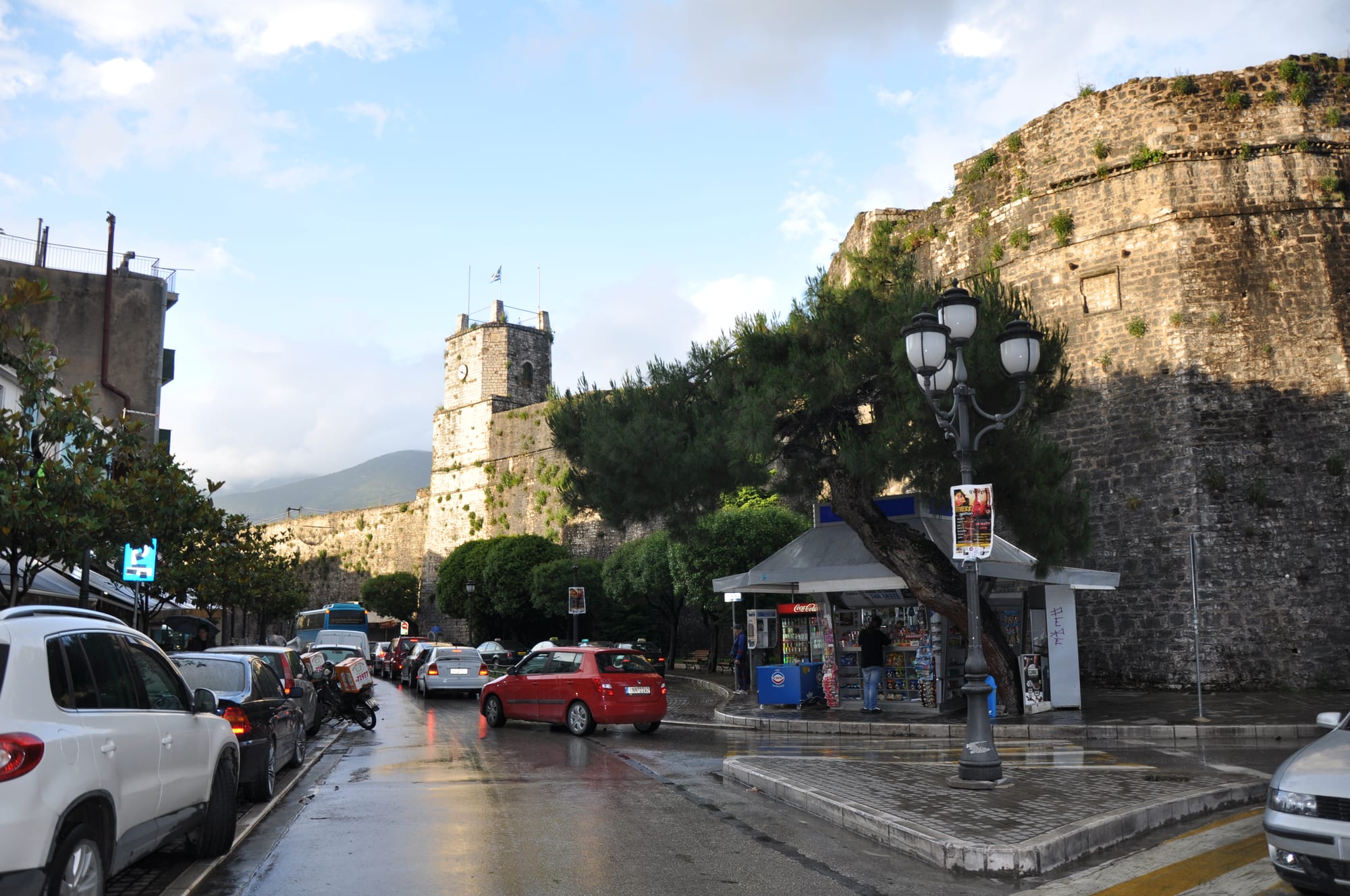
The historic core is compact and pleasant on foot: the Kastro, the old market streets and the lakefront sit side by side, though the lanes inside the walls are uneven and the castle stands on a rise above the lake. The Archaeological Museum and Litharitsia are a short walk from the centre. Pavements can be wet and icy in winter.
🛡️ Safety
Greece is a safe country for visitors, with low levels of violent crime. Ioannina is a calm student city. The practical hazards are winter frost and ice, and for those heading into the mountains, winter snow and steep, remote paths.
Check the weather before driving into the mountains in winter, and give flocks and their dogs a wide berth on mountain walks. Check current official travel advice before travelling.
🌦️ Climate
Ioannina's climate sits on the border between Mediterranean and humid subtropical, tempered by its inland position and elevation. Summers are hot and moderately dry; winters are wet and colder than on the coast, with frequent frosts and occasional snow. It is the wettest city of over 50,000 people in mainland Greece.
- Summer
- hot and moderately dry — the highest temperature ever recorded is 42.4°C
- Winter
- wet and cold, with frequent frosts and occasional snow — the lowest temperature ever recorded is −13°C
🤝 Local Customs
Mosques and the synagogue in the Kastro are preserved monuments, and the island's monasteries and the city's churches expect modest dress. Greek Orthodox feasts, name-days and Easter shape the year. The city has a large student population, which sets the rhythm of its cafés and nights.
Dress modestly in churches and monasteries, and ask before photographing people at worship.
💳 Common Payment Methods
The currency is the euro. Cards are accepted almost everywhere; some small tavernas and kiosks may prefer cash, and cash machines are easy to find in the centre.