A long concrete pier with two roofed shelters running out over the calm green water of a wide lagoon under white clouds

The Bay Islands & the Caribbean East, Honduras

Puerto Lempira

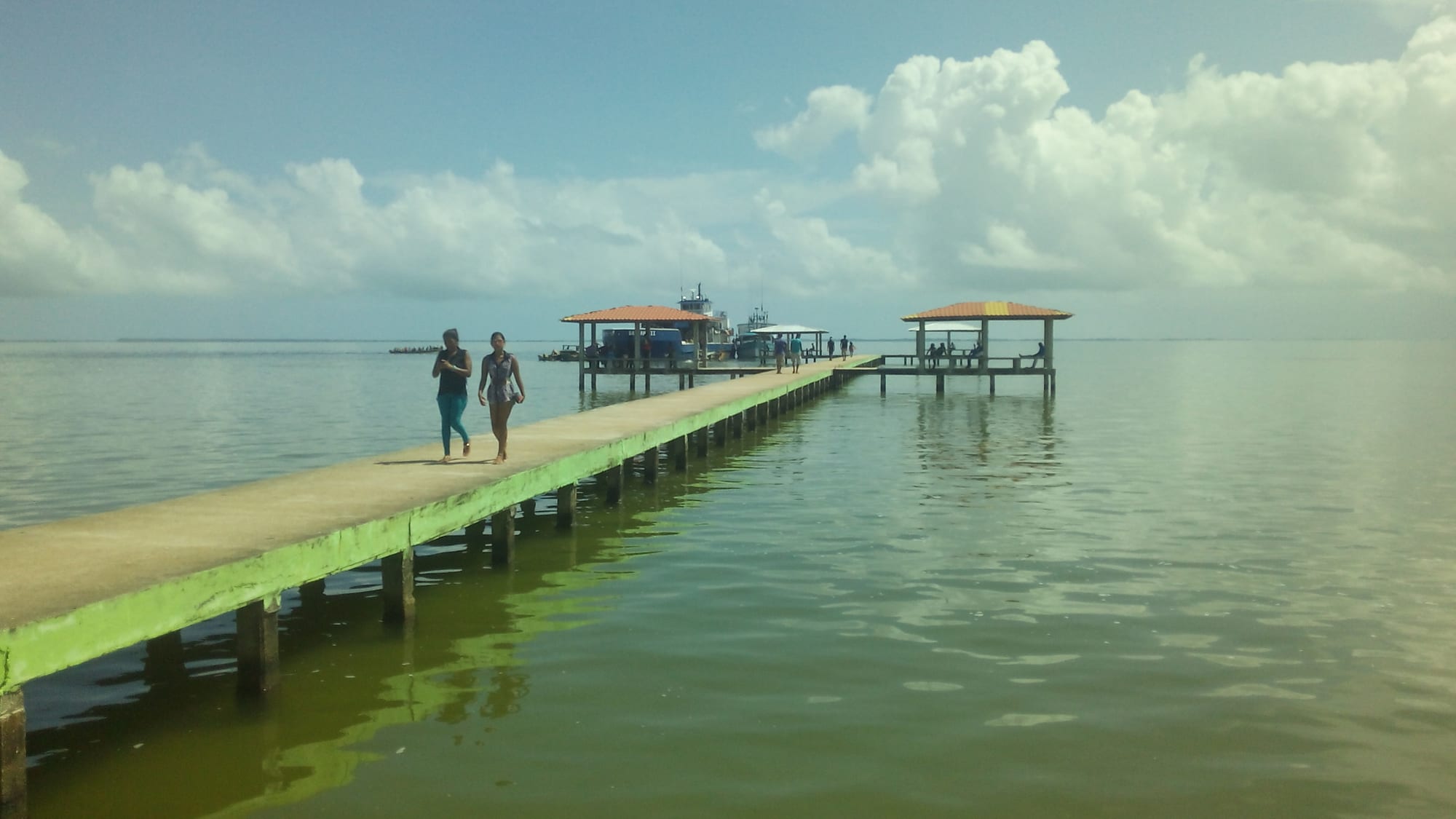
The pier at Puerto Lempira on the Caratasca Lagoon. (Jag22green / Wikimedia Commons · CC BY-SA 4.0)

The capital of Gracias a Dios department and the largest town in La Mosquitia, on the southern shore of the vast Caratasca Lagoon in north-eastern Honduras. A Miskito town with no paved road to the rest of the country, it is reached by air and water, and it lives from the lagoon, government services and trade with the surrounding villages.

Neighbourhoods

  • Town centre
    • First-time visitors
    • Markets
    • Local life

    The unpaved streets around the municipal market, with shops, supermarkets, pharmacies, small restaurants, the public hospital and government offices for the whole department. The airstrip lies within the town.

    Open in Maps
  • The lagoon shore
    • Views
    • Boats
    • Sunsets

    The town's edge along the Caratasca Lagoon, where a pier with roofed shelters runs out over the water and some guesthouses face the lagoon.

    Open in Maps

Things to do

Town and lagoon

  • Caratasca Lagoonpark

    A lagoon of about 1,110 square kilometres reaching far inland from the Caribbean, fed by several rivers, with its western shore protected as part of a biological reserve.

    Open in Maps
  • Mercado Municipalmarket

    The town's main food market, with fresh seafood and other produce.

    Open in Maps
  • Catholic churchlandmark

    The town's Catholic church, about 1.2 km from the centre.

    Open in Maps

Getting around

  • Puerto Lempira Airporttransit hub

    The airstrip within the town on the lagoon shore, the main link with the rest of Honduras and a base for general aviation and the Honduran Air Force.

    Open in Maps

Seasonal events

  • Christmas patronal fairNovember to late January

    The town's patron-saint fair, held over the Christmas season.

Eat and drink

Long-standing places and food districts in Puerto Lempira. Hours, ratings and directions come from your maps app, always current.

Puerto Lempira classics

  • Mercado Municipalmarket

    The main market, the place to see the fresh seafood and other produce the town lives on.

    Open in Maps
  • Seafood restaurants in townneighborhood

    Small local restaurants in town, where seafood and plantain are the local specialities.

    Open in Maps

Experience Puerto Lempira

History

The town's original name was Auhya Yari, Miskito for "long beach" or "long sand". It was renamed Puerto Lempira after Lempira, the Lenca leader who led an unsuccessful resistance to the Spanish conquistadors in the 1530s, with "Puerto" added for its position on the shore of the Caratasca Lagoon. The coast around it belonged to the Mosquito Coast, named after the Miskito nation and long dominated by British interests as the Miskito Kingdom; only in 1960 did the International Court of Justice award the northern part of the Mosquito Coast to Honduras.

Puerto Lempira became a municipality on 5 August 1957 and replaced Brus Laguna as capital of the department of Gracias a Dios in 1975. In the 1980s the town became a centre for CIA operations against the Sandinistas.

In October 1998 Hurricane Mitch made landfall at the Caratasca Lagoon, causing great ecological damage and substantial damage to the town and its airport. It remains the largest town in the department, though it still has no paved roads and no paved highway connecting it to the rest of Honduras.

Culture & Customs

Puerto Lempira is a Miskito town and a centre of Indigenous Miskito culture. The Miskito are a Native people of the Mosquito Coast, with their own language, and Miskito culture is dominant here, though not exclusive. Miskito is the main and official language of the region, followed by Mayangna and Spanish. Around the town, La Mosquitia is also home to the Pech and Tawahka, small peoples of the river forests, and to Garífuna villages on the coast.

The Miskito have their own Moravian churches, and the town also has a Catholic church. The town holds a Christmas patronal fair from November to late January.

Life is tied to the water and to work that is often dangerous. Many Miskito men work as lobster divers, often at great risk, and the lagoon and the sea shape the town's food, its transport and its economy. Puerto Lempira has been a sister city of Plattsburgh, New York, since 2011.

Daily Life

The town had about 22,860 people in a 2023 calculation. At the 2013 census the municipality, the largest in area in Honduras, had 47,528 people, about 82 per cent of them Indigenous, nearly all Miskito; it takes in more than 30 villages and over 200 hamlets.

As the capital of Gracias a Dios, the town lives largely from government and non-government jobs, the public hospital, schools and two university branches, one teaching by distance and one at the nearby community of Mistruck. Small businesses — shops, supermarkets, pharmacies, restaurants and workshops — serve the town and the villages around the lagoon, which also provides the town's main economy. There is no industry, and almost everything is brought in from the interior, so prices are two or three times those elsewhere in Honduras.

Basic services are a daily struggle. There is no sewerage, homes flood in the rainy season, and piped drinking water, available some twenty years ago, has gone, so families dig wells or buy water. Most residents have only a technical or secondary qualification, because travel to the interior for study is beyond their means, and mobile internet is limited to patchy 4G.

Food

Puerto Lempira is known for its seafood and plantain. The Caratasca Lagoon provides the town's main economy, and lobster diving is the main source of income across the department. Along the Mosquito Coast, seafood, including shrimp and lobster, has been the region's boom market since the 1970s, and the green sea turtle was long a staple of the Miskito diet.

The municipal market is the place to see what the town eats, with fresh seafood sold alongside other produce. In the coastal areas of Honduras, seafood and some meats are prepared in many ways, including with coconut milk, and rice and beans is a popular side dish on the Caribbean coast.

Because the town has no industry and almost all food has to be brought in from the interior of Honduras, prices in its shops are double or triple those elsewhere in the country. Horchata and agua de nance are common drinks with meals across Honduras.

Planning tools

Budget

La Mosquitia is costly, because every trip depends on small planes, boats and local guides. Puerto Lempira has no industry, and almost all food, tools and supplies are brought in from the interior, so prices in its shops are often two or three times those elsewhere in Honduras. Rooms are simple.

Daily Budget Midrange
USD 110–240 (best available guesthouse, meals, a private boat or a guided trip)
Daily Budget Shoestring
USD 40–70 (simple guesthouse, market and comedor food, shared boats; flights extra)

The most practical way to see La Mosquitia is an organised trip from La Ceiba or Tegucigalpa, with flights, boats and guides arranged.

Best Time to Visit

Puerto Lempira is wet for most of the year. March and April are the driest months. From June to December heavy rain is the rule, and hurricanes are a risk from June to November.

Suggested Number of Days

Two or three days are enough for the town and a boat trip on the lagoon, with a margin for weather and flight changes. Travelling on into La Mosquitia's villages and forests takes about a week and depends on boats, guides and the state of the rivers.

First Visit
2–3 days
With Surroundings
1 week

Transportation

There are no paved roads in town, and no paved highway links it to the rest of the country. The town itself is small enough to walk; beyond it, travel is by light aircraft or by boat on the lagoon, the rivers and the coast.

Travel beyond the town only with trusted local contacts or an organised trip.

Airport & Station Connections

Air is the main way in. Puerto Lempira Airport, inside the town, has regular scheduled flights several times a week, including from Tegucigalpa, and is the principal link with the rest of Honduras, as no paved highway reaches the town. The alternative is travel by boat.

Walkability

The town is compact and can be walked, from the airstrip to the market and the lagoon shore. Streets are unpaved, and in the rainy season homes in parts of town flood.

Safety

Honduras has had one of the highest homicide rates in the world, driven by gangs (MS-13 and Barrio 18) and drug trafficking, and San Pedro Sula and parts of Tegucigalpa remain dangerous. La Mosquitia lies on a drug trafficking route, with light aircraft and boats moving drugs through the region. There is no piped drinking water, and standing floodwater breeds mosquitoes that carry dengue, malaria and Zika.

Travel in La Mosquitia only with trusted local contacts or guides, drink only bottled or treated water, use insect repellent and take advice on malaria prevention before the trip. Check current official travel advice before travelling.

Climate

A hot, humid tropical rainforest climate with rain in most months. March is the driest month, while from June to December monthly rainfall stays at or above about 300 mm. For the region as a whole, temperatures run at about 27–31°C all year.

Summer
hot, humid and very wet — across the region about 28–33°C, with the hurricane season from June
Winter
warm and wet — across the region about 24–30°C, with northern cold fronts bringing rain from October to January

Local Customs

Miskito culture is dominant, though not exclusive, and Miskito is the main language of the town and the region, followed by Mayangna and Spanish. The Miskito have their own Moravian churches, and the town also has a Catholic church.

Ask before photographing people, dress modestly, and visit outlying communities only with a local guide.

Common Payment Methods

The currency is the Honduran lempira. Cards are accepted mainly on the Bay Islands and in the big cities, and cash is needed for almost everything here, from boats and guides to the market. Prices are high, so it is wise to arrive with enough cash for the whole stay.