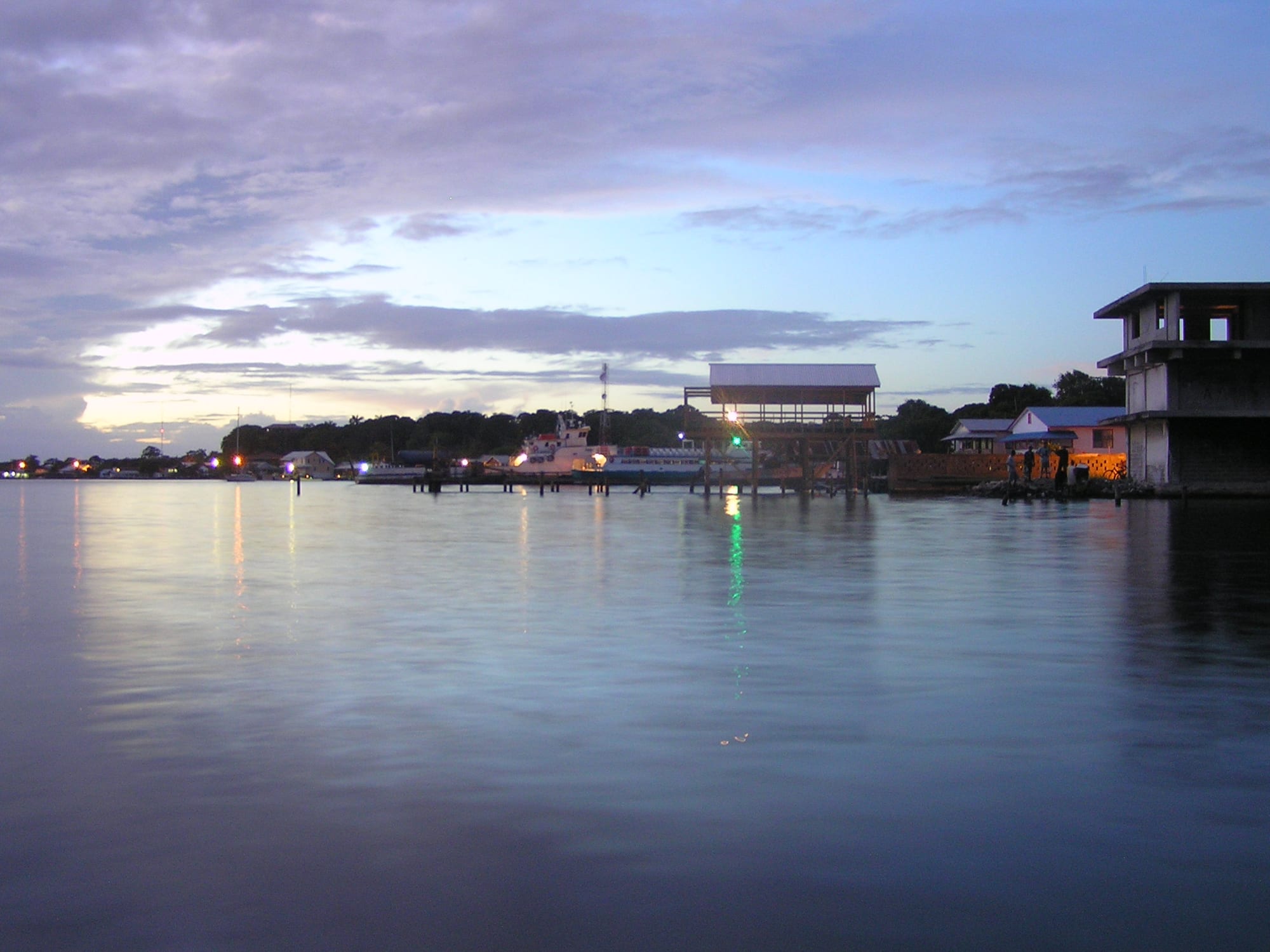
Calm harbour water at dusk with lit jetties, a moored ferry and low waterfront buildings under a purple sky

The Bay Islands & the Caribbean East, Honduras

Utila

Utila at dusk. (ogwen / Wikimedia Commons · CC BY-SA 3.0)

The smallest of Honduras's three main Bay Islands, about 36 km off La Ceiba at the southern end of the Mesoamerican Barrier Reef. Once a haunt of buccaneers and later settled from the Cayman Islands, it is now an English-speaking island of one small harbour town, known for its many dive schools, inexpensive courses and backpacker nightlife.

Neighbourhoods

  • Utila Town (East Harbour)
    • First-time visitors
    • Diving
    • Nightlife

    The island's only town, strung along the harbour where the ferry docks. Dive shops, hostels, restaurants and bars line its narrow main road, tuk-tuks ply up and down it, and most dive shops reach the water and their boats from docks rather than a beach.

    Open in Maps
  • The Utila Cays
    • Quiet
    • Snorkelling
    • Island life

    A scatter of small cays off the western end of the island, several of them inhabited by a small community. Water Cay, Pigeon Cay and Sandy Cay are the best known, with white sand, palms and shallow water.

    Open in Maps
  • Pumpkin Hill and the east end
    • Walks
    • Viewpoints
    • Away from town

    The higher, volcanic eastern end of an otherwise low, mangrove-covered island, topped by Pumpkin Hill. A small beach at its foot, freshwater caves along the shore and the walk to the summit draw visitors out of town.

    Open in Maps

Things to do

On and under the water

  • The reef and dive sitesattraction

    More than eighty dive sites surround the island on the southern end of the Mesoamerican Barrier Reef, known among divers for small reef creatures, rays and occasional whale sharks.

    Open in Maps
  • The Utila Caysattraction

    Small cays off the west of the island, a short boat ride from town, with snorkelling in clear, shallow water.

    Open in Maps
  • The canal and mangrove channelattraction

    A canal cuts the island in two, and kayakers paddle through it and along a mangrove channel to the north shore.

    Open in Maps

Walks and viewpoints

  • Pumpkin Hillviewpoint

    The highest point on the island, a 74-metre volcanic cone at the eastern end, with wide views over the reef and the mangroves.

    Open in Maps
  • Freshwater caves of the east shoreattraction

    Caves along the eastern shore where visitors swim and explore; people have become lost and died deep inside, so going far in without a guide is unwise.

    Open in Maps
  • Kanahau museummuseum

    A small museum on Mamy Lane in town run by a research and conservation group, with natural history and local cultural and historical objects; the group also leads walks to see the island's iguanas.

    Open in Maps

Getting around

  • Útila Airporttransit hub

    The island's airstrip, about 1.6 km north-east of town, with daily scheduled flights from the mainland and Roatán.

    Open in Maps

Short trips from the island

  • Roatánattraction

    The largest and busiest Bay Island, with its own reef, beaches and dive villages, reached by occasional small boats or by air.

    Open in Maps
  • La Ceibaattraction

    The mainland port city where the Utila ferry docks, and the gateway to the Río Cangrejal and the mountains of Pico Bonito.

    Open in Maps

Eat and drink

Long-standing places and food districts in Utila. Hours, ratings and directions come from your maps app, always current.

Utila classics

  • Island seafood and coconut breadneighborhood

    Restaurants along the main road serve conch, crab and fried whole fish, and bakeries sell the island's white bread made with coconut milk.

    Open in Maps
  • Baleada standsneighborhood

    Street vendors all over town sell baleadas, folded flour tortillas filled with refried beans, cheese and cream.

    Open in Maps

Cafés and bars

  • Harbour barsneighborhood

    Bars on docks and over the water along the harbour, popular at sunset and busy late into the night, especially in high season.

    Open in Maps

Experience Utila

History

Before Europeans arrived, the Bay Islands were home to a people the Spanish called the Paya, now known as the Pech. Columbus reached neighbouring Guanaja on his fourth voyage in 1502, and slave raids followed: in 1516, ships sent under the authority of Diego Velázquez de Cuéllar captured Paya on the islands, and a second expedition seized 400 people from Utila and one of the other islands, killing about 100. Over the following century the islands' original people were wiped out by enslavement.

The empty islands became a refuge for buccaneers. Britain occupied the Bay Islands on and off between 1550 and 1700, and pirates used them for food, timber and safe harbour; divers still search Utila's waters for treasure said to come from Henry Morgan's raid on Panama in 1671. In 1797 the British deported more than two thousand Garífuna to the Honduran coast and the Bay Islands, where their descendants keep their own language and identity.

Britain handed the islands to Honduras in the mid-19th century. By then settlers from the Cayman Islands were moving to the nearly uninhabited islands, and Utila still carries their culture and dialect. For a long time it was a closed community devoted to fishing. Over the decades since, tourism and diving have made it one of the most cosmopolitan places in Honduras, and since 2013 the whole island and its cays have been protected as a Ramsar wetland of international importance.

Culture & Customs

Utila's people are of English, Dutch and Afro-Indigenous Garífuna descent, and the Caymanian settlers of the 19th century left a lasting mark: the island remains rich in Caymanian culture and dialect, and islanders speak an English creole close to Jamaica's. Islanders regard Utila as the most traditional and conservative of the Bay Islands, even though it is now also the most international, with dive instructors and travellers from all over the world living alongside old island families.

Diving is the island's culture as much as its economy. Utila is said to certify more new divers than anywhere else in the Caribbean, its dozen or so dive schools teach in many languages, and evening talk in the bars runs to reef creatures and whale-shark stories. A strong nightlife follows, with an unofficial rota among the bars over where everyone goes each night. Utila was also the home of Sunjam, the largest electronic music event in Honduras, which was held each year in early August.

Pirate lore is part of local identity, with tales of buried treasure still told. The island's nature is a point of pride too: the mangroves are the only home of the critically endangered Utila spiny-tailed iguana, and a local conservation group runs walks and a small museum devoted to the island's wildlife and history.

Daily Life

At the 2013 census Utila municipality had 3,947 people. Most residents identified as mestizo, with smaller white and Afro-Honduran minorities. Most live in the single town, East Harbour, with a small community on the inhabited western cays. The island is about 11 km long and 4 km across at its widest, and most of it is low mangrove swamp, with a few small volcanic hills at the eastern end.

Tourism, fishing and trade are the main livelihoods. Dive shops, hostels, restaurants and bars employ much of the town. Days revolve around the dive boats leaving the docks and end late in the bars along the water.

Practical life is shaped by being an island. The post office sits at the ferry dock, the ferry and small planes bring in supplies and visitors from the mainland, and cars share the narrow roads with scooters, bicycles and tuk-tuks. Sand flies at dawn and dusk are a constant complaint.

Food

Utila's cooking is Caribbean island food built on the sea and on coconut. The local white bread is made with coconut milk and often eaten with mango jam. Conch and crab are favourite catches, and sopa de caracol, a conch soup cooked in coconut milk, is one of the most representative dishes of Honduran cuisine. Fried whole fish and fried hog are everyday plates.

The mainland's staple has made the crossing too: baleadas, warm flour tortillas folded over refried beans, crumbled cheese and cream, are sold by street vendors all over town and are the cheapest meal on the island. Restaurants along the main road serve an international mix for divers and travellers alongside seafood. In the coastal areas and the Bay Islands, seafood and some meats are prepared in many ways, including with coconut milk.

Drinks follow the island's nightlife. Honduran beer is standard in the harbour bars, and guifiti, a rum-based bitters made by soaking roots and herbs in rum, can be found in a few of them.

Planning tools

Budget

Utila has long been one of the cheapest places in the Caribbean to learn to dive, and its reputation as a backpacker island rests on that. Dive courses often include a basic dorm bed for their duration. Renting scooters, motorbikes or ATVs is relatively expensive.

Daily Budget Midrange
USD 100–200 (guesthouse or small hotel, restaurant meals, two dives a day)
Daily Budget Shoestring
USD 35–55 (hostel or dive-school dorm, baleadas and street food, tuk-tuks; dive course extra)

Visit several dive shops before choosing a course; their prices are similar, and many offer a free night in the dorm to those who come to look.

Best Time to Visit

The island has a dry season from February to September and a rainy season from October to January, with November the wettest month. Diving is possible all year. Whale sharks are occasional visitors, so sightings can never be promised. The hurricane season runs from June to November.

Suggested Number of Days

Three or four days allow a few fun dives and a look around the island. A full open-water course needs several days on its own, and many divers stay a week or two to take further courses.

First Visit
3–4 days
With Surroundings
1–2 weeks

Transportation

The town is small and easily walked. Tuk-tuks wait on the main road for short rides anywhere on the island, and bicycles, scooters, motorbikes and ATVs can be rented in town. Boats take snorkellers and divers to the cays and the reef, and kayaks can be rented to paddle the canal.

Roads are narrow and some drivers go fast, so walkers should not count on being given the right of way.

Airport & Station Connections

A passenger ferry links Utila with La Ceiba, about 36 km away on the mainland, in about an hour. Útila Airport, about 1.6 km north-east of town, has daily flights on small Honduran airlines from San Pedro Sula and Roatán. Small boats occasionally cross to Roatán.

Walkability

Everything in town lies along one main road and a few lanes, and it is easy to cover on foot. Reaching Pumpkin Hill, the east-end caves or the north shore takes a long walk, a bicycle or a tuk-tuk; the cays need a boat.

Safety

Honduras has had one of the highest homicide rates in the world, driven by gangs (MS-13 and Barrio 18) and drug trafficking, and San Pedro Sula and parts of Tegucigalpa remain dangerous. The Bay Islands are the safest part of Honduras, and Utila has very little violence. The usual problems are late-night snatch thefts from people who have been drinking, occasional break-ins at unlocked rooms, cloned bank cards from island ATMs, and sand flies, which bite worst at dawn and dusk.

Lock rooms, carry little at night, withdraw cash inside a bank with a passport rather than at an outdoor ATM, choose a reputable dive operator, and bring insect repellent or oil. Check current official travel advice before travelling.

Climate

Tropical, with two seasons: dry from February to September and rainy from October to January. For the Bay Islands region as a whole, temperatures stay at around 27–31°C all year, and hurricanes are a risk from June to November.

Summer
hot and humid across the region, about 28–33°C, with sea breezes and the start of the hurricane season in June
Winter
warm across the region, about 24–30°C, with the island's rainy season from October to January and November the wettest month

Local Customs

English is spoken almost everywhere, and older islanders speak an English creole close to that of Jamaica; Spanish is the official language. Utila is known as the most traditional and conservative of the Bay Islands, even after decades of dive tourism.

Keep swimwear for the docks, boats and beaches rather than town, ask before photographing people, and respect the reef: touching coral or standing on it damages it.

Common Payment Methods

The currency is the Honduran lempira, and US dollars are widely accepted on the Bay Islands, where many dive prices are quoted in dollars. Cards are taken by dive shops and many businesses, but small places and tuk-tuks need cash. Card cloning at island ATMs has been a problem, so many visitors withdraw money at a bank counter instead.