💰 Budget
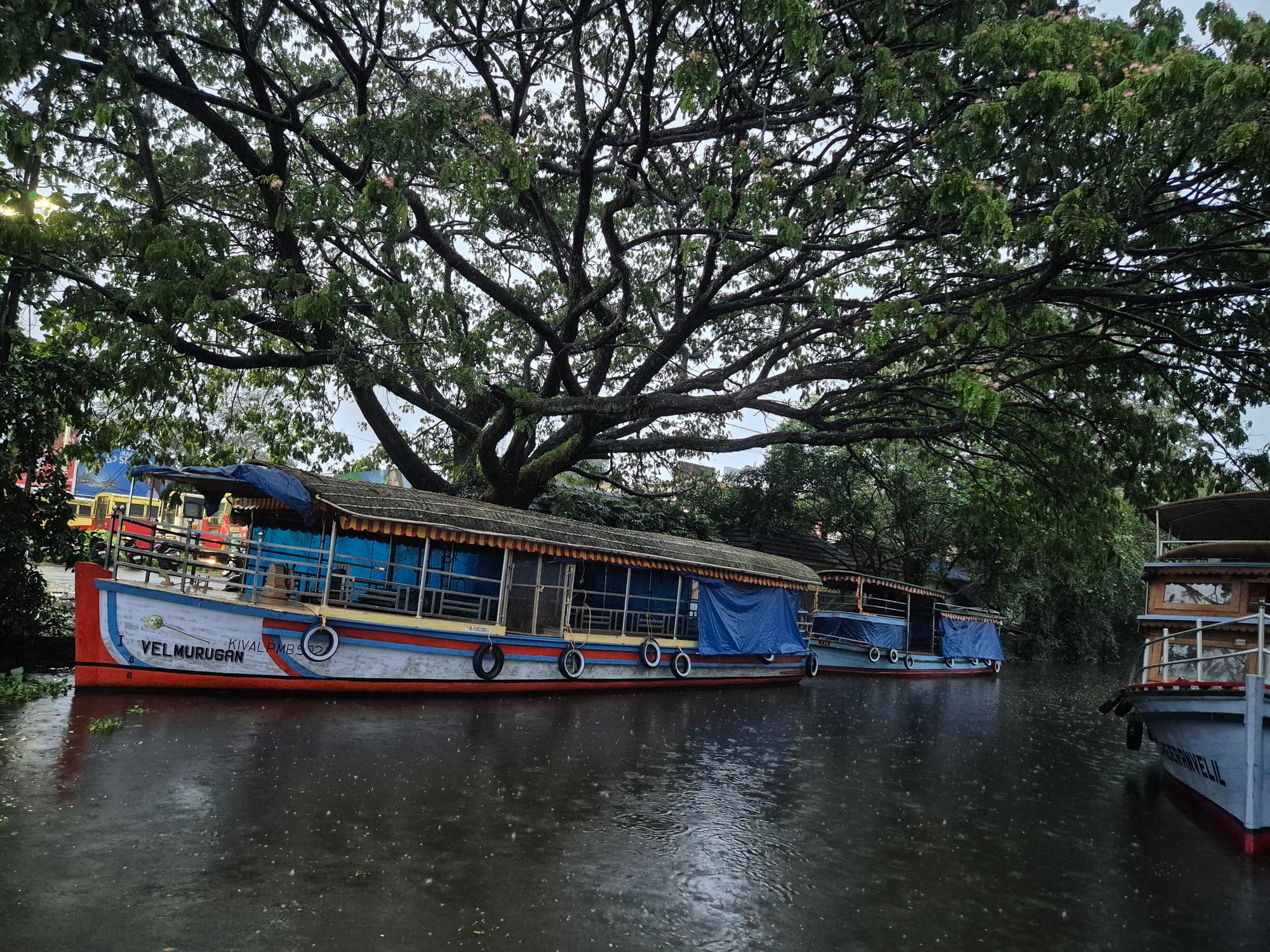
The town itself is cheap: homestays and small hotels cost little, meals in local restaurants less, and ferries and buses almost nothing. The houseboat is the expense that defines most budgets, priced per boat for a night afloat with crew and meals, and it rises sharply at Christmas, New Year and Onam. A shared day cruise or the public ferry gives much of the same landscape for a fraction of the cost.
- Daily Budget Midrange
- USD 50–130 (homestay or resort room, restaurant meals, a shared day cruise, or a share of a houseboat night)
- Daily Budget Shoestring
- USD 15–30 (homestay or hostel bed, local restaurant meals, public ferries and buses)
Houseboat rates fall outside the December to February peak, and the state-run ferry to Kottayam covers the same canals for a few rupees.
📅 Best Time to Visit
November to February is the driest and most comfortable season, and also the busiest and most expensive for houseboats. August and September bring Onam and the snake-boat races, with green paddy fields and a high risk of rain. June and July are the height of the southwest monsoon, when downpours are heavy and flooding is possible in low-lying Kuttanad.
⏳ Suggested Number of Days
Two days are enough for the town, the beach and time on the water. Three or four allow a night afloat, a stay by the sea and time in the surrounding villages. Longer stays suit those who come for the backwaters rather than for sights.
- First Visit
- 2 days
- With Surroundings
- 3–4 days
🚆 Transportation
The centre is small enough to walk or cycle, and auto-rickshaws cover it cheaply. Water is the other network: state ferries link the town with backwater villages and Kottayam, houseboats and smaller shikara boats are hired at the jetties, and canoes reach the narrow canals that larger boats cannot enter. Buses run along the coast road to Kochi and Kollam.
Book a houseboat through a licensed operator or a hotel rather than at the jetty, and take a smaller canoe or shikara if the narrow village canals are the point of the trip.
🛬 Airport & Station Connections
Alappuzha railway station sits on the coastal line with trains from Ernakulam, Thiruvananthapuram and beyond, and the bus stand has frequent services along the coast. Cochin International Airport at Nedumbassery is about 80 kilometres north, roughly two to three hours by road. Long-distance ferries also connect the town with Kottayam and, in season, with Kollam on a full-day cruise.
🚶 Walkability
The town centre, the canals and the beach are flat and walkable, and a stroll along the canal banks and over the small bridges is the best way to see how the place is put together. Pavements are patchy and traffic on the main roads is heavy, and the heat and humidity limit how far most people want to walk between mid-morning and late afternoon.
🛡️ Safety
Alappuzha is a quiet town with little crime affecting visitors. The main risks are on the water and the road: the sea off the beach has strong currents and is not safe for swimming, canal banks are unfenced, and heavy monsoon rain floods low-lying Kuttanad. Mosquitoes are numerous around the backwaters, and dengue and chikungunya occur in Kerala.
Do not swim off the town beach, check that a houseboat carries life jackets, and use repellent and cover up at dusk near the water. Check current official travel advice before travelling.
🌦️ Climate
Tropical, humid and warm throughout the year, with little variation in temperature and a great deal of rain. The southwest monsoon from June to September is the wettest period, and the northeast monsoon brings further rain in October and November.
- Summer
- hot and very humid, around 31–33°C by day from March to May, with sea breezes in the afternoon
- Winter
- warm and drier, around 30–32°C by day and 22–24°C at night from December to February
🤝 Local Customs
Malayalam is the language, and Kerala's mix of Hindu, Christian and Muslim communities is strongly present in the town and the surrounding villages. Dress is modest, particularly at temples, some of which admit only Hindus and ask men to remove their shirts. Shoes come off at temples and in homes, and the sadya feast is eaten with the right hand from a banana leaf.
Cover shoulders and knees away from the beach, ask before photographing inside houses or at toddy shops, and note that Kerala restricts alcohol sales to licensed outlets and bars.
💳 Common Payment Methods
The currency is the Indian rupee. UPI QR-code payment is widely accepted, including by small shops and rickshaws, and cards work in hotels, resorts and larger restaurants. Cash is needed for ferries, toddy shops, markets and village stalls, and ATMs are concentrated in the town centre rather than in the backwater villages.