💰 Budget
Madurai is inexpensive even by Indian standards. Lodges around the temple and the bus stand are cheap, mess halls serve unlimited rice meals for a few rupees, and the temple and most other sights charge little or nothing beyond a camera fee. The main costs are an air-conditioned hotel room in the hot months and a hired car for the hills and outlying temples.
- Daily Budget Midrange
- USD 45–110 (mid-range or heritage hotel, restaurant meals, a car with driver for a day)
- Daily Budget Shoestring
- USD 12–28 (pilgrim lodge or hostel bed, mess meals, buses and auto-rickshaws)
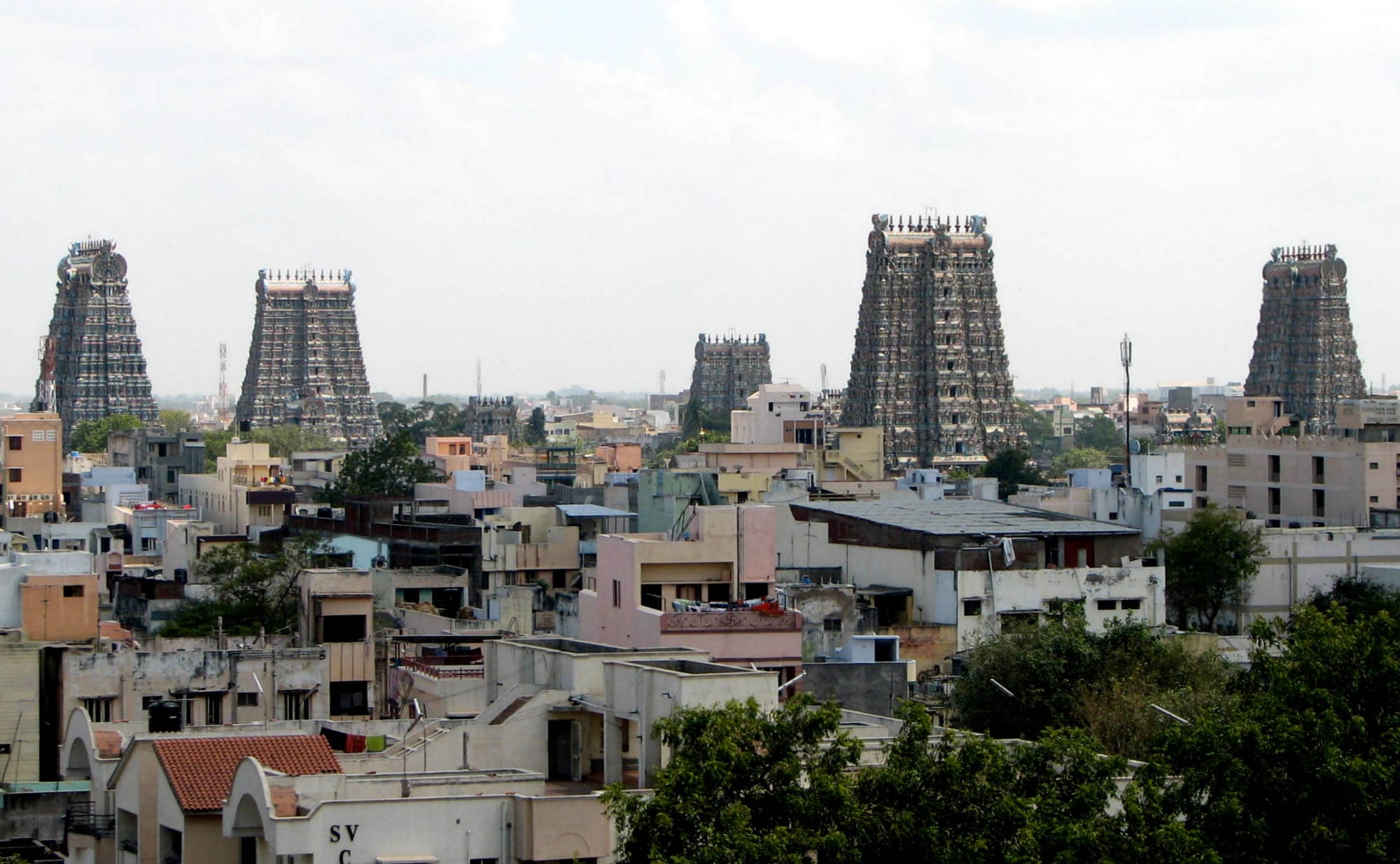
Rooms overlooking the temple towers cost more than their comfort warrants; several hotels have rooftop terraces with the same view open to diners.
📅 Best Time to Visit
November to February is the coolest and driest stretch and the easiest for walking the old city. April and May bring the Chithirai festival and also the worst of the heat, with temperatures often near 40°C. Rain comes mainly with the northeast monsoon between October and December, usually in short heavy bursts rather than all-day downpours.
⏳ Suggested Number of Days
The old city and its main monuments fit into a day or two, with early mornings and evenings the comfortable hours. Three or four days allow the outlying hill temples and a trip towards the Palani hills. Festival periods need more time, as crowds slow everything.
- First Visit
- 1–2 days
- With Surroundings
- 3–4 days
🚆 Transportation
The old city is compact enough to walk, and auto-rickshaws and ride-hailing apps cover the rest cheaply. City and state buses run from the Periyar stand in the centre and the larger Mattuthavani terminus in the north-east, which handles long-distance services. Hired cars with drivers are the usual way to reach the hill temples and Kodaikanal.
Agree an auto-rickshaw fare or use a meter before setting off, and expect drivers near the temple to suggest shops and emporiums — a polite refusal is enough.
🛬 Airport & Station Connections
Madurai International Airport lies about 12 kilometres south of the centre, with domestic flights to several Indian cities and a small number of international services. Madurai Junction is a major railway station with overnight trains from Chennai — roughly eight to ten hours — and services from Bengaluru, Kerala and the far south. Buses reach Mattuthavani terminus from across Tamil Nadu.
🚶 Walkability
The temple quarter is one of the most walkable historic centres in south India: the concentric streets are easy to follow and everything of interest lies within a kilometre or so of the temple. Pavements are crowded with stalls and traffic is dense, and the midday heat makes early morning and after dark the practical times to walk. Shoes must be left outside the temple gates.
🛡️ Safety
Madurai is a calm, conservative city and violent crime affecting visitors is rare. The everyday risks are traffic, pickpocketing in festival crowds and around the bus stands, and heat in April and May. Pressure from touts and commission-seeking rickshaw drivers is common near the temple. Festival crowds can be very large and slow-moving.
Keep valuables secure in temple crowds, drink plenty of water and avoid the middle of the day in the hot season, and buy tickets and guides through official counters. Check current official travel advice before travelling.
🌦️ Climate
Hot and mostly dry, in an inland plain sheltered from the southwest monsoon by the Western Ghats. The city is hottest from March to June and receives most of its rain from October to December, with occasional showers in the earlier monsoon months.
- Summer
- very hot, often 36–40°C by day from March to June, with dry heat and warm nights
- Winter
- warm and pleasant, around 29–31°C by day and about 20°C at night from December to February
🤝 Local Customs
This is a temple city and dress and behaviour matter. Shoulders and knees should be covered at shrines, shoes are left at the gates, and some inner sanctums admit only Hindus. Photography is restricted inside the Meenakshi temple. Jasmine, grown around the city and sold by the length, is worn in the hair by women and offered at shrines. Tamil is the language of daily life, with English understood in hotels and by guides.
Remove footwear well before the temple entrance, ask before photographing worship or processions, and expect alcohol to be sold only in state-licensed shops and hotel bars.
💳 Common Payment Methods
The currency is the Indian rupee. UPI QR codes are accepted by most shops, stalls and drivers, and cards work in hotels and larger restaurants. Cash remains useful for mess halls, temple offerings, flower sellers and rickshaws, and ATMs are common in the centre.