💰 Budget
Hampi is one of the cheaper places to stay in south India. Village guesthouses and north-bank huts cost very little, cafe meals are modest, and bicycles or a moped cover the site for a few rupees. The main expenses are the combined ticket for the Vittala temple and the royal enclosure, a guide, and an auto-rickshaw hired for a day to reach the outlying monuments.
- Daily Budget Midrange
- USD 40–100 (resort or hotel in Hosapete or Kamalapura, restaurant meals, a car or rickshaw with driver, site tickets and a guide)
- Daily Budget Shoestring
- USD 12–25 (guesthouse room or hut, cafe meals, a hired bicycle, local buses)
One ticket covers the Vittala temple and the royal enclosure group on the same day, so it is worth seeing them together; hiring a bicycle costs a fraction of a rickshaw.
📅 Best Time to Visit
November to February is the season, with warm days, cool mornings and clear light on the granite. March onwards becomes uncomfortably hot, reaching the high 30s and beyond by April and May, when walking the site in the middle of the day is unwise. Rain falls mainly between June and October, greening the fields but making the rocks slippery.
⏳ Suggested Number of Days
Two days cover the sacred centre and the royal enclosures at a reasonable pace. Three or four allow the north bank, the outlying temples and time to sit on the hills at dawn and dusk. Heat is the real limit on how much can be seen in a day.
- First Visit
- 2 days
- With Surroundings
- 3–4 days
🚆 Transportation
The ruins are spread across a large area, so nobody sees them all on foot. Bicycles, hired mopeds, auto-rickshaws taken for a half or full day and, on the north bank, walking are the usual means. A boat crosses the Tungabhadra between the village and Virupapur Gaddi; by road the two banks are a long way apart. Buses run frequently between Hosapete, Kamalapura and Hampi.
Rickshaw drivers offer fixed-price tours of the main monuments; agree the list of stops and the price before starting.
🛬 Airport & Station Connections
Hosapete Junction, about 13 kilometres away, is the nearest railway station, with overnight trains from Bengaluru and services from Goa, Hubballi and Ballari; buses and rickshaws complete the journey. Overnight buses run from Bengaluru, Goa and Hyderabad. The nearest airports are at Vidyanagar near Ballari and at Hubballi, with Bengaluru the main long-haul gateway.
🚶 Walkability
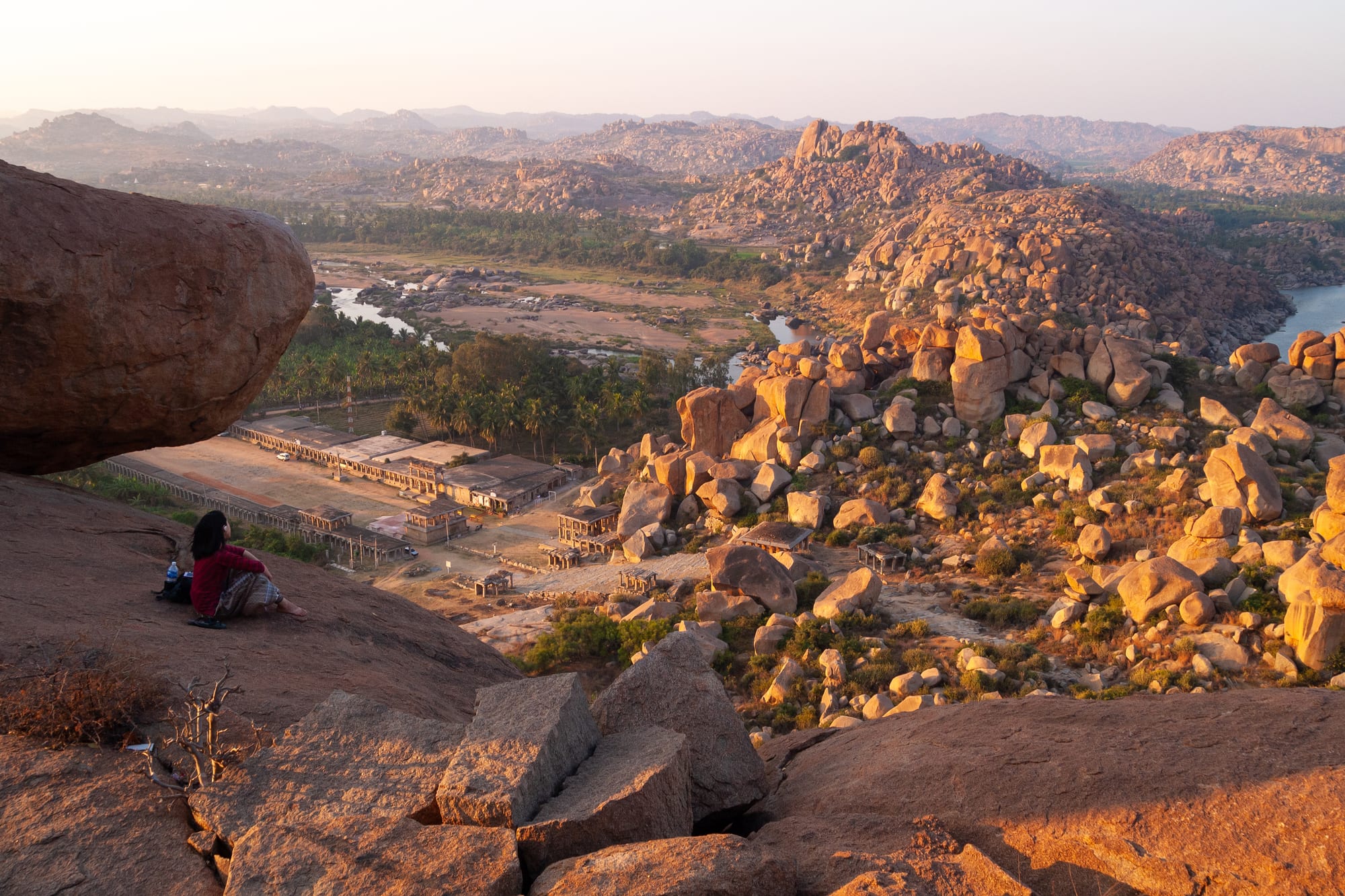
The village itself is tiny and walked in minutes, and the sacred centre from Virupaksha along the bazaar to Matanga Hill and the riverside path is a fine walk of a few kilometres. The royal enclosures lie a couple of kilometres further south, and the Vittala temple is beyond the riverside path, so most visitors combine walking with a bicycle or rickshaw. Paths cross bare rock and there is very little shade.
🛡️ Safety
Hampi is a calm place and serious crime is rare, but the site is large, lightly lit and empty after dark, and solitary walks among the boulders at night are not advised. Heat and dehydration are the commonest problems, along with slips on smooth granite. Monkeys around the temples snatch food and bags. The river has strong currents and swimming in it is dangerous.
Carry water and start early, do not swim in the Tungabhadra, keep food out of sight near the temples, and avoid walking alone among the ruins after dark. Check current official travel advice before travelling.
🌦️ Climate
A hot, dry inland climate in the rain shadow of the Western Ghats. The bare granite radiates heat through the afternoon, and the site offers almost no shade. Rain comes with the southwest monsoon between June and October, less heavily than on the coast.
- Summer
- very hot and dry, commonly 35–40°C from March to May, with the rock uncomfortably hot underfoot
- Winter
- warm days around 28–30°C and cool mornings near 16–18°C from November to February
🤝 Local Customs
The village around the Virupaksha temple is a place of worship as well as a monument. Shoes are removed before entering temples, modest dress is expected, and the sacred zone is vegetarian, with alcohol not sold. Kannada is the local language and English is widely used with visitors. Climbing on carvings or sleeping in the monuments is prohibited, and the site is patrolled.
Cover shoulders and knees at the temples, do not climb on sculpture or structures, and ask before photographing people at worship or bathing in the river.
💳 Common Payment Methods
The currency is the Indian rupee. UPI QR codes are accepted by most guesthouses, cafes and even rickshaw drivers, and site tickets can be bought online or at the gates. Cash is still needed for small purchases, boats and stalls; ATMs are more reliable in Hosapete and Kamalapura than in the village.