💰 Budget
Alghero is cheaper than the Costa Smeralda but busy and pricier in July and August, when most flights operate. Seafood, and lobster above all, is the main restaurant expense. Boat trips to Neptune's Grotto and a hire car for the coast add to the bill.
- Daily Budget Midrange
- USD 140–290 (hotel in or near the old town, seafood dinners, a boat trip or hire car)
- Daily Budget Shoestring
- USD 65–100 (B&B or campsite, pizza and bakery meals, buses)
Visit in May, June or September for lower prices, and avoid restaurants advertising a 'menu turistico'.
📅 Best Time to Visit
May, June and September are the best months for swimming, diving and walking, without the August crowds. July and August are warm, busy and lively at night. Holy Week brings the town's great religious processions, and the sea-urchin festival falls in January and February, when the winter is mild but most flights are not running.
⏳ Suggested Number of Days
Two or three days cover the old town, the beach and a trip to Capo Caccia. Four or five allow time for the prehistoric sites, the coast road south and diving or boat trips. Sea and wind conditions affect boat excursions.
- First Visit
- 2–3 days
- With Surroundings
- 4–5 days
🚆 Transportation
The old town is a limited traffic zone with cameras, so most visitors walk. Regional buses leave from the hub in Via Catalogna for the airport, Sassari and the coast, and ARST trains run to Sassari in about 35 minutes from Sant'Agostino station, about fifteen minutes' walk from the centre, for connections to the rest of the island. A car is the easiest way to reach Capo Caccia, Porto Conte and the coast towards Bosa.
Do not drive into the old town's restricted zone: cameras fine hire cars too.
🛬 Airport & Station Connections
Alghero–Fertilia Airport, also called Riviera del Corallo, is about 8 kilometres north-north-west of the town; most of its routes are seasonal, and buses run hourly to the centre in about 20 minutes. Ferries from Genoa, Barcelona and Civitavecchia arrive at Porto Torres, about 30 kilometres to the north. Trains to the rest of Sardinia require a change in Sassari.
🚶 Walkability
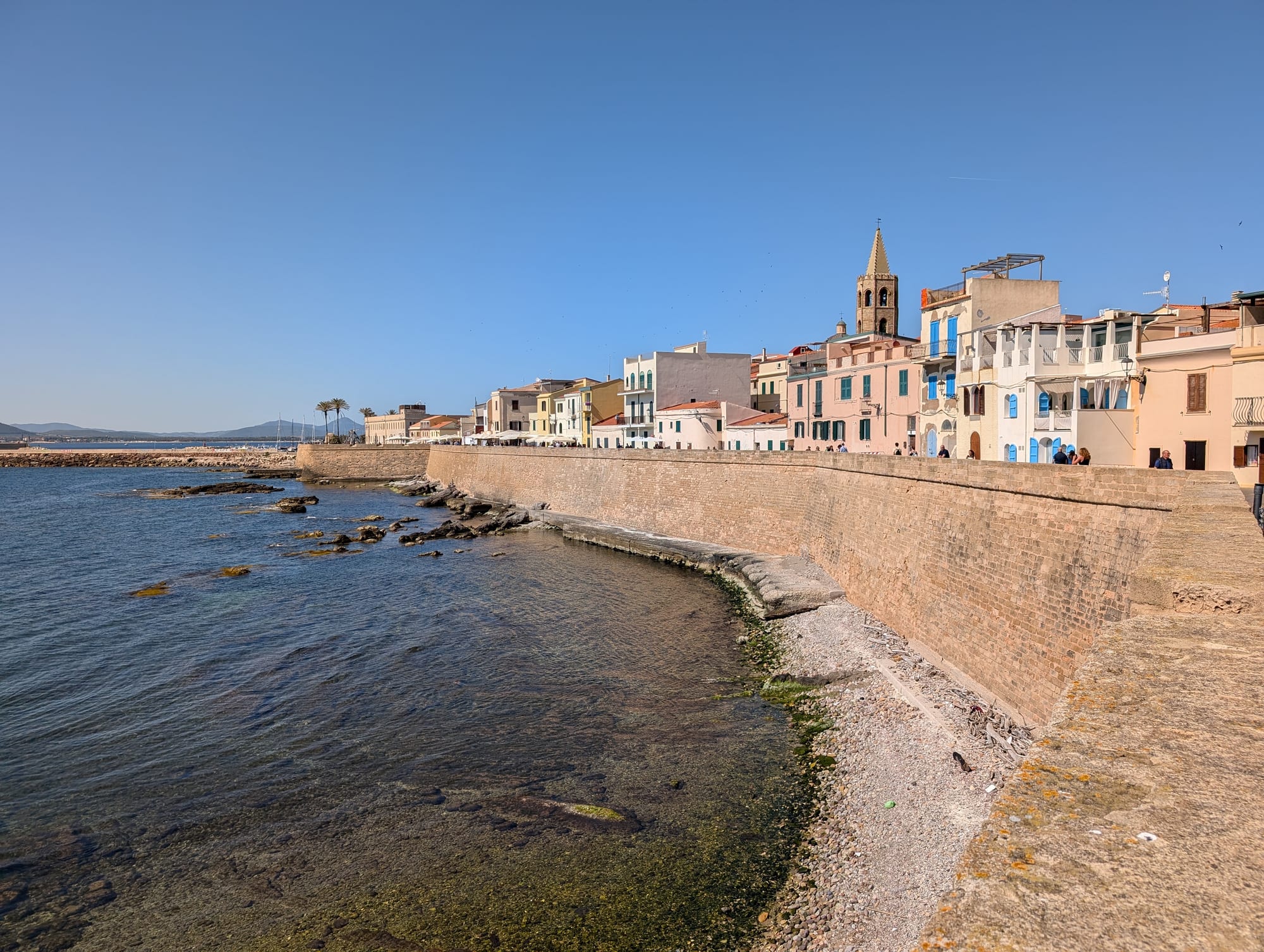
The old town is compact and largely closed to traffic, ideal on foot, and the bastions make a continuous seafront walk. The marina, the Lido beach and the seafront promenades are within walking distance, but Capo Caccia, Neptune's Grotto and the nuraghi need a car, bus or boat.
🛡️ Safety
Italy is generally safe, with low levels of violent crime against visitors. Alghero is a calm resort town. The main risks are natural: strong north-westerly winds and rough seas, rip currents on exposed beaches, summer heat and wildfires.
Check wind and sea conditions before swimming or taking a boat, carry water on coastal walks, and follow fire bans. Check current official travel advice before travelling.
🌦️ Climate
A mild Mediterranean climate tempered by the sea, which keeps summer temperatures in check. Summers are warm and dry, and winters are mild, with frost on only a few days a year. The mistral from the north-west can blow hard and whip up the sea.
- Summer
- warm and dry — at the Fertilia weather station near the airport August averages about 24°C, with around 40 days a year reaching 30°C or more
- Winter
- mild — January averages about 10°C at Fertilia, and the temperature drops below 0°C on only about five days a year
🤝 Local Customs
Algherese Catalan has official recognition, and street signs in the old town carry Catalan names that recall local tradition; a word of Catalan is warmly received. Holy Week is taken very seriously. Red coral is the town's emblem, though coral jewellery comes from living wild reefs. Churches expect covered shoulders and knees.
Service is usually included in the bill, and rounding up is enough. Coffee is cheapest standing at the bar.
💳 Common Payment Methods
The currency is the euro. Cards and contactless payment are widely accepted in hotels, restaurants and shops; carry some cash for small bars, bakeries and the bus ticket machines. ATMs are found in the old town and along the seafront.