💰 Budget
Bosa is far cheaper than the north-east coast: rooms are mostly in B&Bs and small guesthouses in the old town and at Bosa Marina, and trattoria meals are good value. Prices rise in July and August, and a hire car is the main extra cost for anyone exploring the coast and the interior.
- Daily Budget Midrange
- USD 140–280 (B&B or small hotel, restaurant dinners, a hire car, museum entries)
- Daily Budget Shoestring
- USD 65–100 (B&B or campsite, bakery and trattoria meals, buses)
Visit in June or September for warm sea and quieter streets; walking the old town and the river costs nothing.
📅 Best Time to Visit
May, June and September suit both the beach and the steep lanes of the old town. July and August are hot and busy, with the Madonna del Mare procession in early August. Carnival, in February or March, and the September feast in Sa Costa show the town at its most traditional.
⏳ Suggested Number of Days
The old town, the river and the castle fit into a day or two. Allow three or four days to add the beaches, the wine country and the coastal road; having a car makes the difference, as buses are infrequent.
- First Visit
- 1–2 days
- With Surroundings
- 3–4 days
🚆 Transportation
The historic centre is small and best explored on foot. ARST buses link the centre with Bosa Marina, about 2.5 km away, and in season a tourist road train runs between the two. Beyond the town a car is the practical choice; ARST buses run to Alghero, Sassari, Oristano, Macomer and Nuoro.
Park on the edge of the old town; Sa Costa's lanes are steep, narrow and stepped.
🛬 Airport & Station Connections
The nearest airport is at Alghero, about 45 km north along a coastal road, and direct ARST buses link Bosa with Alghero and its airport. Olbia and Cagliari airports are reached by bus to Macomer, about 30 km east — roughly 50 minutes — and then by train.
🚶 Walkability
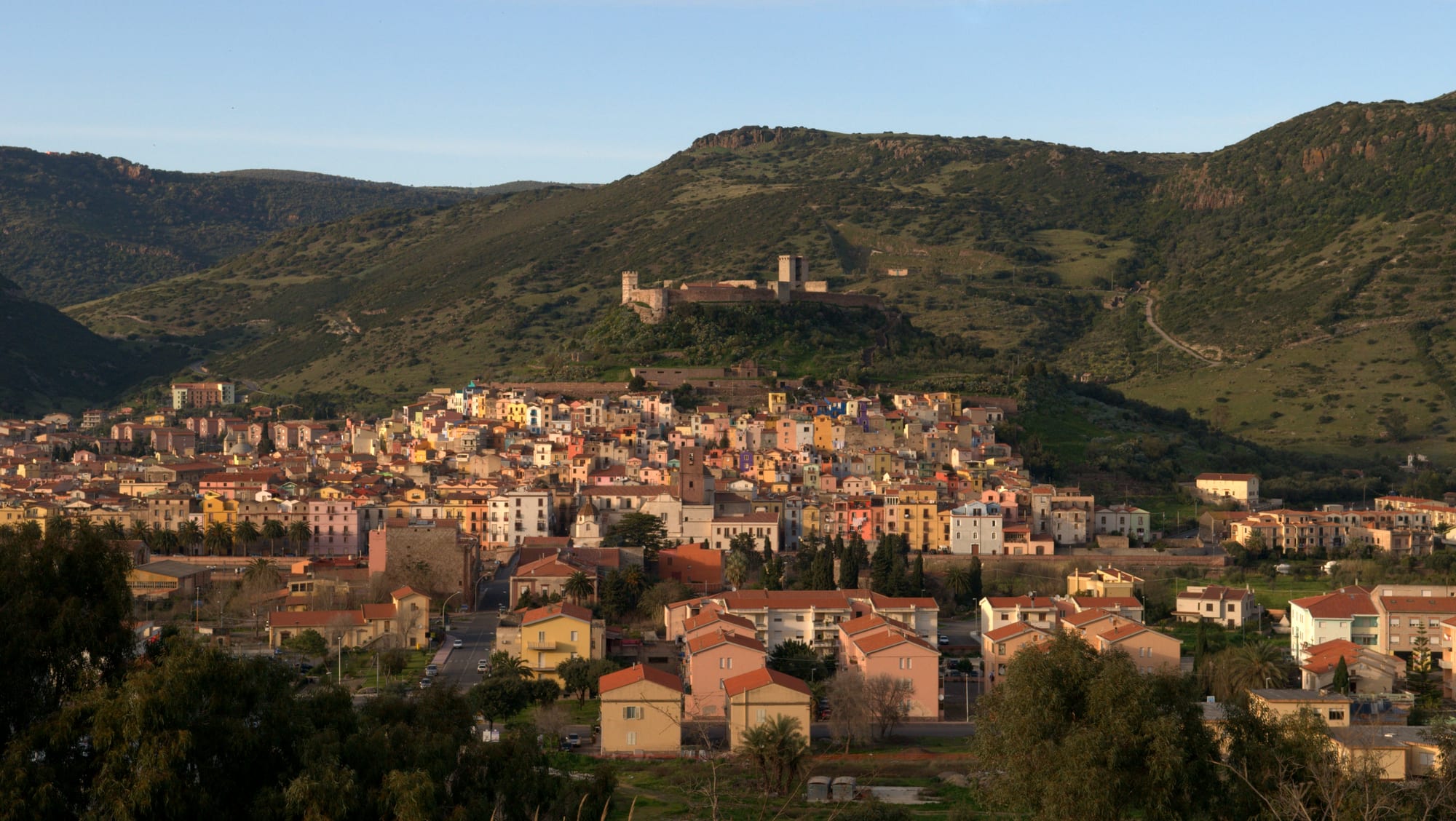
Very walkable: the Corso, the cathedral, the riverfront and the tanneries across the old bridge are all close together, and the river banks make easy level walks. The climb through Sa Costa to the castle is steep, on cobbles and steps, and hard work in summer heat. Bosa Marina is a longer walk or a short bus ride away.
🛡️ Safety
Italy is generally safe, with low levels of violent crime against visitors. Bosa is a quiet, friendly small town. The main risks are natural: summer heat on the climb to the castle, the north-westerly maestrale whipping up the sea, and the flooding to which the low-lying Temo valley has long been prone.
Check sea conditions before swimming when the maestrale blows, carry water on the climb to the castle, and follow local warnings after heavy rain. Check current official travel advice before travelling.
🌦️ Climate
A Mediterranean climate with mild winters and hot summers, when rain is scarce from May often into September. Measured at the Alghero-Fertilia station (1971–2000), frost occurs on about five days a year.
- Summer
- hot and dry — at Alghero's station August averages about 24°C, and around 40 days a year reach 30°C or more
- Winter
- mild — at Alghero's station January, the coldest month, averages about 10°C
🤝 Local Customs
Bosa is a working town rather than a resort, and its people are known for being relaxed and welcoming. Filet lace, worked on a netted ground, is a symbol of local identity, once made by women sitting out in the lanes of the old town and still displayed in churches and homes. Religious feasts, with processions on the river and in Sa Costa, remain community events.
Dress modestly in churches, ask before photographing people at processions, and keep noise down in the residential lanes of Sa Costa at night.
💳 Common Payment Methods
The currency is the euro. Cards are accepted in most shops, restaurants and B&Bs, but smaller bars, bakeries and market stalls may prefer cash, and ATMs are found in the centre of town.