💰 Budget
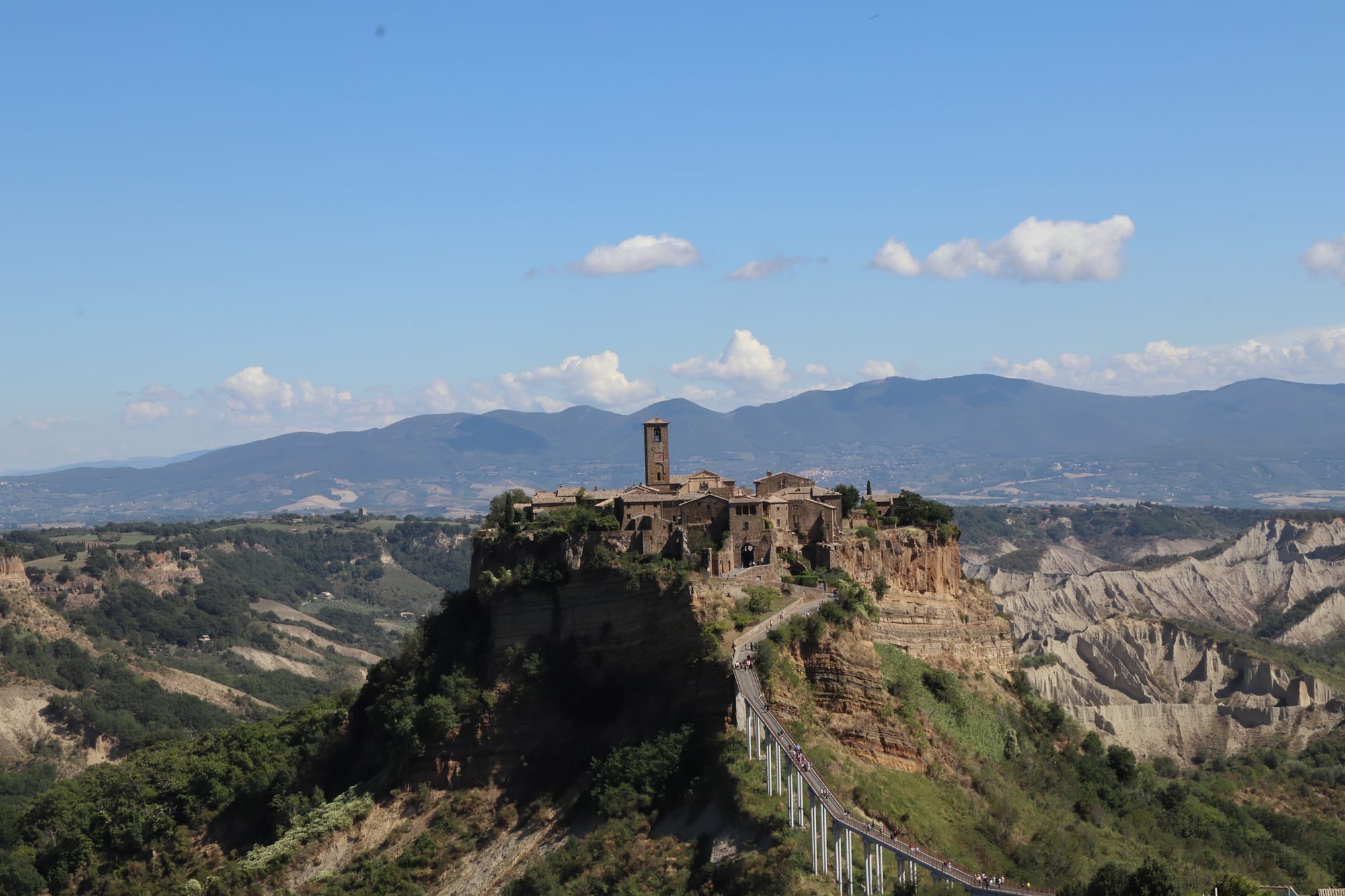
A visit costs little beyond the toll charged to cross the bridge, introduced in 2013, parking in Bagnoregio and a meal. Rooms in Civita itself are few, and most visitors stay in Bagnoregio, Orvieto, Viterbo or the towns of Lake Bolsena, where prices are well below Rome's.
- Daily Budget Midrange
- USD 130–250 (B&B or village room, restaurant dinners, a hire car)
- Daily Budget Shoestring
- USD 60–110 (B&B in Bagnoregio, trattoria meals, Cotral buses)
Come early or late in the day to see the village quietly, and bring cash for parking and small purchases.
📅 Best Time to Visit
Spring and autumn give mild weather for the climb and clear views over the badlands. Summer is hot on the exposed bridge and brings the most visitors, along with the jazz festival. Winter is cold and damp but empty, and the June and September palio days are the liveliest.
⏳ Suggested Number of Days
Most people see the village in a few hours. Staying a night lets visitors see it before the day crowds arrive and after they leave; two or three days allow time for the lakes and towns of the surrounding Tuscia.
- First Visit
- Half a day to 1 day
- With Surroundings
- 2–3 days
🚆 Transportation
Civita can be entered only on foot. Cars stop in Bagnoregio, either at the edge of town or near the foot of the bridge, and a small shuttle bus runs between the town and the bridge; the walk takes about 20 minutes. Residents and workers may cross the bridge on bikes and motorcycles at set times. A car is the easy way to reach the surrounding area.
Wear shoes with grip: the bridge is steep, especially at the top, and the village streets are paved with worn stone.
🛬 Airport & Station Connections
Bagnoregio lies about 28 km north of Viterbo, and Civita about 120 km north of Rome. Cotral buses run to Bagnoregio from Orvieto, leaving from Piazza Cahen at the top of Orvieto's funicular. Drivers from Orvieto take the motorway and follow signs for Lubriano and Bagnoregio.
🚶 Walkability
Entirely pedestrian once across the bridge, and the village is small enough to walk end to end in minutes. The climb up the bridge is the only real effort and is hard for people with limited mobility; there is no step-free alternative.
🛡️ Safety
Italy is generally safe, with low levels of violent crime against visitors. Crime is not a concern in Civita; the hazards are the steep climb in summer heat and the unstable cliffs, which continue to erode and occasionally collapse.
Carry water in summer, keep to marked paths and away from cliff edges and fenced-off areas, and allow for the climb back up the bridge. Check current official travel advice before travelling.
🌦️ Climate
The village sits in the hills of northern Lazio, which are a few degrees cooler than Rome. In nearby Viterbo the climate is Mediterranean with hot summers, an annual average of 14.5°C, and most rain in autumn and winter.
- Summer
- warm to hot — in nearby Viterbo, August averages 24.4°C and July is the driest month
- Winter
- cool and damp — in nearby Viterbo, January averages 6.4°C and November is the wettest month
🤝 Local Customs
Civita is a home for its few residents as well as a sight: keep voices down in the lanes, do not enter private gardens or courtyards, and dress modestly in the church.
Tipping is not expected, though rounding up is welcome; ask before photographing residents.
💳 Common Payment Methods
The currency is the euro. Cards are accepted in many restaurants and shops, but cash is useful for parking, the shuttle bus and small bars. Cash machines are in Bagnoregio rather than in the village.