💰 Budget
Palermo is good value by Italian standards. Street food and market stalls make eating cheap, B&Bs in the old quarters are plentiful, and city buses and trams cost little. The main extras are entry tickets to the palaces, churches and museums, which add up over several days.
- Daily Budget Midrange
- USD 140–270 (central hotel, restaurant dinners, site tickets, taxis or a tour)
- Daily Budget Shoestring
- USD 55–100 (hostel or B&B, street food and markets, buses)
Eat at the markets for lunch, walk the old town, and save on taxis with the airport train or bus.
📅 Best Time to Visit
April to June and September to October are the most comfortable months for walking the old town. July and August are hot, though the Festino fills the streets in mid-July and Mondello is at its liveliest. Winter is mild and changeable, with most of the rain, and the museums and churches are quiet.
⏳ Suggested Number of Days
Three or four days covers the old city at a steady pace. A week allows for the hill town above it, the beaches and a trip along the coast. The summer heat slows sightseeing in the afternoons, which can add a day.
- First Visit
- 3–4 days
- With Surroundings
- 5–7 days
🚆 Transportation
City buses run by AMAT cover about 90 routes, and many run along Via Roma; a free minibus loops through the historic centre. A tram network, opened in 2015, has four lines from the central and Notarbartolo stations to the outer districts, and a metropolitan railway serves the city and airport. Buses can be slow and crowded, and traffic is heavy. AST coaches link Palermo with the other cities of Sicily.
Bus 806 goes to Mondello; buy tickets before boarding, and avoid driving in the old town, where traffic and parking are difficult.
🛬 Airport & Station Connections
Falcone Borsellino Airport, named after the two anti-mafia judges, is at Cinisi, about 35 km west-north-west of the city. Trains run from the airport station to Palermo Centrale about every 30 minutes on working days, and shuttle buses take about 50 minutes. Trains link Centrale with Catania, Agrigento, Trapani and, across the Strait of Messina, the mainland. Ferries connect the port with Naples, Genoa, Livorno, Cagliari, Tunis and the island of Ustica.
🚶 Walkability
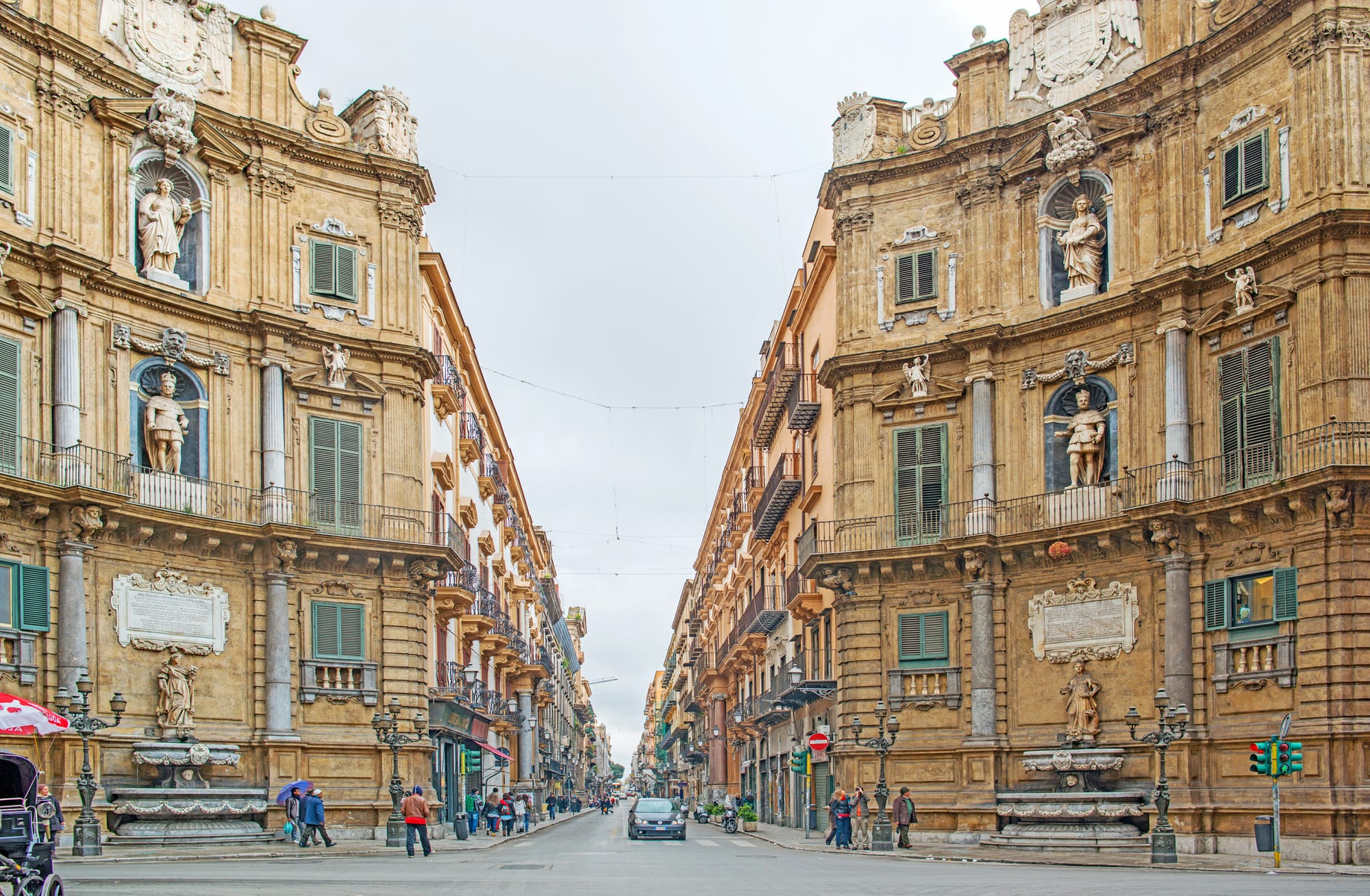
The historic centre is compact and best seen on foot: Via Maqueda and the Cassaro (Corso Vittorio Emanuele) cross at the Quattro Canti, and the cathedral, the palace, the markets and the Kalsa are all within walking distance. Pavements are narrow, scooters weave through the lanes and traffic is chaotic, so walking takes care; the new city to the north is more spread out.
🛡️ Safety
Italy is generally safe, with low levels of violent crime against visitors. The Mafia does not target tourists. The common problems are pickpockets on buses and in the markets and motorcycle-riding thieves who snatch bags and phones, and cars left with luggage in them may be broken into. Summer heat and wildfires on the surrounding hills are the natural risks.
Carry bags on the side away from the road, keep phones out of reach of passing scooters, and leave nothing in parked cars. Check current official travel advice before travelling.
🌦️ Climate
One of the warmest cities in Europe, mainly because of its warm nights, with an average yearly temperature of about 18°C and some 2,500 hours of sunshine. Summers are very long, hot and dry; winters are mild and changeable, with most of the year's rain. Snow is rare — only about a dozen times since 1945.
- Summer
- very long, hot and dry; the scirocco wind from Africa can send temperatures soaring, to a record 47°C in 2023
- Winter
- mild and changeable, with rain; the lowest temperature on record is −2.5°C
🤝 Local Customs
Religion runs deep: Santa Rosalia is the city's beloved patron, and processions fill the calendar. Churches expect covered shoulders and knees. People speak Italian and the Palermitano dialect of Sicilian. Lunch and the afternoon break slow the city, and evenings start late. Tipping is not expected as it is in North America; rounding up the bill is a courteous gesture.
Dress modestly for the churches and the Cappella Palatina, and step aside for processions on feast days.
💳 Common Payment Methods
Italy uses the euro. Cards work in hotels, restaurants and most shops, but market stalls and street-food vendors often want cash, so keep small notes and coins. Cash machines are easy to find in the centre.