The white bow of an icebreaker pushing through a flat sea packed with broken white ice floes under a pale blue sky

Hokkaido, Japan

Abashiri

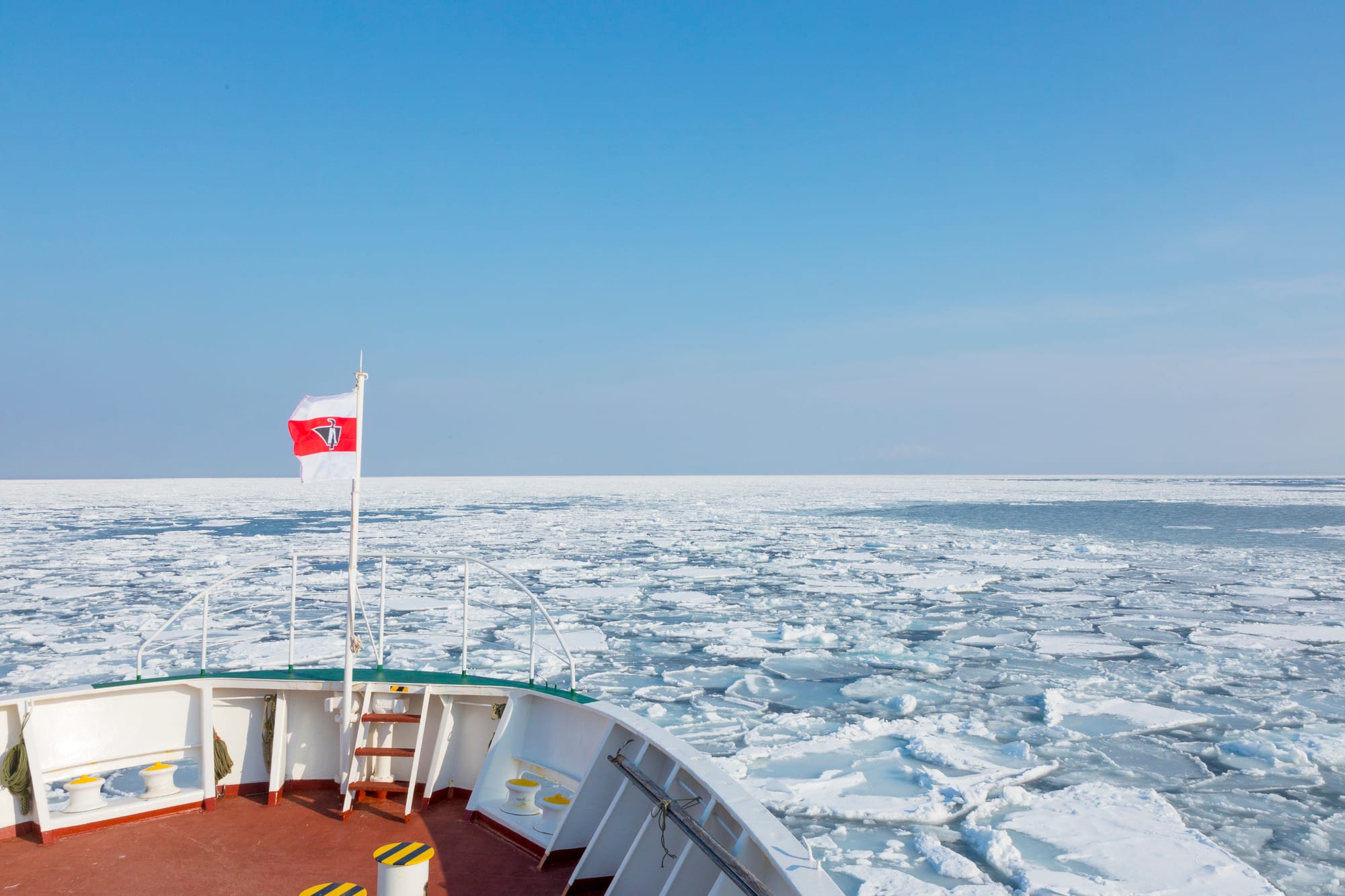
An icebreaker working through the drift ice that fills the Sea of Okhotsk off Abashiri in late winter. (kkawamura / Wikimedia Commons · CC BY 4.0)

A small port city on the Sea of Okhotsk in north-eastern Hokkaido, built on fishing, farming and a notorious Meiji-era prison whose convicts cut the first road into the island's interior. Lakes and dunes surround it, and for a few weeks each winter drift ice from the north closes over the sea, drawing icebreaker cruises and most of the year's visitors.

Neighbourhoods

  • The town centre and Abashiri Station
    • First-time visitors
    • Close to public transport
    • Restaurants

    A compact grid of shops, offices, business hotels and izakaya on the low ground between the Abashiri River and the hills. Most of the city's places to eat and sleep are within a few streets of the station, and buses to the museums and the port leave from outside it.

    Open in Maps
  • The port and the drift-ice terminal
    • Winter cruises
    • Seafood
    • Sea views

    The working harbour at the river mouth, where fishing boats unload scallops, salmon and crab and the icebreakers sail in winter. A roadside station with food stalls and a seafood market stands beside the quay, and the breakwater gives a long view along the Okhotsk coast.

    Open in Maps
  • Mount Tento and the museum hill
    • Museums
    • Viewpoints
    • Quiet

    The wooded rise south-west of the centre, reached by road and by a seasonal sightseeing bus. The prison museum, the drift-ice museum and the museum of northern peoples are spread across its slopes, with views over the town, the lakes and the sea.

    Open in Maps
  • Yobito and the lake shore
    • Quiet and residential
    • Nature
    • Fishing

    A scatter of houses, fishing sheds and farmland along the narrow strip between Lake Abashiri and Lake Notoro, a few kilometres west of the centre. Anglers drill for pond smelt on the frozen lake in winter, and the flat roads are easy cycling in summer.

    Open in Maps

Things to do

Drift ice and the sea

  • Drift ice icebreaker cruisesattraction

    Passenger icebreakers sail from the port from late January to March, pushing into the pack ice that drifts down from the Amur river mouth and the Russian coast.

    Open in Maps
  • Okhotsk Ryu-hyo Museummuseum

    A museum on Mount Tento devoted to the drift ice, with a cold room holding real floes and tanks of the clione sea slug, the 'ice angel' of the Okhotsk.

    Open in Maps
  • Kitahama Stationtransit hub

    A tiny wooden halt on the Senmo Main Line east of the city, standing right on the Okhotsk shore, with an observation deck looking over the sea and the winter ice.

    Open in Maps

Museums and history

  • Abashiri Prison Museummuseum

    An open-air museum at the foot of Mount Tento preserving the timber cell blocks, courthouse and farm buildings of the Meiji-era prison, moved here in 1983 and the only prison museum in Japan.

    Open in Maps
  • Hokkaido Museum of Northern Peoplesmuseum

    A museum comparing the Ainu with the Sami, Inuit and the peoples of Siberia, through clothing, sledges, tools and hunting gear from across the circumpolar north.

    Open in Maps
  • Moyoro Shell Moundattraction

    A national historic site by the river mouth, the best-known settlement of the Okhotsk culture, a sea-hunting people who lived on this coast more than a thousand years ago, with a museum over the excavations.

    Open in Maps

Lakes, dunes and viewpoints

  • Lake Abashiripark

    A brackish, meromictic lake south-west of the town, ringed by forest and farmland and frozen hard enough for ice fishing in midwinter.

    Open in Maps
  • Lake Notoropark

    A lagoon open to the sea, whose shore at Ubaranai turns deep red in September when the glasswort beds — said to be the largest in Japan — take colour.

    Open in Maps
  • Lake Tofutsupark

    A shallow lagoon east of the city, a Ramsar wetland where swans and geese stop on migration, backed by the wild flower meadows of the Koshimizu dunes.

    Open in Maps

Short trips from the city

  • Lake Saromapark

    Japan's third-largest lake and the largest in Hokkaido, a lagoon about an hour north-west along the coast, edged by a long sandbar and known for its scallop and oyster farms.

    Open in Maps
  • Shiretoko National Parkpark

    The UNESCO-listed peninsula of forest, waterfalls and brown bears east of Abashiri, reached by road or by the Senmo Main Line to Shiretoko-Shari.

    Open in Maps

Seasonal events

  • Abashiri Okhotsk Drift Ice FestivalFebruary

    A winter festival of ice and snow sculptures, first held in 1966, staged in the city while the pack ice lies offshore.

Eat and drink

Long-standing places and food districts in Abashiri. Hours, ratings and directions come from your maps app, always current.

Abashiri classics

  • Restaurants around Abashiri Stationneighborhood

    The few blocks between the station and the river hold most of the city's sushi counters, izakaya and ramen shops, where Okhotsk scallops, salmon and crab appear on almost every menu.

    Open in Maps
  • The port market hallsmarket

    Stalls and counters beside the harbour selling the day's catch, grilled scallops and seafood rice bowls, with the icebreaker berth alongside.

    Open in Maps

Local drink

  • Abashiri Beerrestaurant

    A small local brewery whose range is made with regional produce and includes Bilk, a blend of beer and milk.

    Open in Maps

Experience Abashiri

History

The coast at the mouth of the Abashiri River has been settled for a very long time. The Moyoro shell mound by the river marks a village of the Okhotsk culture, a sea-hunting people who lived along this shore from roughly the fifth to the tenth century and left bone harpoons, pottery and the remains of pit houses. Ainu communities followed, and the name Abashiri comes from the Ainu language; Japanese traders and fishing crews worked the coast under the Matsumae system, with the interior left largely untouched.

The modern town was made by a prison. In 1890 the Meiji government opened a branch prison here, at the far edge of a territory it was trying to settle and defend against Russian expansion, and the inmates were set to cut the Central Road inland towards Asahikawa. More than a thousand prisoners were sent to the village, and so many died on the stretch between Abashiri and Asahikawa that it became known as the Prisoner's Road. The prison stayed, and the settlement around it grew on fishing, forestry and the farming the convicts had helped open up.

A railway reached the coast in the early twentieth century, the port was improved, and Abashiri became the market and shipping town of the Okhotsk district; it was raised to city status in 1947. Salmon, scallops and crab sustained it, along with sugar beet and potatoes on the farms inland. The old timber prison buildings were moved to the foot of Mount Tento in 1983, a year before the working jail moved into a modern building, and opened as a museum, and from the same decade icebreaker cruises turned the winter ice from a nuisance into the city's best-known asset.

Culture & Customs

Abashiri's identity is northern rather than conventionally Japanese. It sits closer to Sakhalin than to Tokyo, and the museums on Mount Tento present it that way: the Hokkaido Museum of Northern Peoples sets Ainu clothing and tools beside Sami, Inuit, Nivkh and Siberian material, while the shell mound and its museum deal with the Okhotsk culture that preceded both. Ainu place names cover the surrounding map, and the region's Indigenous heritage is now treated as a living part of local identity rather than a curiosity.

The prison is the other half of the city's reputation. Abashiri Prison was for decades a byword in Japan for the end of the line, fixed in the national imagination by a long series of yakuza films made in the 1960s, and the museum that preserves the old buildings is frank about the forced labour that built the road inland. Residents are used to the association and treat it with a certain dryness.

Winter shapes the year. The arrival of the ice is announced and watched for, the February festival, held since 1966, carves snow and ice in the middle of town. Much of the social life happens in small izakaya near the station, where the talk is of the catch, the weather and the ice. Tokyo University of Agriculture's Okhotsk campus brings a few hundred students to a city that would otherwise be older still.

Daily Life

Fewer than 35,000 people live in Abashiri, down from more than 40,000 in the 2000s, and the number has been falling for decades as young people leave for Sapporo and Tokyo; the surrounding towns of the Okhotsk district are emptying faster. The working population is concentrated in fishing and fish processing, farming, the prison and local government, the university campus, and a tourist trade that is intense for a few winter weeks and thin for much of the rest of the year.

The port sets the rhythm. Boats work the Okhotsk for scallops, salmon, Atka mackerel and crab, and the processing plants and cold stores nearby handle the catch; when the ice closes the sea, the fleet stops and the icebreakers take over. Inland, large fields of sugar beet, potatoes, wheat and onions run towards the lakes, worked by machinery on a scale unusual in Japan.

Most people live in low houses and small blocks of flats in the grid near the station or along the roads towards the lakes, and almost every household has a car. Snow clearing is a daily job from December onwards, and school and work timetables bend around blizzards. The persistent issues are depopulation and ageing, thin bus and rail services — the lines through this corner of Hokkaido have been repeatedly cut back — and a winter economy that depends on ice that arrives less reliably than it once did.

Food

Abashiri eats from the Sea of Okhotsk. Hotate, the scallops farmed and dredged along this coast, are the signature: grilled in the shell at the harbour, served raw over rice, or fried. Salmon appears as sashimi, as ikura, the salted roe eaten by the spoonful over rice, and as ruibe, frozen raw slices that melt in the mouth, a method inherited from Ainu practice. Kegani, the hairy crab of the northern seas, is a winter luxury, and hokke, Atka mackerel, is split and grilled as everyday food.

The usual way to eat all of this is a kaisendon, a bowl of rice heaped with raw seafood, or a set meal in one of the counters near the station or beside the port. Hokkaido's other staples are here too: miso ramen, jingisukan, or Genghis Khan, of mutton and vegetables grilled on a domed iron pan, and dairy in the form of soft-serve ice cream sold long into the cold. Pond smelt pulled from the frozen lake are fried as tempura in winter.

Inland produce fills out the rest of the table — potatoes, onions, sugar beet, wheat for noodles, and milk from the farms of the Okhotsk district. A small local brewery makes beers from regional ingredients, among them a blend of beer and milk, and Hokkaido's dairy sweets and seafood preserves fill the souvenir shelves at the port and the airport.

Planning tools

Budget

Abashiri is inexpensive by Japanese standards outside the drift-ice weeks, when hotel rooms and cruise seats are in short supply and prices rise. Business hotels near the station are the usual accommodation, seafood is better value than in Sapporo, and the main variable cost is transport: a hire car, or the long limited-express journey across Hokkaido.

Daily Budget Midrange
USD 110–200 (mid-range hotel, seafood dinners, museum entry, a hire car or an icebreaker cruise)
Daily Budget Shoestring
USD 50–85 (business hotel or guesthouse, seafood bowls and ramen, local buses and trains)

Book rooms and cruises well ahead for February, and compare a hire car with the sightseeing bus that links the hilltop museums in season.

Best Time to Visit

Late January to early March for the drift ice, the icebreakers and the winter festival — the reason most people come, though the ice varies from year to year and can arrive late or break up early. June to September is mild, green and far quieter, with flowers on the Koshimizu dunes, and September brings the red glasswort beds on Lake Notoro.

Suggested Number of Days

One full day covers the town and the hilltop museums; two are comfortable in winter, when a cruise takes up half a day and weather can cancel sailings. Three or four allow the lakes, the Okhotsk coast and a run east towards Shiretoko.

First Visit
1–2 days
With Surroundings
3–4 days

Transportation

The centre is small enough to walk, but the museums stand on a hill a few kilometres out and the lakes further still. Local buses connect the station, the port and the hill, with extra sightseeing services in the main seasons, and taxis wait at the station. Most Japanese visitors arrive with a hire car, which is the only practical way to reach the lagoons and the coast road.

Winter driving here means snow tyres, ice on every surface and short daylight; allow far longer than the map suggests.

Airport & Station Connections

Memanbetsu Airport lies about 20 kilometres west of the city, with flights from Sapporo and Tokyo and a bus into town in roughly half an hour. Trains are slow: the limited express from Sapporo takes around five and a half hours, and the Senmo Main Line runs along the coast to Shiretoko-Shari and on to Kushiro. Long-distance buses also serve Sapporo.

Walkability

The flat grid around the station and the river is easy to cover on foot in twenty minutes or so, and the harbour is a short walk beyond it. Everything else — the prison museum, the drift-ice museum, the museum of northern peoples, the lakes — needs a bus, a taxi or a car. Pavements are snow-packed and icy from December to March.

Safety

Crime is very low and the risks are natural ones. Winter brings ice underfoot, blizzards that close roads and severe wind chill on the coast; brown bears live in the forests and hills around the city and on the Shiretoko peninsula; and the Okhotsk coast is exposed to earthquakes and tsunami.

Wear shoe grips or studded soles in winter, keep to marked paths and carry a bear bell in the forests, note tsunami evacuation signs near the shore, and follow crew instructions on the ice cruises. Check current official travel advice before travelling.

Climate

Cold, clear and comparatively dry — the eastern side of Hokkaido escapes the heaviest Sea of Japan snowfall and much of the summer humidity. Sea fog drifts in along the coast in early summer, and the pack ice usually appears offshore from late January and clears in March.

Summer
cool and fresh, generally 18–24°C by day, with fog and cooler evenings near the sea
Winter
cold and windy, about -10 to -1°C, with hard frost, regular snow and drift ice on the sea

Local Customs

Standard Japanese manners apply: shoes come off indoors and at inn entrances, voices stay low on trains and buses, and rubbish is carried until a bin appears. Tipping is not practised anywhere. In public baths bathers wash thoroughly before entering the water, and tattoos are restricted at some baths. The museum of northern peoples and the shell mound deal with Ainu and Okhotsk-culture heritage, which is treated as living history rather than folklore.

Ask before photographing people, fishing crews or private houses, keep to the marked walkways on the dunes and lake shores, and check whether a bath accepts tattooed bathers.

Common Payment Methods

The currency is the Japanese yen. Hotels, supermarkets, convenience stores and the larger attractions take cards and IC cards, but small restaurants, market stalls and rural sights are often cash only. Post office and convenience-store cash machines accept foreign cards; withdraw before heading out to the lakes or the coast.