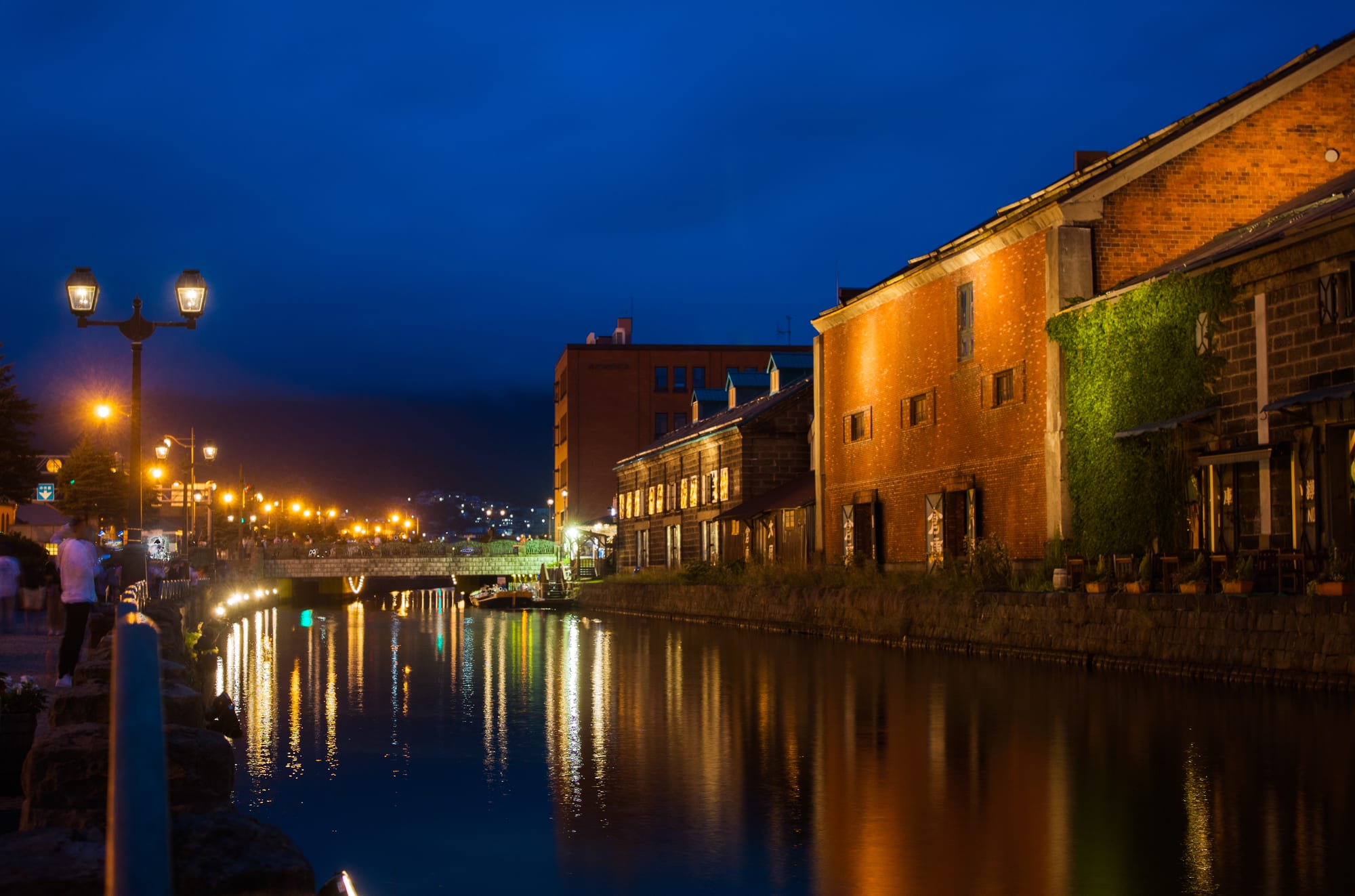
A narrow canal at dusk reflecting warmly lit brick and stone warehouses, with old street lamps along a stone walkway

Hokkaido, Japan

Otaru

The Otaru Canal at dusk, lined with the brick and stone warehouses of the old port. (Tan Wei Liang Byorn / Wikimedia Commons · CC BY-SA 4.0)

A port city on the Sea of Japan coast half an hour west of Sapporo, built on the herring trade and the shipping of Hokkaido's coal. Stone and brick warehouses line a short canal, former bank buildings stand along its main street, and the city now trades on glassware, music boxes, sushi and the look of its own past.

Neighbourhoods

  • The canal and warehouse district
    • First-time visitors
    • Walks and views
    • Historic district

    The short stretch of canal with its gas-style lamps and converted warehouses is the image most people have of the city. Restaurants, beer halls and craft shops occupy the old stores, and the promenade is busiest in the evening when the lamps come on.

    Open in Maps
  • Sakaimachi and the old banking street
    • Shopping
    • Architecture
    • Best for food

    A pedestrianised run of Meiji and Taishō shops, banks and merchant houses between the canal and the station, now full of glass studios, music-box shops, sweet shops and cafés. Grand former bank buildings stand at its inland end.

    Open in Maps
  • Around Otaru Station
    • Close to public transport
    • Best for food
    • Hotels

    The everyday centre on the slope above the harbour, with the station, hotels, covered shopping streets and the triangular market beside the tracks. The street of sushi restaurants that the city is known for runs nearby.

    Open in Maps
  • Shukutsu and the northern coast
    • Coastal scenery
    • Quiet and residential

    The old herring-fishing quarter north of the port, where merchants' houses look over the water and the aquarium sits on a headland. Boats leave from here in summer for the cliffs and sea caves along the coast.

    Open in Maps
  • Asarigawa and the inland valleys
    • Hot springs
    • Quiet and residential

    A hot-spring area in the hills a few kilometres east, with inns, a river and cherry trees in spring, and ski slopes above the city that look down over the bay.

    Open in Maps

Things to do

The canal and the old port

  • Otaru Canallandmark

    A canal completed in 1923 so that barges could unload ships offshore, half of it retained after a long preservation campaign and lined with a stone promenade.

    Open in Maps
  • Sakaimachi Streetneighborhood

    The old merchants' street, lined with stone warehouses and shopfronts from the boom years, now a run of glass, music-box and confectionery shops.

    Open in Maps
  • Former Bank of Japan Otaru Branchmuseum

    A 1912 bank building whose designers included Tatsuno Kingo, architect of Tokyo Station, now a museum of money and banking and the grandest survivor of the street once called the Wall Street of the north.

    Open in Maps
  • Temiya Line trailtrail

    A walking path along the track bed of Hokkaido's first railway, opened in 1880 to bring coal down to the port, with a preserved station and rolling stock.

    Open in Maps

Crafts, museums and the herring years

  • Otaru Music Box Museummuseum

    A brick building of 1902 at the end of Sakaimachi Street holding some 25,000 music boxes, with a steam clock outside.

    Open in Maps
  • Otaru glass studiosattraction

    Glassmaking began here with oil lamps and fishing floats for the herring fleet, and workshops and shops around Sakaimachi still blow and sell glass.

    Open in Maps
  • Nishin Goten herring mansionsmuseum

    Timber houses built by herring fishery bosses on the coast north-west of the centre, preserved with their crew quarters, nets and kitchens.

    Open in Maps
  • Otaru City General Museummuseum

    The city's history and railway collections, split between a canal-side building and a site by the old Temiya line, covering the port, the herring trade and the coal railway.

    Open in Maps

Views, coast and hot springs

  • Mount Tenguviewpoint

    A hill behind the city reached by ropeway, with a wide view over the bay, a ski slope in winter and a collection of tengu masks at the top.

    Open in Maps
  • Otaru Aquariumattraction

    An aquarium on the Shukutsu headland with tanks of northern sea life and open-air pools for seals, sea lions and penguins.

    Open in Maps
  • Asarigawa Onsenattraction

    Hot-spring inns and baths in a wooded valley east of the centre, a short bus ride from the station and busy with cherry blossom in spring.

    Open in Maps

Short trips from the city

  • Yoichi distilleryattraction

    The Nikka whisky distillery founded in 1934 in the fishing town of Yoichi, about 20 kilometres west, with coal-fired stills and a museum in its stone buildings.

    Open in Maps
  • Shakotan Peninsulaviewpoint

    A rocky peninsula west of the city known for clear blue water, cliff capes and sea urchin in summer.

    Open in Maps
  • Sapporoneighborhood

    Hokkaido's capital, about 40 kilometres east and half an hour by train, close enough that many visitors treat the two cities as one trip.

    Open in Maps

Seasonal events

  • Otaru Snow Light Path FestivalFebruary

    Candles in snow lanterns and floating glass buoys line the canal, the Temiya track bed and the side streets for several evenings in midwinter, an event run by residents and volunteers since 1999.

  • Otaru Ushio Festivallate July

    The city's summer port festival, with a dance procession through the streets, boats on the harbour and fireworks over the water.

  • Coastal boat tripssummer

    Small boats run from the northern harbour along the cliffs and sea caves of the coast, weather permitting.

Eat and drink

Long-standing places and food districts in Otaru. Hours, ratings and directions come from your maps app, always current.

Otaru classics

  • Sushi Streetneighborhood

    A street of sushi restaurants near the station, the city's best-known culinary institution, working with scallops, squid, sea urchin, salmon roe and crab landed on this coast.

    Open in Maps
  • Sankaku Marketmarket

    A small triangular market beside the station where fish stalls and a handful of counters serve rice bowls heaped with crab, roe and sea urchin from early morning.

    Open in Maps
  • Canal-side beer hallsneighborhood

    Converted warehouses on the water hold beer halls and seafood restaurants, some brewing German-style beer on the premises and grilling scallops and lamb.

    Open in Maps

Sweets and cafés

  • Sakaimachi's cake and sweet shopsneighborhood

    Western-style patisseries, cheesecake makers and confectioners occupy the old shopfronts, a legacy of a port that imported European tastes early.

    Open in Maps
  • Old coffee housescafe

    Long-established coffee houses in stone buildings near the canal serve siphon coffee and cake, the quiet counterpart to the shopping street outside.

    Open in Maps

Experience Otaru

History

The name comes from the Ainu, whose words for a sandy shore and a river describe the beach where the city now stands. Japanese fishing camps grew along this coast in the 19th century as the herring runs were exploited, and when the Meiji government began developing Hokkaido, Otaru's sheltered bay became the island's main port. Its first railway, opened in 1880 between the harbour and Sapporo and extended to the Sorachi coalfields, was the first in Hokkaido and one of the earliest in Japan.

Herring and coal made the city rich. Fishery bosses built timber mansions along the shore with quarters for hundreds of seasonal crew; banks, shipping firms and trading houses put up stone and brick offices on a street that became known as the Wall Street of the north; and the canal, completed in 1923, let barges unload ships anchored offshore straight into warehouses. Otaru was for a time the commercial capital of Hokkaido, and at the census of 1920 it was larger than Sapporo.

Then the herring disappeared from the coast in the 1950s, the coal trade collapsed, and container shipping moved to Tomakomai on the Pacific side. The canal was to have been filled in for a road in the 1970s; a long local campaign saved half of it, and the restored promenade and warehouses became the basis of a tourist economy from the 1980s. Love Letter, a film shot here in 1995 and a great success in South Korea, brought a wave of visitors from elsewhere in Asia. The city has been shrinking and ageing steadily since its peak.

Culture & Customs

Otaru's culture is built on the memory of its boom. The warehouses, banks and merchant houses are the city's principal asset, and their preservation — fought for street by street — is a source of civic pride and of continuing argument about what should be restored and who pays for it. Walking the canal at dusk, when the lamps light, is the local ritual as much as the visitor's.

Craft came out of industry. Glassworks that once made oil lamps and floats for the herring nets now blow ornaments and drinking glasses, and the mechanical music box, imported as a curiosity, became a local speciality with a museum and a street of shops. In February the two combine in the snow-lantern festival, when candles are set in hollowed snow and in glass buoys along the canal and the old railway track — an event run largely by volunteers and residents.

The sea sets the rest of the tone: an early-morning market culture, a street given over to sushi restaurants, and summer boat trips along the cliffs. Sapporo's closeness shapes daily life, since many residents commute there, and gives the city a slightly wistful character — an old commercial capital that now lives partly as its larger neighbour's day trip, and knows it.

Daily Life

About 107,000 people live in Otaru, down from a peak of some 207,000 in 1964, and the city has one of the higher proportions of older residents in Japan. Houses climb the slope from the harbour in terraces, and outlying districts have thinned as families moved to Sapporo or into the valley floor.

The economy runs on tourism, the port, fishing and food processing, retail and commuting. Cruise ships and ferries use the harbour, wholesalers handle scallops, squid and salmon, and glass, sweets and music boxes supply the souvenir trade. A commercial university founded in the boom years is still here, and a steady flow of residents takes the train to work in Sapporo each morning.

Winter dominates the calendar. Snow clearing on steep streets is a daily task for months, roofs are cleared, and buses run late in storms; the February festival is the one event that turns that weather into an asset. Depopulation, empty houses, the cost of maintaining a large stock of historic stone buildings, and a tourist economy concentrated into a few streets while the rest of the city quietly shrinks are the issues that come up most in local debate.

Food

Sushi is the city's calling card. A street of specialist restaurants near the station, and many more around it, work with what the cold northern water provides: scallops, squid, flounder, herring, sea urchin, salmon roe and several kinds of crab. The cheaper version of the same thing is the kaisendon, a bowl of rice buried under raw seafood, eaten at the market by the station from early morning.

The herring years left their own dishes. Nishin soba, buckwheat noodles topped with a sweet-simmered dried herring, is a Hokkaido and Kyoto staple that makes particular sense here, and dried and pickled herring is still sold in the shops around the canal. Grilled scallops, steamed crab and boiled sea urchin appear at market counters, and ishikari nabe, a miso-based salmon hotpot, belongs to this coast.

Otaru also has an unusually sweet tooth for a fishing port. Western-style cake shops, cheesecake makers and confectioners line the old merchants' street, a legacy of a city that traded with the outside world early, and coffee houses in stone buildings serve them. Beer is brewed in a canal-side warehouse in the German style, and the Nikka distillery at Yoichi, half an hour west, supplies the whisky.

Planning tools

Budget

Otaru is cheaper than Sapporo for rooms and about the same for food, though sushi at the best-known counters can cost as much as anywhere in Japan. Many visitors come for a day from Sapporo and spend only on lunch and souvenirs. Prices rise during the February light festival and the summer holidays.

Daily Budget Midrange
USD 110–200 (mid-range hotel or onsen inn, sushi dinners, taxis and day trips)
Daily Budget Shoestring
USD 45–80 (hostel or business hotel, market bowls and ramen, trains and buses)

A seafood bowl at the market costs a fraction of a sushi counter dinner, and most of the canal and warehouse district costs nothing to walk.

Best Time to Visit

June to September is mild and clear, with boat trips along the coast and long evenings on the canal. February brings the snow-lantern festival, the city's most atmospheric week, though cold and icy. Late April and May add cherry blossom in the hot-spring valley. November and early December are grey and quiet.

Suggested Number of Days

The central districts fit comfortably into a day, which is how most visitors see them. Staying overnight suits anyone who wants the canal after dark and an early market breakfast. Two or three days allow the coast and the towns further west as well.

First Visit
1 day
With Surroundings
2–3 days

Transportation

Trains on the coastal line link Otaru with Sapporo every few minutes and continue west towards Yoichi. Local buses climb from the station to the hot springs, the ropeway and the northern coast, and a bus terminal beside the station serves the peninsula. The central sights are close enough together that most visitors walk between them.

Streets slope steeply from the station down to the harbour and are icy for months — allow extra time in winter.

Airport & Station Connections

Trains from Sapporo take about thirty to forty-five minutes and run frequently; some continue from New Chitose Airport, about seventy minutes away, without a change. Buses run from Sapporo on the expressway. Ferries from Maizuru and Niigata on Honshu dock at the city's ferry terminal, and cruise ships tie up at the harbour in summer.

Walkability

The tourist core is compact and best seen on foot: the station, the canal, Sakaimachi Street and the old banking district lie within a kilometre of one another. The land drops sharply from the station to the sea, so returns are uphill, and outlying districts such as Shukutsu and Asarigawa need a bus. Pavements are snow-packed and slippery from December to March.

Safety

Crime is very low and the streets feel safe at night. The main hazards are winter ones: ice on the steep streets, snow sliding from roofs, and slippery stone along the canal. The coast lies in an earthquake and tsunami zone, and boat trips along the cliffs are cancelled in rough weather.

Wear boots with grip and keep clear of roof edges in winter, take care on the unfenced canal-side promenade, and learn the earthquake drill. Check current official travel advice before travelling.

Climate

Cold and snowy, with heavy falls off the Sea of Japan in winter and a milder, humid influence from the water in summer. Snow lies from December into March and the hills behind the city hold it longer. Hokkaido is spared the June rainy season that affects most of Japan.

Summer
warm and fairly dry, generally 19–26°C in July and August
Winter
cold and snowy, generally -6 to 1°C from December to February, with heavy falls and strong coastal wind

Local Customs

Tipping is not practised. Shoes come off in inns and many restaurants, and queues form quietly at popular sushi counters and market stalls. Several glass and music-box workshops are working studios, so hot glass areas are kept clear and photography is sometimes restricted. Tattoos may bar entry to hot-spring baths.

Ask before photographing shopkeepers, craftspeople or market traders; in a hot spring, wash thoroughly first and keep swimwear and towels out of the water.

Common Payment Methods

The currency is the Japanese yen. Cards and IC cards work on trains, in hotels and in most shops and restaurants aimed at visitors, but small counters, market stalls and older cafés often take cash only. Convenience stores and the post office have machines that accept foreign cards.