💰 Budget
Hakodate is inexpensive by Japanese city standards: business hotels are plentiful, the tram is cheap and seafood costs less than in Tokyo. Prices rise during the cherry blossom, the August festival and the New Year holiday. The main extras are the ropeway, museum entries and a hire car for the countryside around the city.
- Daily Budget Midrange
- USD 110–200 (mid-range hotel or onsen inn, seafood dinners, tram and taxis, day trips)
- Daily Budget Shoestring
- USD 50–85 (hostel or business hotel, ramen and market bowls, tram and local trains)
Day passes for the tram and bus pay for themselves quickly, and the morning market is cheapest for a seafood breakfast.
📅 Best Time to Visit
Late April and May bring cherry blossom to Goryōkaku and mild, clear weather. June to September is warm, fresh and the squid season, with the port festival in August. October adds autumn colour around Ōnuma. Winter is cold and snowy with an illuminated waterfront, but sea fog and wind can close the mountain ropeway at any time of year.
⏳ Suggested Number of Days
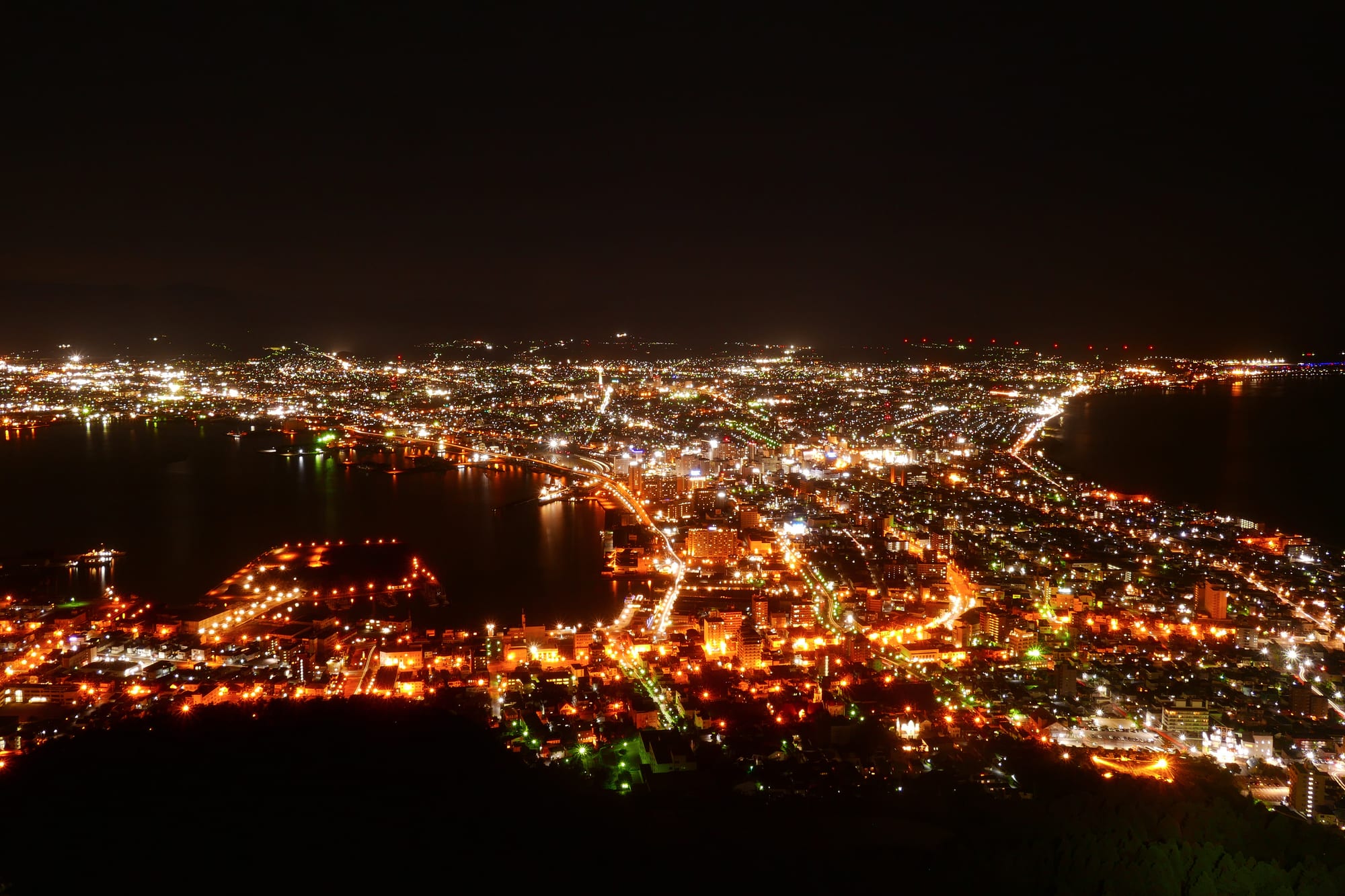
Two days cover the city itself comfortably. Three or four allow the lakes and the coast beyond it, or a hot-spring stay. Weather is the main variable, since the view that draws most visitors depends on a clear evening, so flexibility helps more than extra days.
- First Visit
- 2 days
- With Surroundings
- 3–4 days
🚆 Transportation
Trams are the backbone, running on two routes from Yunokawa through the station and the bay to the foot of the mountain, with buses covering Goryōkaku, the ropeway and the suburbs. An IC card or a day pass works on both. JR trains link the city with Shin-Hakodate-Hokuto for the Shinkansen and with Ōnuma. A car helps only for the wider peninsula.
Roads and pavements are icy from December to March, and the ropeway and mountain road close in high wind.
🛬 Airport & Station Connections
Hakodate Airport lies about 8 kilometres east of the centre, roughly twenty minutes by bus, with flights from Tokyo and other Japanese cities. The Hokkaido Shinkansen from Tokyo takes about four hours to Shin-Hakodate-Hokuto, a little north of the city, where a connecting train runs in to Hakodate Station in under twenty minutes. Limited expresses connect with Sapporo in around three and a half hours, and ferries cross the strait from Aomori.
🚶 Walkability
The historic core is walkable and rewarding: Motomachi's grid of steep slopes, the bay and the warehouses can all be covered on foot, though the gradients are severe and the wind off the strait is constant. Goryōkaku and Yunokawa are too far to walk from the harbour and need a tram or bus. Pavements are icy for much of the winter.
🛡️ Safety
Crime is very low and the city feels safe at night. The hazards are weather and terrain: icy slopes and snow-covered steps in Motomachi, snow falling from roofs, strong winds on the mountain, and cold sea fog. The coast lies in an earthquake and tsunami zone, and a ferry disaster in the strait in 1954 remains a reminder of how rough these waters become.
Wear boots with grip in winter and take the ropeway rather than the mountain road in poor weather, and learn the earthquake drill and the posted tsunami evacuation routes. Check current official travel advice before travelling.
🌦️ Climate
Milder than the rest of Hokkaido because of its southern position and the surrounding sea, but wet and windy, with sea fog common in early summer. Snow falls through the winter, though less than in Sapporo, and the June rainy season that affects most of Japan barely reaches here.
- Summer
- mild and often foggy, generally 18–26°C in July and August
- Winter
- cold and snowy, generally -5 to 2°C from December to February, with strong winds off the strait
🤝 Local Customs
Tipping is not practised. Shoes come off in inns, some restaurants and homes, and quiet is expected on trams and trains. The churches of Motomachi are working places of worship, so services are not interrupted and photography inside is often restricted. Tattoos may bar entry to hot-spring baths, though some in Yunokawa are more relaxed.
In a hot spring, wash thoroughly before entering the water and leave swimwear and towels out of it; at the morning market, ask before photographing stalls or their owners.
💳 Common Payment Methods
The currency is the Japanese yen. Cards and IC cards are accepted at hotels, chains, the tram and most sizeable restaurants, but market stalls, small counters and older shops often take cash only. Convenience-store and post-office machines dispense yen on foreign cards.