💰 Budget
Hiroshima is cheaper than Kyoto, Osaka or Tokyo. Business hotels around the station and the centre are plentiful and reasonably priced, the Peace Park and its memorials cost little or nothing to visit, and okonomiyaki, noodles and set lunches keep food costs low. The larger expenses are Shinkansen fares in and out and a ryokan night on Miyajima.
- Daily Budget Midrange
- USD 100–190 (business hotel or ryokan, restaurant dinners, museum entry, Shinkansen and ferry travel)
- Daily Budget Shoestring
- USD 45–75 (hostel or budget business hotel, okonomiyaki and noodle meals, trams and local trains)
A one-day tram pass covers the central network cheaply, and the museum and memorial admissions in the Peace Park are modest.
📅 Best Time to Visit
Late March to May and October to November are the most comfortable months, with cherry blossom along the castle moat and the rivers in spring and maples at Mitaki-dera in autumn. Oysters are at their best from late autumn through winter. Early August is hot and humid and the city is busiest around the memorial ceremony on 6 August.
⏳ Suggested Number of Days
One full day covers the centre, and a second allows more time for the museums, the castle and the gardens. Three or four days suit anyone adding the islands and coast nearby. Visitors who want time to absorb the memorial sites should allow longer.
- First Visit
- 1–2 days
- With Surroundings
- 3–4 days
🚆 Transportation
Hiroshima keeps the longest tram network in Japan, run by Hiroden, with lines radiating from the station through the centre to Ujina and out to Miyajimaguchi. An elevated light-rail line, the Astram, runs north, local JR trains serve the suburbs and the coast, and city buses fill the gaps. Ferries leave Ujina and a pier near the Peace Park for Miyajima and the islands.
IC cards are accepted on the trams, buses and trains; on the trams passengers usually board at the rear and pay on leaving.
🛬 Airport & Station Connections
Hiroshima Station is on the Sanyo Shinkansen, roughly an hour and a half from Shin-Osaka and about four hours from Tokyo, and it is the usual way in. Hiroshima Airport lies about 50 kilometres east of the city near Mihara, with domestic flights and some international services and an airport bus taking roughly an hour. Ferries and high-speed boats also connect the port with Matsuyama on Shikoku.
🚶 Walkability
The central delta is flat and easy to walk. The Peace Memorial Park, the castle, Shukkei-en and the Hondori arcade lie within about two kilometres of each other, linked by riverside paths and wide pavements, and the trams cover anything longer. Hiroshima Station is a little further east across the rivers, about a fifteen-minute tram ride from the Peace Park.
🛡️ Safety
Hiroshima is a very safe city, with low levels of violent crime; the ordinary precautions against pickpocketing in crowded nightlife streets are enough. The real risks are natural: heavy summer rain has caused deadly landslides on the hillsides around the city, typhoons reach the Inland Sea in late summer and early autumn, and August heat and humidity are severe.
Take heavy-rain and landslide warnings seriously in the rainy season, carry water in summer, and treat the memorial sites as places of mourning rather than sightseeing. Check current official travel advice before travelling.
🌦️ Climate
A humid subtropical climate sheltered by mountains on both sides, milder and sunnier than much of Japan. The rainy season runs through June into July, typhoons can arrive between August and October, and snow in the city is light and infrequent.
- Summer
- hot and humid, generally 30–35°C by day, with high humidity and heavy rain in the rainy season
- Winter
- cool and mostly dry, generally 2–10°C, with occasional light snow
🤝 Local Customs
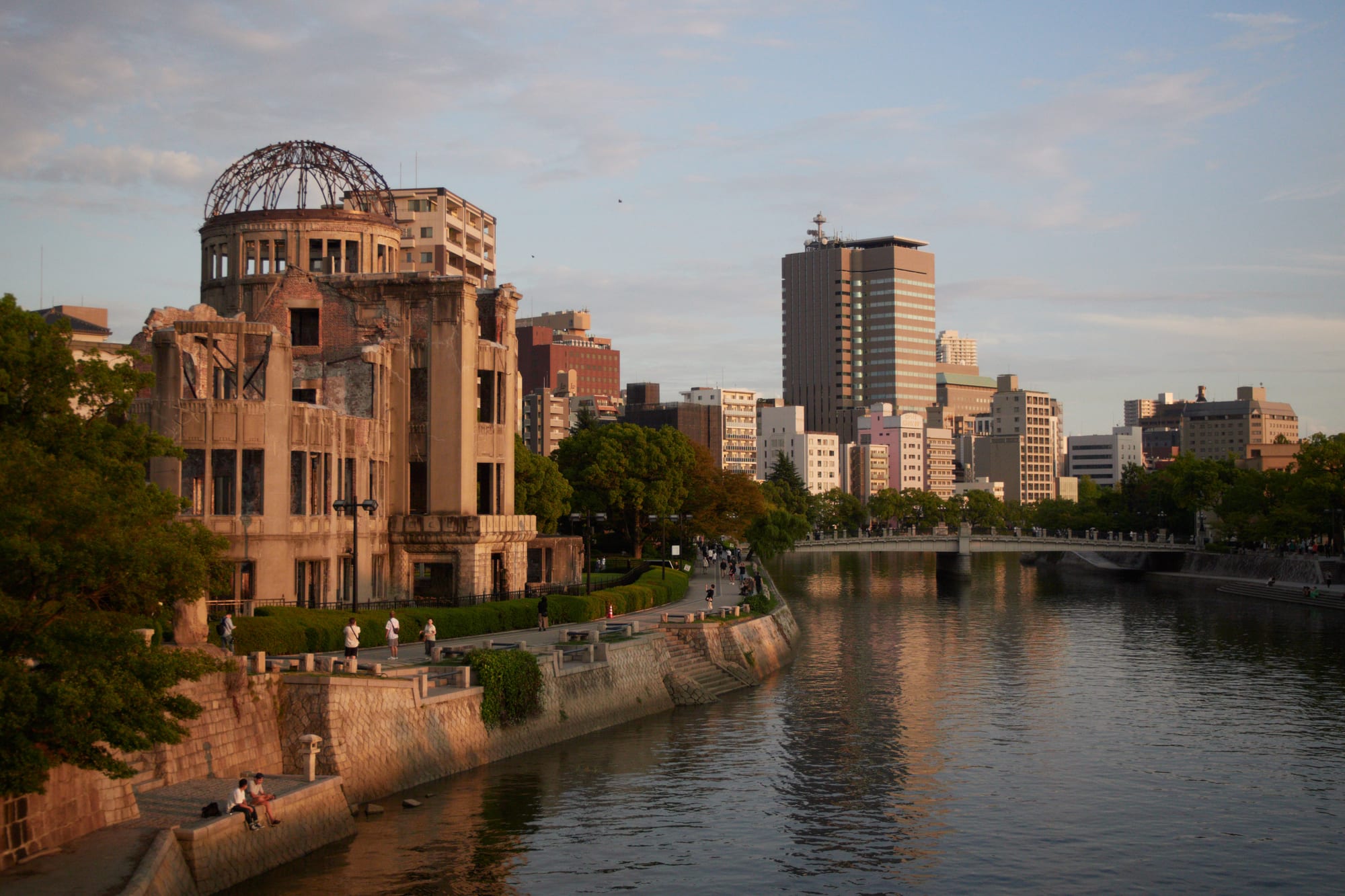
Ordinary Japanese manners apply: shoes come off in homes, ryokan and some restaurants, queues are orderly, and eating while walking is avoided. In the Peace Memorial Park, at the cenotaph and inside the memorial hall, visitors keep their voices low and photograph with restraint. Survivors and their families live in the city, and the bombing is discussed seriously rather than casually.
Tipping is not practised and can cause confusion; carry a small bag for rubbish, as public bins are scarce, and take off shoes where a raised floor or slippers signal it.
💳 Common Payment Methods
The currency is the Japanese yen. Cards and IC transport cards are accepted in hotels, department stores, chains and most restaurants in the centre, and QR payment apps are common, but small okonomiyaki counters, shrines and market stalls may take cash only. International cards work in post office and convenience-store cash machines.