💰 Budget
Costs are low for most of the year: a handful of inns and small hotels, simple restaurants, and entry fees of a few hundred yen to the samurai houses. Blossom season is the exception, when the few rooms in the town are booked far ahead and prices rise; many visitors stay in Akita, Morioka or at Lake Tazawa instead and travel in for the day.
- Daily Budget Midrange
- USD 95–180 (small hotel or hot-spring inn with dinner, restaurant meals, house entry fees, a hire car)
- Daily Budget Shoestring
- USD 45–75 (guesthouse or simple inn, noodle meals, walking and local trains)
Book blossom-season accommodation many months ahead, and note that the samurai street itself is free to walk; only the house museums charge.
📅 Best Time to Visit
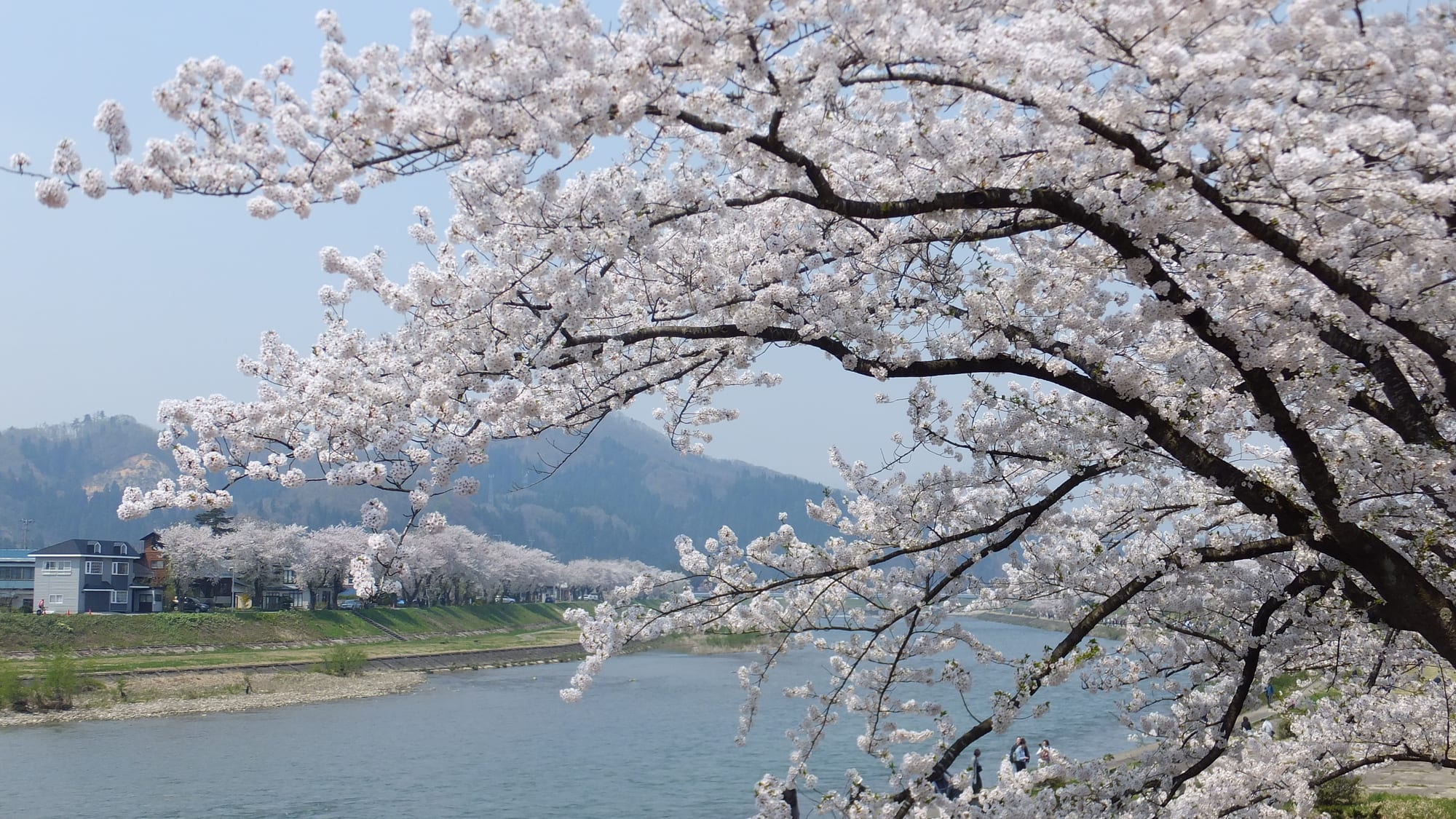
Late April and the first days of May, when the weeping cherries and the river embankment flower together — the town's busiest fortnight by far. Autumn, from mid-October, is quieter and good for the gorge and the mountains. Winter buries the black fences in snow and suits the February fire rite, though services are thin and cold is severe.
⏳ Suggested Number of Days
Half a day covers the old streets comfortably, and a full day allows the house museums and the craft workshops without hurrying. Two or three days suit a visitor taking in the lake, the hot springs and the gorge nearby, and blossom season needs extra time for the crowds.
- First Visit
- half a day to 1 day
- With Surroundings
- 2–3 days
🚆 Transportation
The town is small and walked end to end in half an hour. Bicycles and rickshaws can be hired near the station in season, and a few buses serve the surrounding villages. Trains run north-east to Lake Tazawa in about a quarter of an hour, and the rural Akita Nairiku line heads north through the hills. A hire car helps for the gorge and the hot springs.
Local bus and Nairiku line services are infrequent, so check return times before setting out into the hills.
🛬 Airport & Station Connections
Akita Shinkansen trains stop at Kakunodate, roughly three hours from Tokyo and about three quarters of an hour from Akita city, which makes the town an easy stop on the line between Morioka and the Sea of Japan coast. Akita Airport, about an hour away by road, has domestic flights to several Japanese cities.
🚶 Walkability
Very good. The station, the merchant quarter, the samurai street and the river embankment lie within about two kilometres on flat ground, and the old districts are best seen slowly on foot. Pavements are narrow in places and the streets carry traffic, and snow is banked along them from December to March.
🛡️ Safety
Crime is very low and the town is quiet after dark. The hazards are winter weather — deep snow, ice underfoot and snow sliding from roofs — along with bears in the surrounding forests and gorges, and the heat and crowding of blossom season.
Wear boots with grip in winter and keep clear of eaves after snowfall, carry a bear bell on forest walks and heed local warnings, and take care with open flames and crowds at the fire festival. Check current official travel advice before travelling.
🌦️ Climate
Heavy snow country: an inland basin on the Sea of Japan side of Tohoku, where winter snowfall is among the deepest in Japan and summers are hot and humid. Spring arrives late, so the blossom falls towards the end of April, and autumn colour is at its best in late October.
- Summer
- warm to hot and humid, generally 26–31°C by day
- Winter
- cold and very snowy, about -5 to 2°C, with snow lying from December to March
🤝 Local Customs
Most of the samurai houses are still lived in by the families that own them, and the street is a residential one rather than an open-air museum: gardens, doorways and windows are private unless a house is signed as open. Standard Japanese manners hold — shoes off inside the houses, no tipping, quiet voices. The Akita dialect is thick among older residents.
Photograph houses from the street rather than through gates, keep off private paths and gardens, and do not touch or lean on the cherry trees, many of which are protected monuments.
💳 Common Payment Methods
The currency is the Japanese yen. Hotels, the station and larger shops take cards, but many craft workshops, small restaurants and the house museums prefer cash, and cash machines are few outside the station area and the convenience stores. Withdraw before arriving or at a convenience store on the way in.