💰 Budget
Morioka is one of the better-value cities in Japan. Business hotels near the station are plentiful and cheap outside festival weeks, noodles and set lunches cost little, and the castle park, the riverbanks and the brick streets cost nothing. Shinkansen fares from Tokyo and a hire car for the mountains are the significant expenses.
- Daily Budget Midrange
- USD 100–190 (mid-range hotel or a hot-spring inn with dinner, restaurant meals, museum entry, a hire car)
- Daily Budget Shoestring
- USD 45–75 (business hotel or guesthouse, noodle meals, buses and local trains)
Rooms sell out for the Sansa Odori in early August; a hot-spring inn at Tsunagi is an inexpensive alternative to a city hotel.
📅 Best Time to Visit
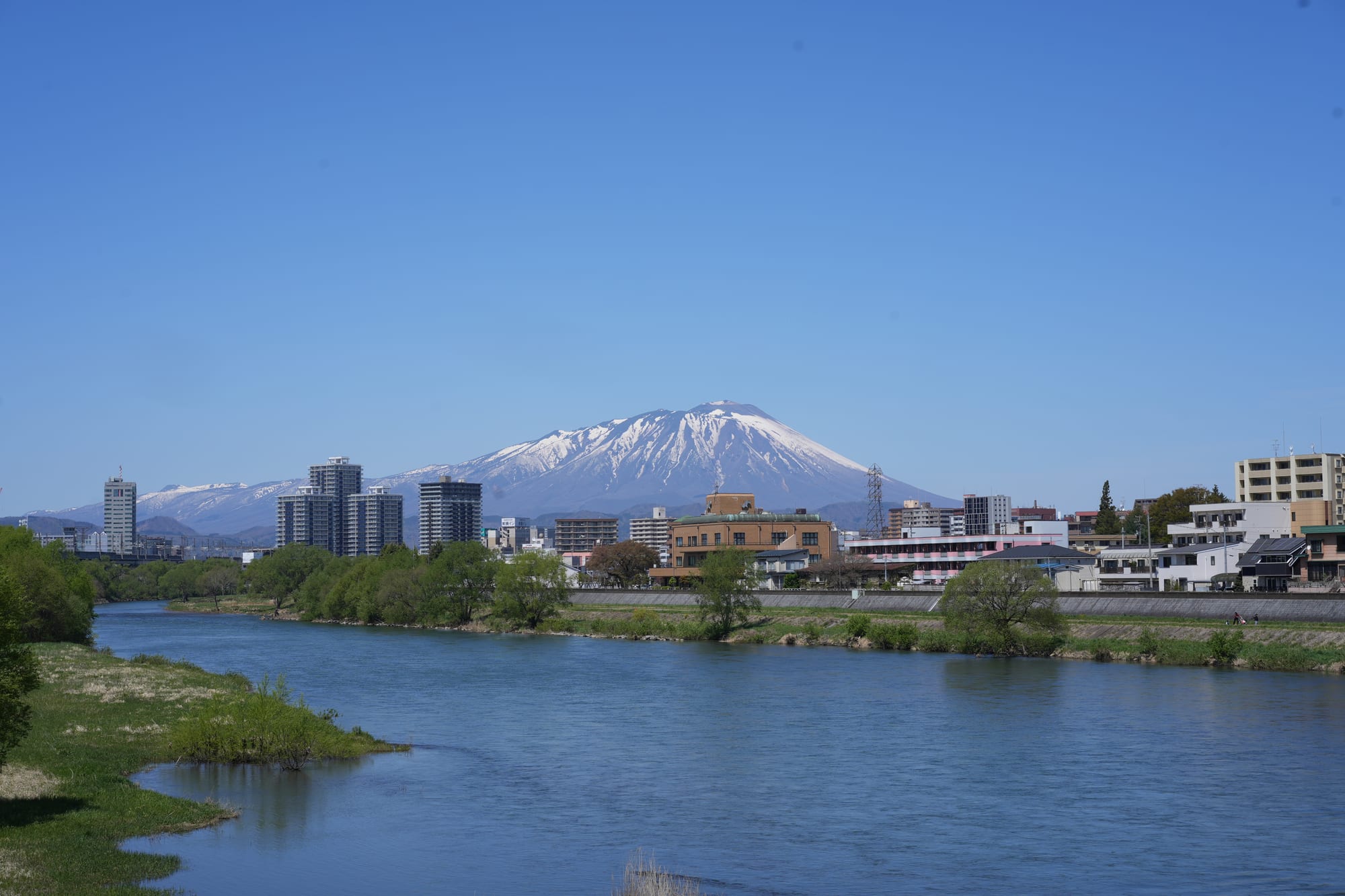
Late April for blossom on the castle walls, and May and June for clear views of Mount Iwate and the horse procession. Early August brings the drums of Sansa Odori in hot, humid weather. October turns the mountains and the plateau gold, and January and February are cold and snowy but good for hot springs and skiing nearby.
⏳ Suggested Number of Days
A day is enough for the central sights and the rivers; a second allows the craft workshops and museums and a slower pace. Three or four suit a visitor who also wants the mountains, the hot springs and the farms, and a festival visit needs extra time for crowds.
- First Visit
- 1–2 days
- With Surroundings
- 3–4 days
🚆 Transportation
The centre is compact and mostly walkable, and two loop bus services circle it from the station in either direction, with ordinary city buses beyond. Local trains run out to Shizukuishi, Hanamaki and the coast. Bicycles suit the flat riverbanks. A hire car is the practical way to reach Hachimantai, the farms and the hot springs.
Buses to the hills and hot springs are infrequent, so check the return time before setting out.
🛬 Airport & Station Connections
Tohoku Shinkansen trains from Tokyo reach Morioka in about two hours and a quarter, and the line divides here, with branches to Akita and on to Aomori and Hokkaido. Hanamaki Airport, about 40 kilometres south, has domestic flights to other Japanese cities. Overnight buses run from Tokyo, and local lines cross to the Sanriku coast.
🚶 Walkability
Good in the centre: the station, the castle park, Odori, Saien and Zaimokucho lie within a couple of kilometres on flat ground, linked by bridges over the rivers. The shrines, the museums and the craft workshops are on the outskirts and need a bus or a car. Snow and ice make pavements slow from December to March.
🛡️ Safety
Crime is very low and the city is quiet at night. The hazards are natural: heavy snow and ice in winter, bears in the forests and on the mountain trails close to the city, earthquakes, and volcanic activity on Mount Iwate, which is monitored and occasionally restricted.
Check volcanic and trail advisories before climbing, carry a bear bell in the forests, wear shoes with grip in winter, and keep a disaster-alert app on a phone. Check current official travel advice before travelling.
🌦️ Climate
An inland basin climate with sharp seasons: hot, humid summer days, cold snowy winters and short springs and autumns. The mountains to the west hold off the worst of the Sea of Japan snow, but falls are still heavy, and the city is one of the colder prefectural capitals in Japan.
- Summer
- warm to hot and humid, generally 26–31°C by day, cooling at night
- Winter
- cold and snowy, about -5 to 3°C, with regular snow cover from December to March
🤝 Local Customs
Ordinary Japanese manners apply: shoes off indoors, no tipping, quiet on buses and trains. A wanko soba meal is a game with its own etiquette, and the servers direct it. Iwate people have a reputation in Japan for being unhurried and understated, and the local dialect is strong among older residents.
At shrines bow at the gate and rinse hands at the basin, ask before photographing craftspeople at work or dancers before a procession, and wash before entering a hot-spring bath.
💳 Common Payment Methods
The currency is the Japanese yen. Hotels, department stores, chains and the main attractions take cards, and IC cards work on buses and trains, but many noodle shops, craft workshops and market stalls remain cash only. Cash machines in convenience stores and post offices accept foreign cards.