💰 Budget
Amman is the most expensive city in Jordan, and hotel prices in the western districts are well above those downtown. Food can be very cheap: falafel, hummus and shawarma cost little in Al-Balad, while restaurants in Abdoun and Sweifieh charge several times as much. The Jordan Pass, bought online before arrival, covers the entry visa and admission to sites countrywide.
- Daily Budget Midrange
- USD 110–240 (mid-range hotel, restaurant meals, taxis or a hire car, museum entries)
- Daily Budget Shoestring
- USD 40–70 (downtown guesthouse, falafel and hummus meals, service taxis and buses)
Taxis should run on the meter; agree a price first if the driver will not use it.
📅 Best Time to Visit
March to May and October to November are the most comfortable months, warm in the day and cool at night. Summer is hot and dry but bearable at the city's altitude, with cool evenings. Winter is cold and wet, with occasional snow that closes the steep streets for a day or two. The war that began in February 2026 has disrupted aviation and tourism across the region.
⏳ Suggested Number of Days
Two days cover the central sights comfortably. Four or five allow day trips north and east from the city and a slower pace. Traffic and the hills slow movement between districts, so allow more time than the map distances suggest.
- First Visit
- 2 days
- With Surroundings
- 4–5 days
🚆 Transportation
The city is spread over steep hills and most journeys are made by car. Yellow taxis are plentiful and metered, ride-hailing apps work well, and a bus rapid transit network links several main corridors, with a line running north towards Zarqa. Older service taxis and minibuses cover fixed routes for very little. Long-distance coaches and minibuses leave from the northern, southern and Abdali-area terminals.
Traffic is heaviest in the late afternoon and before Friday prayers; allow extra time to reach the airport.
🛬 Airport & Station Connections
Queen Alia International Airport lies about 30 kilometres south of the city, roughly 40 minutes by road, with a shuttle bus to the city and taxis at fixed fares. Coaches connect Amman with Aqaba, Petra and the northern towns, and land borders link the city with its neighbours. Aviation across the region has been disrupted by the war that began in February 2026.
🚶 Walkability
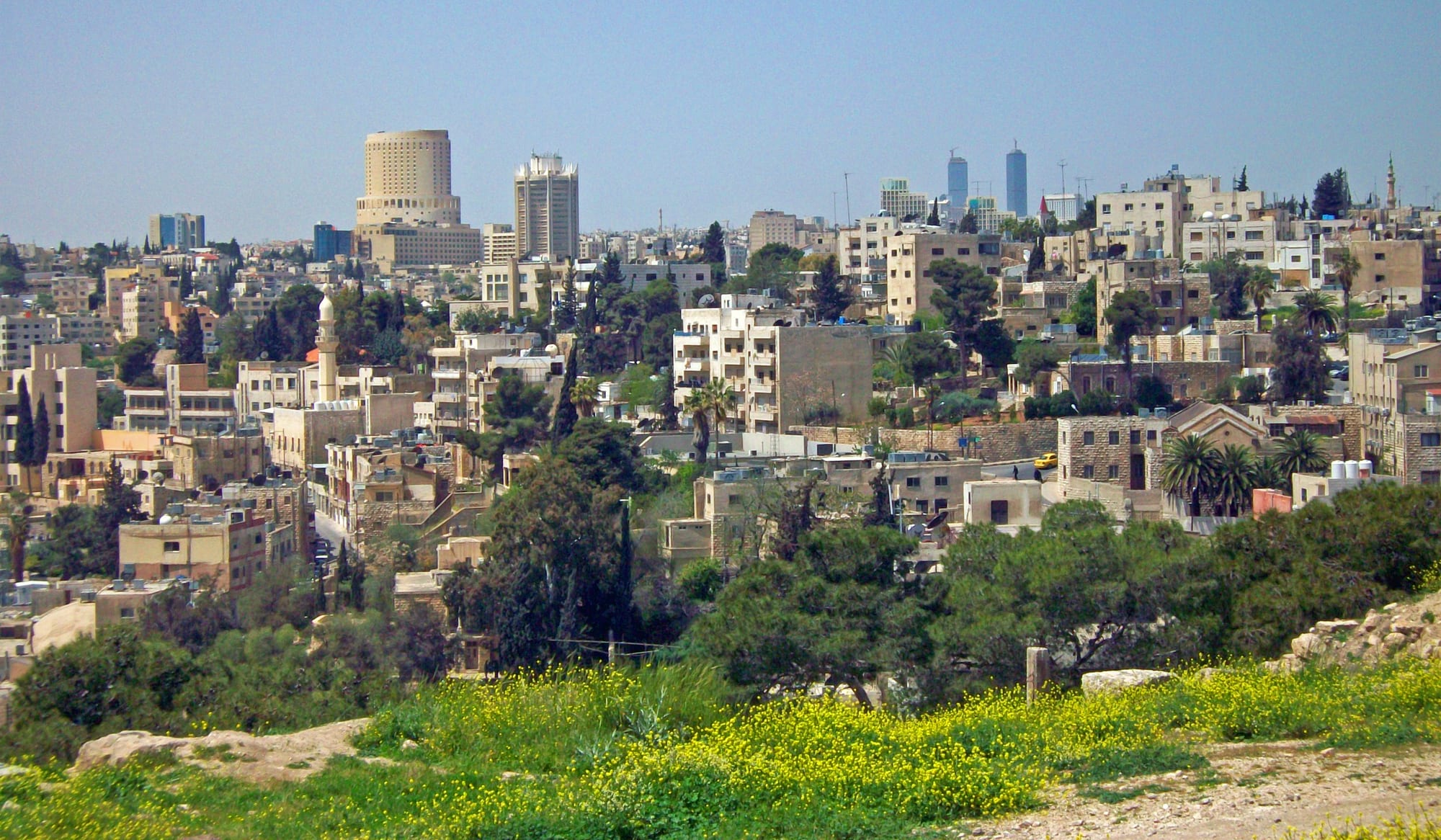
Downtown is walkable and best seen on foot, and long public stairways climb from it to Jabal Amman and Jabal al-Weibdeh. Beyond that the city is hard going: the hills are steep, distances between districts are long, pavements are often blocked or missing, and crossing the main roads takes care. Most residents drive even for short trips.
🛡️ Safety
Amman is a calm city with low levels of violent crime, and visitors are treated with courtesy. The usual risks are pickpocketing in crowded souks, traffic on roads where drivers rarely give way to pedestrians, and occasional demonstrations, which are best avoided. Since February 2026 the wider region has been at war, and there have been launches towards targets in Jordan.
Avoid demonstrations and political gatherings, take care crossing roads, and keep valuables close in crowded markets. Check current official travel advice before travelling.
🌦️ Climate
A hot-summer Mediterranean climate at between about 700 and 1,100 metres above sea level, which keeps the capital cooler than the Jordan Valley below it. Rain falls only between November and April, and the hills can turn green for a few weeks in spring.
- Summer
- hot and dry days, usually 28–33°C, with low humidity and noticeably cool evenings
- Winter
- cool and wet, typically 5–13°C, with heavy rain, strong winds and snow in some years
🤝 Local Customs
Jordanians are hospitable and offers of tea or coffee are frequent and sincere. Dress is relaxed in western Amman but modest downtown and in the east: covered shoulders and knees avoid attention, and a headscarf is needed to enter a mosque. Greetings are unhurried, and the right hand is used for eating and passing things. Alcohol is sold in licensed shops, hotels and many restaurants, but not during Ramadan daylight hours, when eating and drinking in public is avoided.
Ask before photographing people, especially women, and tip around 10 per cent in restaurants where service is not already added.
💳 Common Payment Methods
The currency is the Jordanian dinar, divided into 1,000 fils and pegged to the US dollar. Cards are accepted in hotels, malls and larger restaurants, but downtown shops, markets, small cafés and many taxis take cash only. ATMs are widespread, and money changers downtown give good rates.