History
Madaba is old enough to appear in the Hebrew Bible as Medeba, a town of the Moabite plateau fought over by Moab and Israel and mentioned on the Mesha Stele found at nearby Dhiban. Under Nabataean and then Roman rule it was a prosperous provincial town on the road system of the plateau, with a colonnaded street, and it kept its importance into the Byzantine centuries, when it became a bishopric. That is the period the town is now known for: in the fifth and sixth centuries its churches and houses were floored with mosaics by workshops of unusual skill.
The great earthquake of 749 and the shifting of trade left Medeba largely deserted, and for more than a thousand years the site was a mound of ruins used by herders. Its modern history begins in 1880, when 90 Arab Christian families from Karak, led by two Italian priests of the Latin Patriarchate of Jerusalem, petitioned the Ottoman authorities and were allowed to resettle the ruins, by then a bare tell. Building their houses and churches, they found mosaic floor after mosaic floor beneath the soil.
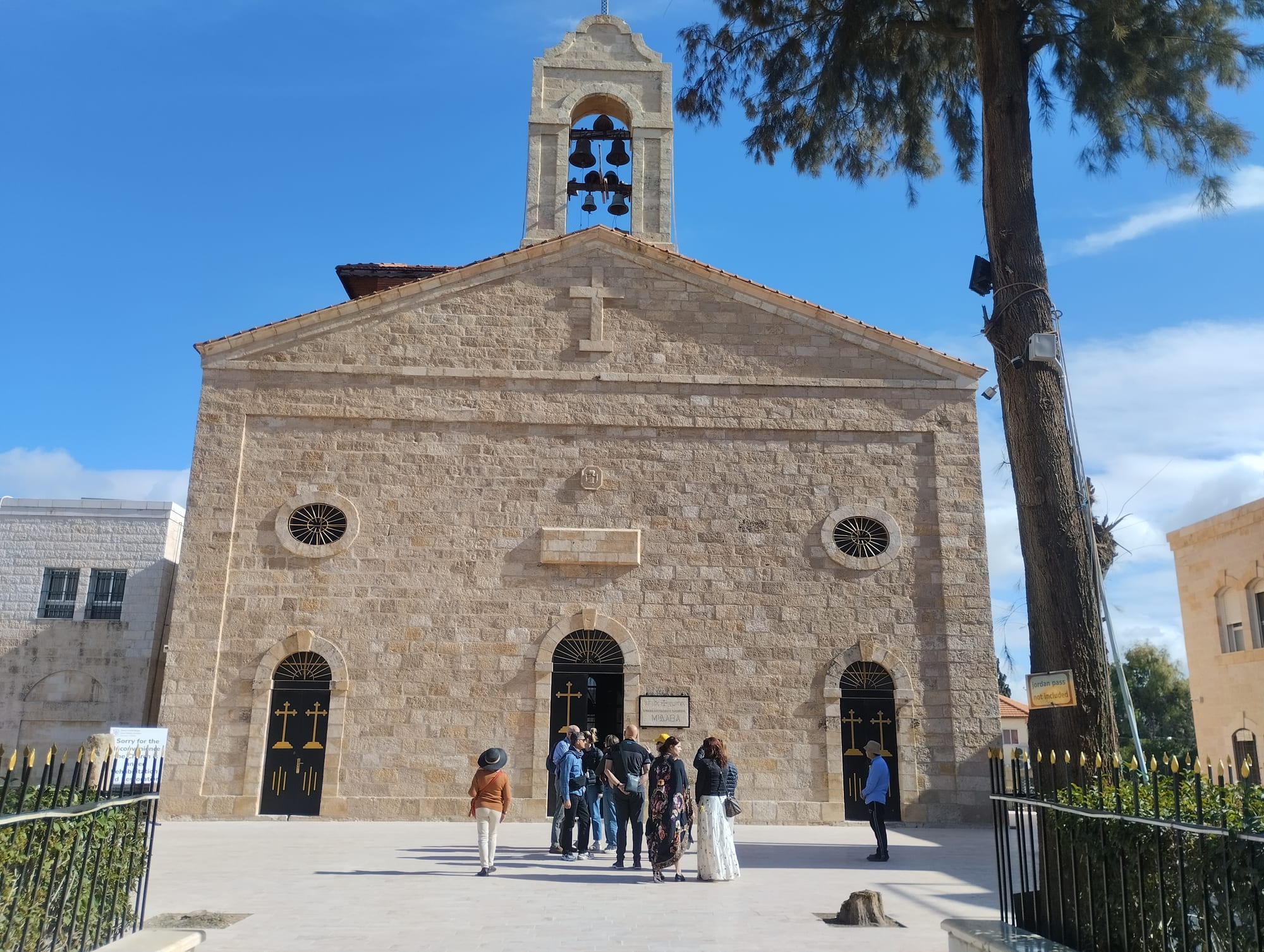
In 1884 workmen preparing the site of a new Orthodox church uncovered the floor of a Byzantine basilica carrying a map of the Holy Land in coloured stone; the full mosaic came to light in 1896 as the new church was floored, and it has been studied ever since as the oldest surviving map of the region, with Jerusalem shown in detail. The town grew around that discovery as well as around farming, gained an archaeological park and a mosaic school in the 20th century, and its population expanded further with Palestinian arrivals after 1948 and 1967. Today it is the capital of Madaba Governorate and among Jordan's ten largest cities.