💰 Budget
One of the cheaper cities in Kazakhstan. Hotels are modest and priced for officials and traders rather than tourists, and the bazaars and canteens cost very little. The one expensive item is a trip towards Baikonur, which must be arranged in advance through an agency and priced accordingly.
- Daily Budget Midrange
- USD 65–130 (mid-range hotel, restaurant meals, a driver for trips out of the city)
- Daily Budget Shoestring
- USD 25–45 (simple hotel or guesthouse, bazaar and canteen food, buses and trains)
Baikonur requires permits obtained weeks ahead through a specialist agency, and the cost per person falls sharply in a group.
📅 Best Time to Visit
April to early June and September to October, when the heat is bearable and the countryside is at its best — green fields and tulips in spring, the rice and melon harvest in autumn. Nauryz in late March is a good time to be in the south. July and August bring fierce desert heat, and winter is cold and windy on the open plain.
⏳ Suggested Number of Days
A day or two is enough for the city itself. Three or four suit anyone adding an arranged excursion or a drive into the surrounding district, where permits and long driving distances, rather than the number of sights, decide how much time is needed.
- First Visit
- 1–2 days
- With Surroundings
- 3–4 days
🚆 Transportation
The city is flat and spread out, served by municipal buses and plentiful cheap taxis, usually hailed from the street or booked through an app. Long-distance travel is by train along the main Almaty to Russia line, by bus, or by domestic flights from the airport. Trips into the surrounding district need a hired car with a driver.
Agree a taxi fare before getting in if the ride is not booked through an app, and allow extra time for level crossings on the railway.
🛬 Airport & Station Connections
Korkyt Ata International Airport, about 12 kilometres south-east of the centre, has domestic flights and has been cleared for international services since 2014. The city is a scheduled stop on the main railway from Almaty and Shymkent to Aktobe and Russia, and overnight trains are a common way to arrive. A national highway runs alongside the railway for buses and shared taxis, with Shymkent roughly half a day away by road.
🚶 Walkability
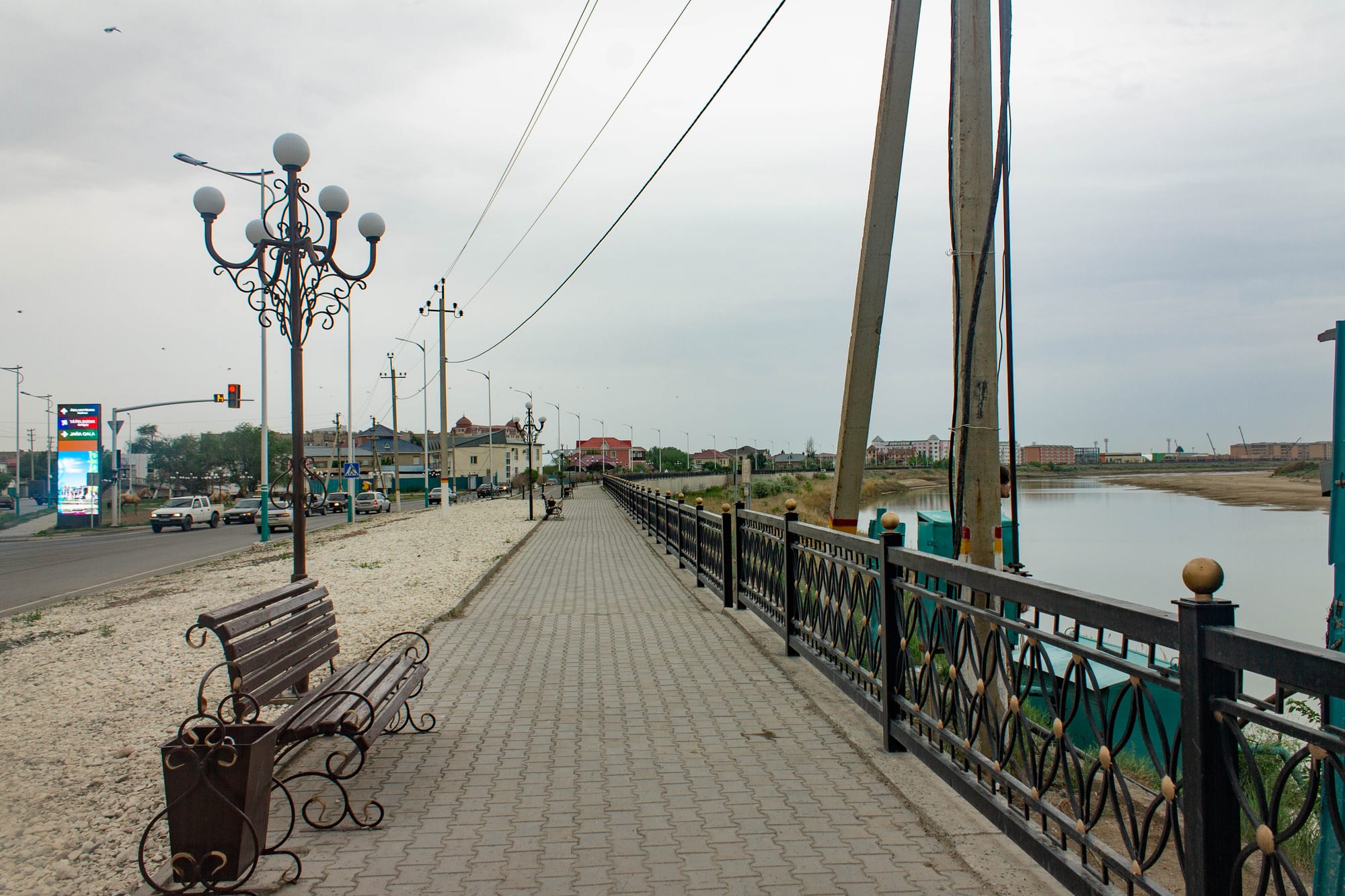
The centre is flat, low-rise and walkable, and the embankment makes an easy stroll. Distances between districts are long, though, and the summer sun is severe, so walking is confined to early morning and evening for much of the year. Pavements and crossings are uneven in the outer streets.
🛡️ Safety
Kyzylorda is a quiet provincial city and violent crime is rare. The usual cautions apply to crowded bazaars and to taxis taken off the street. The greater risks are heat exhaustion in summer, dust, and poor road conditions on journeys into the district.
Carry water and cover up against the sun, use app-booked taxis where possible, and never approach the Baikonur restricted zone without an arranged permit. Check current official travel advice before travelling.
🌦️ Climate
A harsh continental desert climate with very little rainfall, long hot summers and short cold winters. Wind blows dust off the surrounding plains, and the irrigation canals and trees of the city provide most of the relief in summer.
- Summer
- very hot and dry, often 35–40°C in July, with cooler nights
- Winter
- cold and windy, frequently around -10°C or below, with little snow
🤝 Local Customs
The south is the most Kazakh-speaking and observant part of the country. Elders are greeted first, guests are fed generously and tea is poured again as soon as the bowl empties. Shoes come off in homes. Modest dress is expected, especially at mosques and shrines, and alcohol is available but drunk more discreetly than in northern cities.
Ask before photographing people, take a small gift when invited to a home, and accept at least a token amount of food that is offered.
💳 Common Payment Methods
The currency is the Kazakhstani tenge. Cards and local mobile payment apps are accepted in hotels, supermarkets and many cafés, but the bazaars, village stalls and street taxis run on cash. Cash machines are easy to find in the centre; foreign currency is best exchanged at bank counters.