💰 Budget
Mombasa has two price levels. Guesthouses on the island, Swahili cafés, matatus and tuk-tuks cost very little, while the beach hotels of Nyali, Bamburi and Shanzu and the resorts further out charge international rates, rising sharply at Christmas and in August. Boat trips and marine park fees are the main extras.
- Daily Budget Midrange
- USD 95–230 (beach hotel, restaurant meals, a boat trip or snorkelling day)
- Daily Budget Shoestring
- USD 30–60 (guesthouse, local cafés, matatus and tuk-tuks)
Agree tuk-tuk and boat fares before setting off, and budget separately for marine park entry and for trips to the south coast.
📅 Best Time to Visit
December to March is hot, dry and calm, the best stretch for swimming and snorkelling and the busiest with visitors. July to October is a little cooler and breezier with rougher water. April and May bring the heaviest rain and are the quietest weeks on the coast.
⏳ Suggested Number of Days
Two or three days cover the island city and a beach. Five to seven allow the south coast, the creeks and reefs to the north, or a run inland to Tsavo. Heat and ferry queues slow everything, so plan fewer moves per day than the distances suggest.
- First Visit
- 2–3 days
- With Surroundings
- 5–7 days
🚆 Transportation
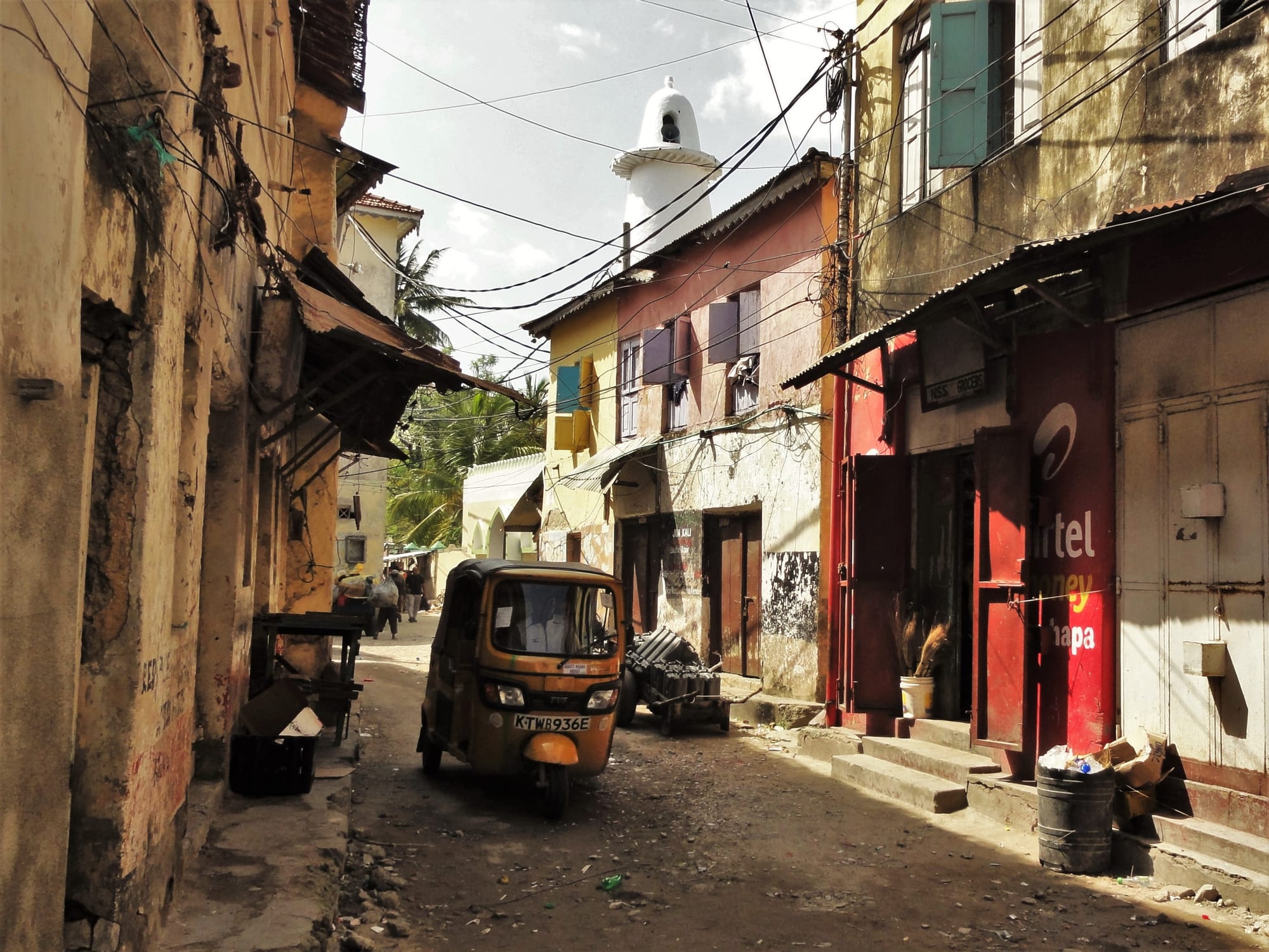
Matatus cover the island and the mainland roads, and tuk-tuks are the usual way to move short distances, with boda-boda motorcycles for the rest. The Likoni ferry carries foot passengers and vehicles across the harbour entrance to the south coast and is heavily used at the start and end of the working day. Bridges and a causeway link the island northwards and westwards.
Allow extra time for the Likoni ferry at peak hours, and agree the tuk-tuk fare before getting in.
🛬 Airport & Station Connections
Moi International Airport, about 10 kilometres west of the island, has domestic flights and scheduled and charter services to regional destinations, the Middle East and Europe. The standard gauge railway opened in 2017 runs from Nairobi to the Mombasa Terminus at Miritini, outside the city, with two express trains and an all-stations train each day, and buses and matatus use the Nairobi highway through Voi and Mtito Andei.
🚶 Walkability
The Old Town and the island centre are walkable, and the lanes around Fort Jesus are best seen on foot, though the heat and humidity make the middle of the day hard going and pavements are uneven and crowded. Everything beyond the island — the beaches, Haller Park, the airport, the railway terminus — needs a vehicle. Walking in the Old Town and on the beaches after dark is generally avoided.
🛡️ Safety
Mombasa has street crime, and thefts and touting occur on the beaches and in the old quarters, particularly after dark. Militant attacks have hit the coast, including at Mpeketoni in Lamu County in 2014, and governments advise against travel to parts of Lamu and Tana River counties far to the north. Swimming carries rip-current risks, and malaria is present along the whole coast.
Avoid the northeastern counties and the immediate Somali border, take care in Nairobi's central and eastern districts and after dark, use hotel or app-based transport, and take malaria precautions outside the highlands. Walking on beaches or in the old town after dark is best avoided, and the northern Lamu and Tana River border areas should be given a wide berth. Check current official travel advice before travelling.
🌦️ Climate
Hot and humid all year at sea level, with sea breezes rather than seasons of temperature. Rain comes heaviest in April and May, and a second, lighter spell falls around November; the monsoon winds set the character of the months, calm from December and stronger and cooler from June.
- Summer
- December to March is hot and humid, around 30–33°C, with calm seas
- Winter
- June to September is a little cooler, around 29°C, breezier with a rougher sea
🤝 Local Customs
Mombasa is largely Muslim, and the call to prayer, Friday gatherings and the calendar of Ramadan and Eid shape the week. Dress away from the beach is modest — covered shoulders and knees, especially in the Old Town and around mosques — and swimwear belongs on the shore. Greetings are important and unhurried, and Swahili is the everyday language.
A service charge is often added in hotel restaurants, and rounding up is usual elsewhere. Ask before photographing people, mosques or the ferry, and avoid eating or drinking in the street during Ramadan daylight hours.
💳 Common Payment Methods
The currency is the Kenyan shilling. M-Pesa mobile money is used for almost every local payment, including tuk-tuks and market stalls, and cards work in hotels, malls and larger restaurants. ATMs are common on the island and in Nyali, and small notes are useful for fares, ferries and stalls.