💰 Budget
Phonsavan is inexpensive. Guesthouses are plain and cheap, food costs little, and the main outlay is transport: a minivan tour or a hired driver and guide for the jar sites, and the long bus or flight in and out. Warm bedding and heating are rarely included, which matters in the cold season.
- Daily Budget Midrange
- USD 40–90 (better hotel, restaurant meals, a private driver and guide for the jar sites and Muang Khoun)
- Daily Budget Shoestring
- USD 15–30 (guesthouse room, noodle shops and market food, a seat on a shared minivan tour)
Carry kip in cash; cash machines exist on the main road but can be out of service, and villages and site fees take nothing else.
📅 Best Time to Visit
November to February brings clear skies over the plateau and the best light on the jar sites, though nights are genuinely cold and dawn can approach freezing. March and April are warm but often thick with smoke from field burning. The rains from May to October make the grassland green and the sites muddy, and can slow the mountain roads.
⏳ Suggested Number of Days
Most visits last about two days, and three suit travellers who also want the old capital, the outlying jar groups and the war sites. Journeys in and out are long by road, so arriving by air changes how much time is usable.
- First Visit
- 2 days
- With Surroundings
- 3 days
🚆 Transportation
The town itself is walkable along its single main road, with tuk-tuks for longer hops. The jar sites and villages are reached by minivan tours sold by guesthouses and agencies, by hired driver, or by rented motorbike. Buses and vans run west to Luang Prabang and Vang Vieng, south to Vientiane and east along Route 7 towards the Vietnamese border at Nong Het.
Mountain journeys take far longer than the distances suggest, and night buses on these roads are best avoided.
🛬 Airport & Station Connections
Xieng Khouang Airport sits on the edge of the town, with short domestic flights from Vientiane. By road, Luang Prabang and Vientiane are both most of a day away over the mountains; buses also run east on Route 7 towards Vinh in Vietnam. There is no railway to the province, so travellers using the Laos–China line change to a bus at Vang Vieng or Luang Prabang.
🚶 Walkability
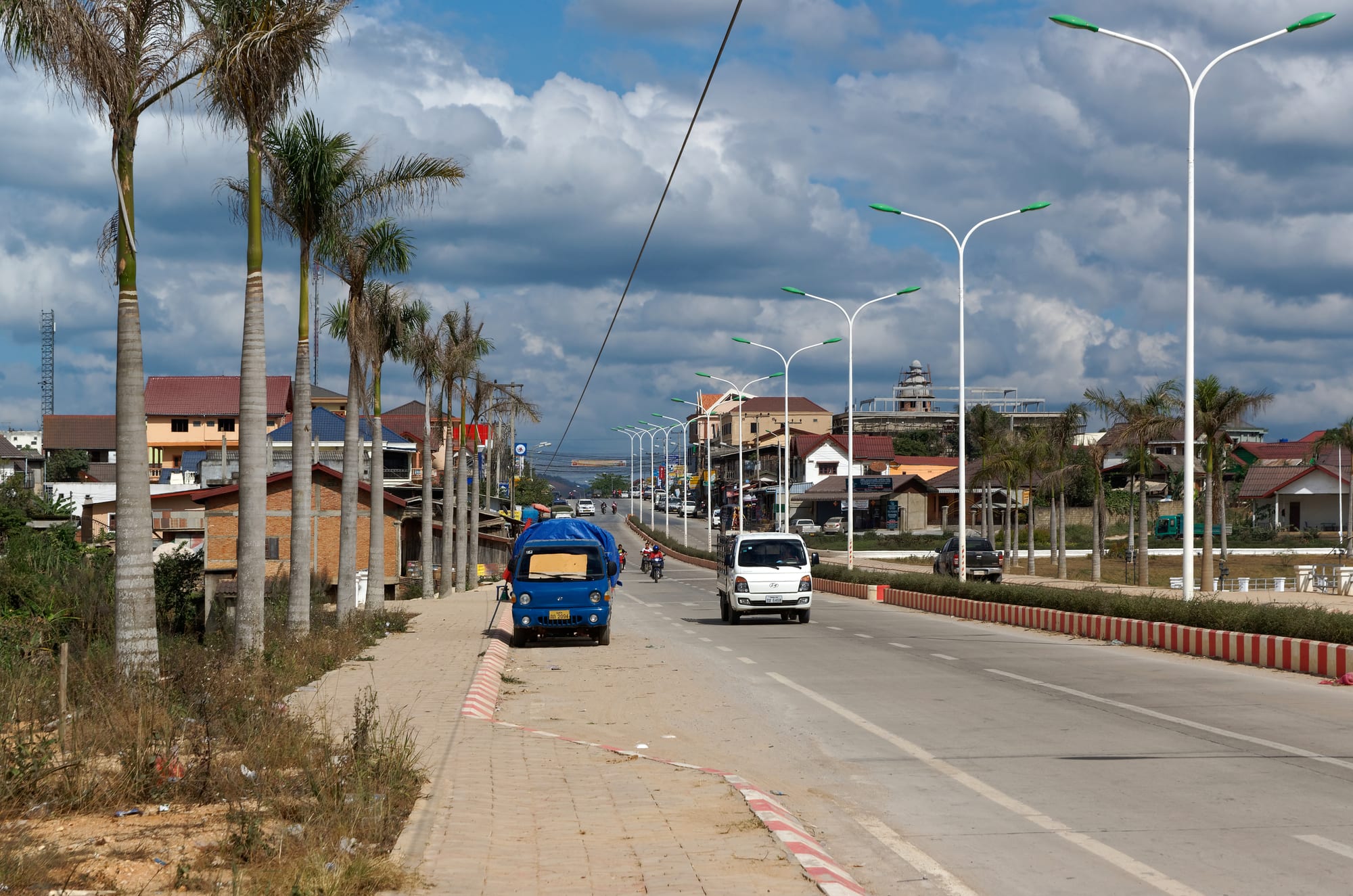
The centre is flat and easy to walk, with the market, guesthouses and restaurants strung along about a kilometre of main road. Beyond that the town spreads thinly and pavements give out, so the airport, the bus station and the jar sites all need transport. Evenings are quiet and lighting is patchy.
🛡️ Safety
Crime against visitors is rare, and the town is calm. The serious hazard is unexploded ordnance: Xiangkhouang was one of the most heavily bombed places on earth, and although the jar sites open to visitors have been cleared and marked, the surrounding land often has not been. Mountain roads are narrow and prone to landslides in the wet season, and medical facilities are limited.
Keep to marked paths at the jar sites and between the white clearance markers, never touch or move scrap metal, and use a licensed guide for any walking in the countryside. Check current official travel advice before travelling.
🌦️ Climate
The Xiangkhouang plateau lies over 1,000 metres above sea level, so Phonsavan is markedly cooler than lowland Laos, with a wet summer, a dry winter and a smoky hot season in spring.
- Summer
- mild to warm, generally 25–30°C, with heavy rain and cloud from May to September
- Winter
- dry and pleasant by day at about 20–24°C, but cold at night, often 5–10°C and occasionally near freezing
🤝 Local Customs
Xiangkhouang is mixed, with Lao, Hmong, Khmu and Tai Phuan communities and a long, painful war history that touches many families. Temple manners are the Lao ones — covered shoulders, shoes off, soft voices — and highland villages have their own customs about entering houses and photographing people or ceremonies. War sites are graves as much as monuments and are treated quietly.
Ask before photographing people, houses or ordnance, and do not buy or handle war scrap; tipping is not expected but guides and drivers appreciate it.
💳 Common Payment Methods
The Lao kip is used for everything, and cash is essential outside a few hotels. Cash machines on the main road accept foreign cards but have withdrawal limits and are sometimes empty. Site entry fees, drivers, markets and village purchases are all cash, and US dollars or Thai baht are only occasionally accepted.