History
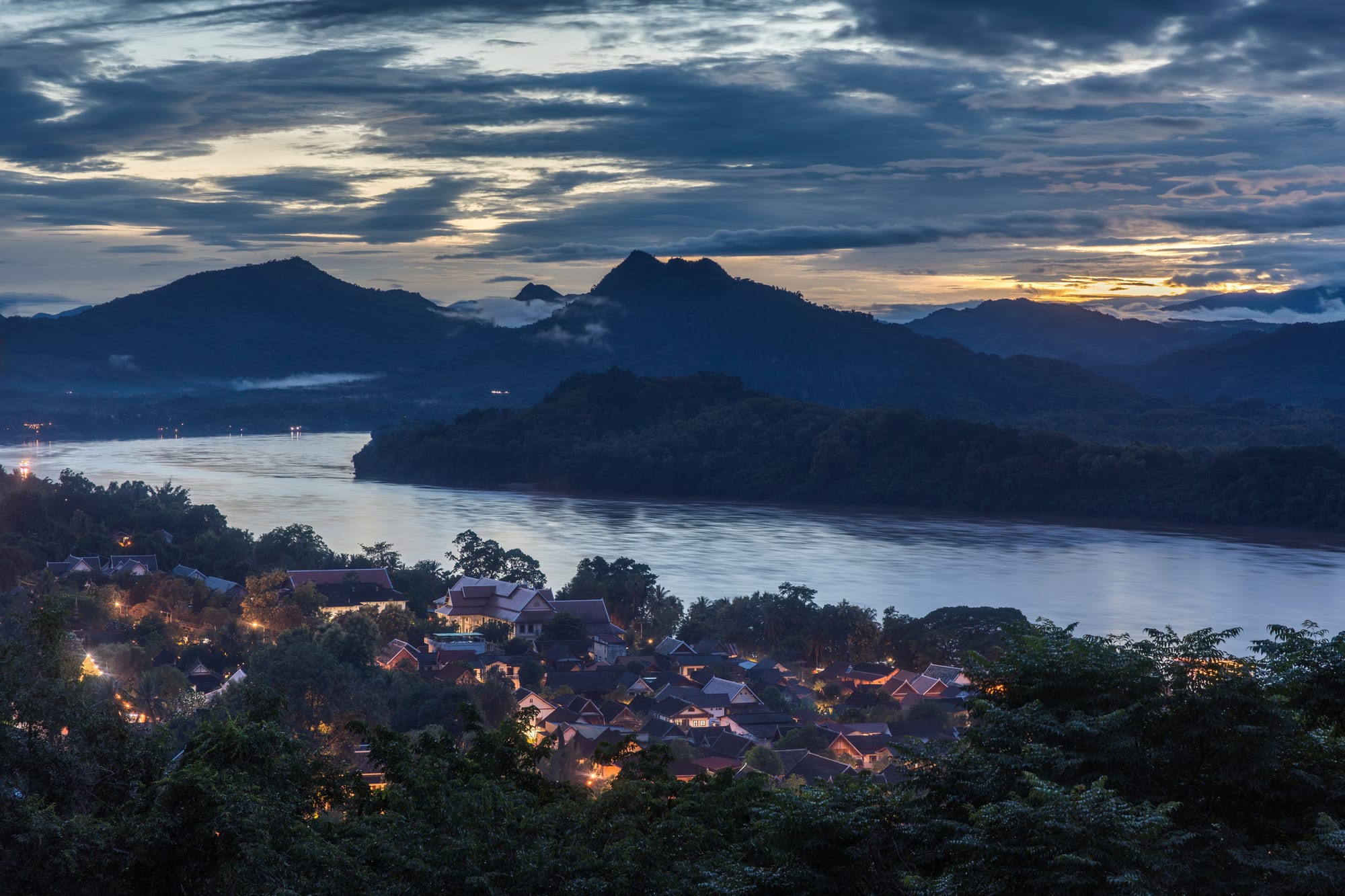
Luang Prabang, known in early times as Muang Sua and later Xieng Thong, was the seat of the Lao principalities of the upper Mekong long before it became a royal city. In 1353 Fa Ngum founded the kingdom of Lan Xang here, and the town took its present name from the Phra Bang, a Buddha image brought as a symbol of the dynasty's Theravada faith. King Setthathirath moved the capital to Vientiane in the 1560s, but Luang Prabang remained the religious heart of the north, and when Lan Xang split in the early 18th century it became the capital of its own kingdom, which later paid tribute to Siam.
The uplands were a patchwork. Xiangkhouang was the Phuan principality of Muang Phuan, fought over by Lao, Siamese and Vietnamese rulers, while Tai, Khmu, Hmong, Akha and Yao peoples settled the hills of Phongsaly, Luang Namtha and Bokeo. In 1887 Chinese Haw raiders sacked Luang Prabang, and the French envoy Auguste Pavie helped the king escape — an episode that led to the French protectorate. The royal family kept its throne in Luang Prabang throughout the colonial period.
The 20th century was hardest on the east. The Plain of Jars was a key battlefield of the Secret War and was bombed repeatedly, and the Pathet Lao ran their leadership from caves at Vieng Xay in Houaphanh. After 1975 the monarchy was abolished and the last king, Savang Vatthana, was sent to a re-education camp in Houaphanh, where he died. UNESCO listed Luang Prabang in 1995, the railway reached it in 2021, and the Plain of Jars was listed in 2019.