💰 Budget
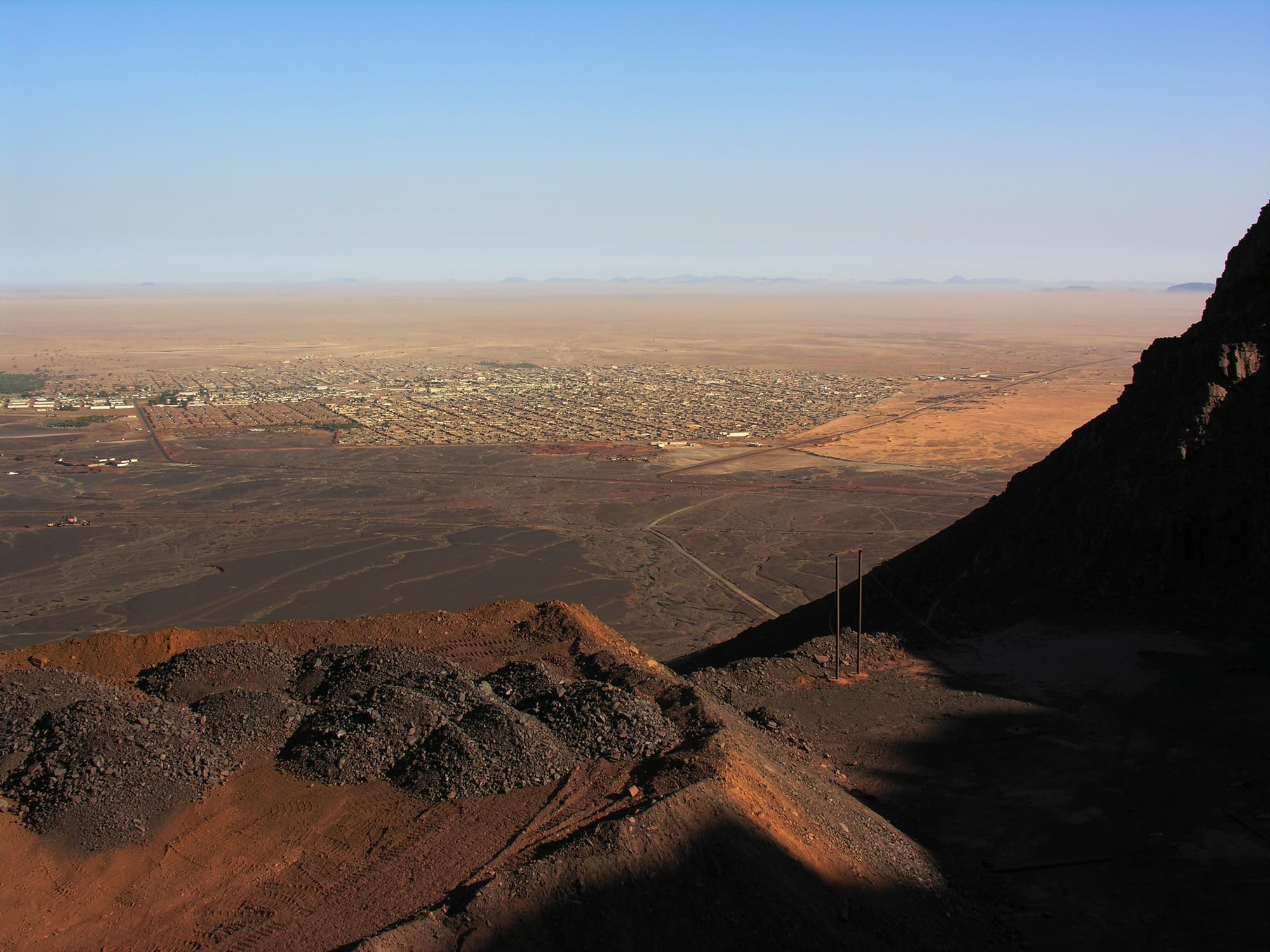
Zouérat is a working town, not a tourist one, and prices reflect its distance from everywhere: food and fuel are trucked or railed in and cost more than in Nouakchott, while lodging is limited to a few simple hotels and company guesthouses. The ore train to the coast is the cheapest long journey in the country, since riding on the ore is free.
- Daily Budget Midrange
- USD 100–200 (the best rooms available, meals out, a hired 4x4 with driver)
- Daily Budget Shoestring
- USD 25–45 (simple room, market and grill food, shared taxis, the ore train)
Carry cash; banks exist but cash machines can fail, cards are almost never accepted, and there is nowhere to fall back on between here and the coast.
📅 Best Time to Visit
November to February, when days are warm and nights near freezing on this high northern plain. March and October are hotter but bearable. From April to September the heat is extreme and spring winds fill the air with dust; the town works through it, but travel is punishing.
⏳ Suggested Number of Days
A day covers the town. Two or three make sense only for someone taking the railway to the coast or travelling on with a vehicle, since the journeys, not the place, take the time.
- First Visit
- 1 day
- With Surroundings
- 2–3 days
🚆 Transportation
The town is flat and spread out, and people move by shared taxi, pickup and company bus; walking works within a quarter but not between them in the heat. The railway is the link to the coast, and a road runs south towards Atar and Nouakchott, with 4x4s and bush taxis covering it.
Arrange transport through a local operator or the hotel, agree the price first, and carry water and warm clothing for the night hours of any long journey.
🛬 Airport & Station Connections
Zouérat lies at the end of the ore railway, about 700 kilometres inland from Nouadhibou, and the train takes most of a day in each direction. There is a road south towards Atar and on to Nouakchott, a long desert drive, and Tazadit Airport has flights to Nouadhibou and a seasonal service to Casablanca. Travel here is arranged, not casual.
🚶 Walkability
Streets are flat, sandy and wide, and the centre around the market can be walked easily. The quarters are far apart and the sun is severe for much of the year, so residents walk short distances and take shared taxis for longer ones. Mining areas outside the town are not places to wander into.
🛡️ Safety
Zouérat lies in Tiris Zemmour, and most governments advise against travel to the far north and north-east, including much of this region and the areas near the Algerian and Malian borders, which are military zones. The town itself is a controlled company and administrative centre with checkpoints on its approaches; uncleared landmines remain near the Western Sahara border to the north-west, and mining ground is hazardous and restricted.
Travel with a registered operator, keep to established routes, register at checkpoints and never cross into the northern border zones. Check current official travel advice before travelling.
🌦️ Climate
Saharan and extremely dry, on a high plain where nights are much colder than anywhere on the coast. Rain is negligible, dust and wind are frequent, and the gap between the hottest afternoons and the coldest winter nights is among the widest in the country.
- Summer
- very hot, commonly 40–45°C by day with hot, dusty winds
- Winter
- warm days around 22–28°C and cold nights that can fall close to freezing
🤝 Local Customs
A conservative Muslim town with a strong working-men's character. Modest dress is expected — loose clothing covering shoulders and knees, long sleeves and a scarf for women. Greetings are unhurried and green tea in three rounds accompanies almost every encounter. Alcohol is illegal in Mauritania. Mines, the railway, checkpoints and military installations should not be photographed, and people should be asked first.
Ask permission before taking any photograph near industrial or official sites, keep identification to hand for checkpoints, and during Ramadan eat and drink out of sight in daylight.
💳 Common Payment Methods
The currency is the Mauritanian ouguiya (MRU). Zouérat has banks and some cash machines, but they are not dependable, and cards are accepted almost nowhere. Cash, in small notes, pays for taxis, meals, the market and rooms; euros can sometimes be changed with dealers.