💰 Budget
Durango is an inexpensive city with few foreign visitors. City hotels are good value, the historic centre and its churches are free to explore, museum entries are low, and gorditas and market food cost little. Trips to the film sets or the sierra add transport costs.
- Daily Budget Midrange
- USD 80–180 (central hotel, restaurant meals, museums, cable car and a taxi or tour to the film sets)
- Daily Budget Shoestring
- USD 30–50 (budget hotel, market food and gorditas, local buses)
Hotels fill and prices rise during the national fair in July.
📅 Best Time to Visit
October to May is dry and mostly sunny, with warm days and cold nights in winter. June is the hottest month, and summer storms arrive around mid-June, bringing many wet afternoons into September. The national fair in July is the liveliest time in the city.
⏳ Suggested Number of Days
Two days cover the historic centre and its museums. Three or four allow for half-day trips outside the city and slower days in the centre.
- First Visit
- 2 days
- With Surroundings
- 3–4 days
🚆 Transportation
The historic centre is compact and best seen on foot. Local buses link it with the rest of the city and the bus station, and taxis are plentiful: red ones work from the bus station, green ones across the city and yellow ones mostly in the centre. Visitors usually reach the film sets by taxi, tour or car.
Travel between cities by day on the toll highways.
🛬 Airport & Station Connections
Durango International Airport is about 17 km north-east of the city centre, with flights to other Mexican cities and some international routes. The main bus station, about 4–5 km north-east of the centre, has buses across the state and the country. The toll highway to Mazatlán crosses the Sierra Madre by tunnels and the Baluarte Bridge, cutting the journey to about two and a half hours.
🚶 Walkability
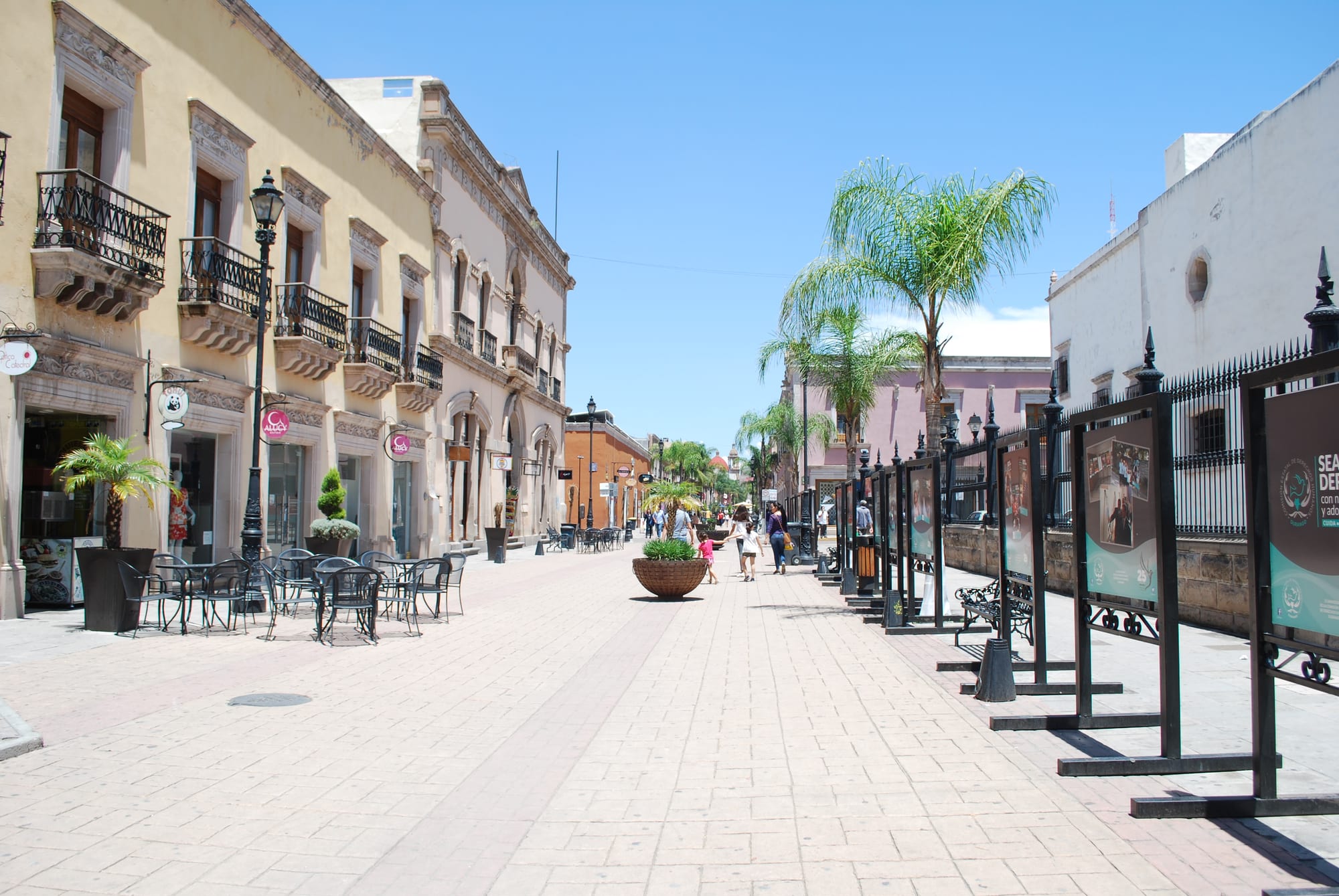
The centre is one of the most walkable in northern Mexico: the Paseo Constitución is pedestrianised, and the cathedral, theatres, museums and market are a few blocks apart. Beyond it the city spreads widely, and taxis or buses are needed.
🛡️ Safety
Safety varies enormously by state and even neighbourhood. Durango is part of the northwest, one of the parts of Mexico most affected by organised-crime violence, where conditions vary by state and district and can change quickly.
Keep to busy areas after dark, use registered taxis, travel between cities by day on toll roads, and take local advice before heading into the sierra. Check current official travel advice before travelling.
🌦️ Climate
A semi-arid highland climate at almost 1,900 metres. Winters are dry and sunny with a wide gap between warm days and cold nights; summers are warm, with most of the year's rain in afternoon storms from mid-June.
- Summer
- June averages 30°C by day and 14°C at night; July and August average about 28°C, with storms and hail
- Winter
- January averages 21°C by day and 2°C at night, with frequent frost and occasional cold snaps below −5°C
🤝 Local Customs
Duranguenses are proud of their colonial city, their westerns and their mezcal. Saint George, the patron saint, is honoured with flowers and candles each April. A tip of 10–15 per cent is usual in restaurants, less so at street stands. Hats and sunglasses come off on entering a church, and the formal usted is the polite way to address strangers.
The legal drinking age in Mexico is 18; drinking in the street is illegal in many places. Bullfighting was banned in the municipality in 2013.
💳 Common Payment Methods
The currency is the Mexican peso. Cards are accepted in hotels, larger restaurants and shops; cash is needed for the market, street food, local buses, taxis and tips. Use cash machines inside banks and shopping centres.