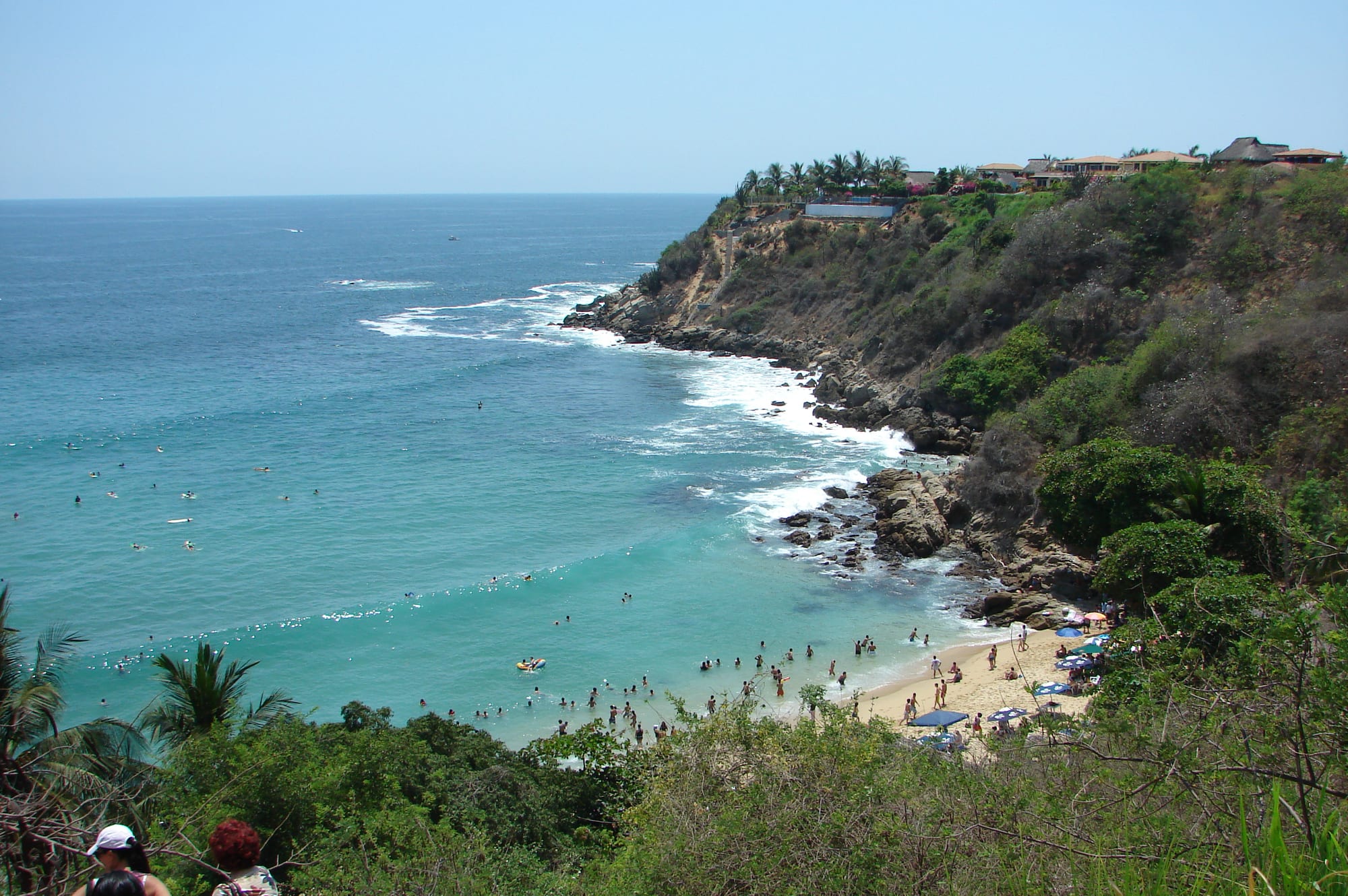
A small sandy cove with swimmers in turquoise water below green cliffs, with houses on the headland

Oaxaca & the Pacific South, Mexico

Puerto Escondido

Playa Carrizalillo, a sheltered cove on the west side of Puerto Escondido. (elfidomx / Wikimedia Commons · CC BY 2.0)

A port and beach town on Oaxaca's Pacific coast that grew from a coffee-shipping bay in the 1930s into a busy tourist centre. Surfers made it famous for the powerful wave at Zicatela Beach; sheltered coves, fishing boats and lagoons lie along the bay, and a new highway opened in 2024 has brought it within a few hours of Oaxaca City.

Neighbourhoods

  • Zicatela
    • Surfing
    • Nightlife
    • Beaches

    The long beach at the eastern end of the bay and the tourist district behind it, built around surfers, with surfboard rentals and places to stay. Its southern end, near Punta Zicatela, has consistently good waves. This side of town belongs to the municipality of Santa María Colotepec.

    Open in Maps
  • The Adoquín and Playa Principal
    • First-time visitors
    • Best for food
    • Local life

    The old centre of town around the main beach, where fishermen land their catch at dawn and boats leave for tours. The Adoquín, a pedestrian street above the beach, has restaurants, bars and craft shops, with Coastal Highway 200 running above it.

    Open in Maps
  • Rinconada and Carrizalillo
    • Families
    • Beaches
    • Quiet and residential

    West of the centre, the Rinconada is a former landing strip now lined with restaurants, salons and shops, near the steps down to the sheltered cove of Carrizalillo.

    Open in Maps
  • Bacocho
    • Beaches
    • Quiet stays

    The westernmost developed beach, with fine soft sand, palm trees and upscale beach clubs; undeveloped beaches continue beyond it.

    Open in Maps

Things to do

Beaches

  • Playa Zicatelabeach

    Nicknamed the Mexican Pipeline for a wave compared with the Banzai Pipeline in Hawaii, it draws surfers and bodyboarders from around the world and hosts major competitions; a strong rip current makes it unsuitable for swimming.

    Open in Maps
  • Playa Marinerobeach

    West of the El Moro rocks, the best of the town beaches for swimming, with gentler surf suited to beginners and bodyboarders.

    Open in Maps
  • Playa Principalbeach

    The 500-metre main beach of grey sand in front of the town, where fishing boats come in and boats can be hired to reach other beaches or look for turtles and porpoises.

    Open in Maps
  • Puerto Angelito and Manzanillobeach

    Twin beaches in a sheltered cove, safe for swimming; Puerto Angelito is busier, while Manzanillo, with no road access, is quieter.

    Open in Maps
  • Playa Carrizalillobeach

    A cove of white sand and blue-green water reached by steps or by water taxi, with gentle waves and rocks good for snorkelling.

    Open in Maps
  • Playa Bacochobeach

    A wide beach of fine sand and palms with moderate surf, though the far western end can have a strong rip current.

    Open in Maps

Walks and viewpoints

  • Andador Escénicotrail

    A stone walkway below the lighthouse west of the main beach, leading towards Puerto Angelito.

    Open in Maps

Short trips from the town

  • Laguna de Manialtepecpark

    A mangrove lagoon about 18 km west of town, popular for birdwatching, with pelicans, ibis, storks and jacanas among many species.

    Open in Maps
  • Lagunas de Chacahua National Parkpark

    A national park created in 1937 of lagoons, mangroves and dunes, with boat tours to see birds and a crocodile nursery, and beaches where three species of turtle lay their eggs.

    Open in Maps

Seasonal events

  • Fiestas de NoviembreNovember into early December

    A month of events on Zicatela, the main beach and the municipal plaza, including a surfing tournament, a sailfishing competition, motocross and a festival of coastal dance.

Eat and drink

Long-standing places and food districts in Puerto Escondido. Hours, ratings and directions come from your maps app, always current.

Food districts and markets

  • Mercado Benito Juárezmarket

    The town's market, with fresh fish and produce alongside kitchenware and clothing.

    Open in Maps
  • The Adoquínneighborhood

    The pedestrian street above the main beach, lined with restaurants and bars.

    Open in Maps
  • Rinconadaneighborhood

    The former airstrip on the west side, now a strip of restaurants and shops near Carrizalillo.

    Open in Maps

Puerto Escondido classics

  • Fish from Playa Principalneighborhood

    Fishermen land their catch at dawn on the main beach and sell it to local restaurants and families, the base of the town's seafood.

    Open in Maps

Experience Puerto Escondido

History

There was no town here before the 1930s. The bay had been used from time to time to ship coffee from the plantations inland, but the lack of drinking water prevented a permanent settlement; the Nahuatl name for the area, Zicatela, means "place of large thorns". The first residents are considered to be Nazario Castellanos and Escolástica Valencia, night watchmen for the coffee plantations, and in the 1930s the port became more firmly established. People lived on fish, poultry, iguanas and turtle eggs.

In the 1960s Highway 200 was built along the coast, linking the Oaxacan towns with Acapulco. Coffee began to travel by truck and the port's role shrank, but surfers and other travellers found the quiet beaches and tourism grew. Drinking water, mail, government offices and a small airport, where the Rinconada now runs, arrived; restaurants that were once palapas, thatched shelters where fishermen cooked their catch, mostly gave way to modern tourist facilities.

The town straddles two municipalities: the Zicatela side belongs to Santa María Colotepec and the west to San Pedro Mixtepec. In August 2008 residents blocked the highway to San Pedro Mixtepec to protest at the lack of money for infrastructure. Hurricane Carlotta made landfall near the town in 2012, and on 19 June 2025 Hurricane Erick came ashore in Oaxaca as a Category 3 storm, cutting electricity and phone coverage for at least 30,000 people here. In 2024 a new highway from Oaxaca City opened, shortening a journey that had taken seven hours over the mountains.

Culture & Customs

Surfing defines the town's image. The wave at Zicatela, nicknamed the Mexican Pipeline after Hawaii's Banzai Pipeline for its power and shape, draws an international crowd of surfers and bodyboarders, and competitions have been held there every November. The Zicatela district caters to them, and La Punta at the beach's southern end has its own surf scene.

The town caters to a more downscale and eclectic crowd than neighbouring Huatulco — mostly surfers, backpackers and Mexican families — and the mix of foreign surfers and long-stay visitors with a working fishing port gives it a less polished character than planned resorts.

The Fiestas de Noviembre are the main local celebration, running through November into early December, with events on Zicatela, on the main beach and in the municipal plaza above it: a surfing tournament, a sailfishing competition, motocross and a festival of coastal dance. Visitors gather to watch the sunset from the small rocky beach around the cliff at the southern end of La Punta.

Daily Life

Puerto Escondido had 35,673 inhabitants at the 2010 census, and about 69 per cent of San Pedro Mixtepec municipality's population lives in the town. It generates most of the municipality's income, and residents have complained that it receives little support from the municipal seat in return.

Tourism is the main business, from surf schools and board rentals to restaurants, hotels and boat tours, and the airport is one of the fastest-growing in Mexico, its passenger numbers in 2025 double those of 2019. The opening of the new highway from Oaxaca City in 2024 brought a surge of visitors, with holiday weekends such as Holy Week overwhelming the town. The port still supports commercial fishing and draws people for deep-sea fishing, especially for sailfish.

The day starts early on the main beach, where fishermen land their catch at dawn and sell it to restaurants and families, and boats take visitors out to look for turtles and dolphins. Surfers time their days by the swell, and the coast's rainy season and hurricane risk from about June to November shape the year.

Food

Most of the local cuisine is based on seafood and local plants, among them eleven species of banana, chocolate and coffee from the hills inland. Fish comes straight from the boats that land on Playa Principal at dawn, and the deep water offshore is known for sailfish.

The town's market, the Mercado Benito Juárez, sells fresh fish and produce alongside household goods, and the pedestrian Adoquín above the main beach and the Rinconada near Carrizalillo are the main restaurant strips. Restaurants were once almost all palapas, thatched shelters where fishermen cooked what they had caught; that tradition has mostly given way to modern restaurants. Small family-owned restaurants in palapas still stand on the beach at Puerto Angelito.

Being in Oaxaca, the town also has access to the state's wider kitchen — the moles, tlayudas and mezcal of the Valley of Oaxaca, now a few hours away by the new highway. Coffee from the plantations inland was once shipped from the bay.

Planning tools

Budget

Puerto Escondido ranges from cheap cabañas and hostels for surfers and backpackers to pricier design hotels, and it caters to a more modest crowd than Huatulco. Since the new highway opened in 2024, visitor numbers have grown, and holiday periods such as Holy Week can be very busy.

Daily Budget Midrange
USD 80–190 (beach bungalow or boutique hotel, restaurants, a boat or lagoon tour)
Daily Budget Shoestring
USD 30–55 (hostel or cabaña, market and street food, local buses)

Carry cash: small restaurants, colectivos and stalls rarely take cards.

Best Time to Visit

October to April is dry and the easiest time on the coast. Surfers come in the summer swell season, when the big waves break at Zicatela, but summer is also the rainy season, with the risk of hurricanes from about June to November. The Fiestas de Noviembre fill the town in November.

Suggested Number of Days

Three or four days is enough for the beaches and the town. Five to seven allow for the lagoons and the wider coast. Surfers and long-stay visitors often stay much longer.

First Visit
3–4 days
With Surroundings
5–7 days

Transportation

Frequent local buses run along the main roads, with their destinations painted on the windscreen, and taxis are plentiful. Water taxis link the main beach with coves such as Carrizalillo, and boats can be hired for fishing or wildlife trips.

Agree taxi fares before setting off.

Airport & Station Connections

Puerto Escondido International Airport, in the town, handled about 950,000 passengers in 2025, with flights to several Mexican cities. A new highway from Oaxaca City, opened in 2024, meets coastal Highway 200 at Ventanillas, about 13 km east of town; before it opened, the bus journey over the Sierra Sur took seven hours. Highway 200 also runs west to Acapulco, and shuttle vans and buses link the town with Oaxaca City.

Walkability

The town is spread along the bay and is less walkable than smaller beach villages. Zicatela, the Adoquín and the main beach can be walked between, and the Andador Escénico links the centre with Puerto Angelito; the western coves and Bacocho are easier by taxi.

Safety

Safety varies enormously by state and even neighbourhood. The main coastal towns of Oaxaca see mostly petty crime, and strong currents at beaches such as Zicatela drown swimmers every year. The coast is exposed to Pacific hurricanes: Hurricane Erick made landfall in Oaxaca on 19 June 2025 as a Category 3 storm and left at least 30,000 people in Puerto Escondido without electricity or phone coverage.

Swim only at sheltered beaches such as Carrizalillo, Puerto Angelito or Marinero, take local advice on currents, and follow warnings in the hurricane season. Check current official travel advice before travelling.

Climate

The climate is tropical and humid, with an average annual temperature of 28°C and a rainy season in summer, when tropical storms and hurricanes are possible.

Summer
hot, humid and rainy, about 30–34°C on the coast
Winter
dry and sunny, around 30°C on the coast

Local Customs

The town is relaxed and informal, shaped by surf culture and Mexican family holidays. Beachwear belongs on the beach; cover up in town and in churches. A tip is customary in restaurants.

Ask before photographing people, and do not disturb nesting turtles or their eggs.

Common Payment Methods

The currency is the Mexican peso. Cards are accepted at larger hotels and restaurants, but cash is needed for buses, taxis, markets and many small businesses.