💰 Budget
Ondangwa is one of the cheaper places to stay and eat in Namibia. Hotels and guesthouses along the highway serve business travellers rather than tourists, market food costs very little, and the main expenses for a visitor are a hire car and fuel. Prices rise around Etosha if the town is used as a base for the park.
- Daily Budget Midrange
- USD 150–400 (business hotel or lodge, restaurant meals, a hire car and a guided day in Etosha)
- Daily Budget Shoestring
- USD 45–80 (basic guesthouse or camping, market and street food, a shared hire car, park fees)
Fuel, cash, tyres and supplies are easier to find here than anywhere further north or west, so stock up before leaving the B1.
📅 Best Time to Visit
May to September is the most comfortable time, dry and warm, with the lowest malaria risk and the best game viewing in Etosha to the south. October before the rains is fiercely hot. From January to April the oshanas fill, the plains turn green, birds arrive and traditional foods such as mushrooms and caterpillars appear, but roads flood and the heat is humid.
⏳ Suggested Number of Days
The town is usually a stop of a night rather than a destination in itself. Two or three days allows the mission museum, the markets of the wider Owambo strip and an approach to Etosha from the north. Distances between the northern towns are short, so a car makes a long day possible.
- First Visit
- 1 day
- With Surroundings
- 2–3 days
🚆 Transportation
Shared taxis and minibuses run constantly along the B1 between Ondangwa, Ongwediva and Oshakati, and long-distance minibuses leave for Windhoek from the transport ranks. The town is spread along the highway, so residents rely on taxis for anything beyond their own quarter. A hire car is needed for the museum at Olukonda, the homesteads and Etosha.
The B1 through the northern towns is busy with pedestrians, livestock and overtaking traffic, so daylight driving and low speeds matter here more than on empty desert roads.
🛬 Airport & Station Connections
Ondangwa Airport, just outside the town, has scheduled flights from Windhoek in under two hours, and is the usual air gateway to the north. By road the town is on the tarred B1 about 700 km north of Windhoek, typically a full day's drive, with minibuses covering the same route. The Angolan border at Oshikango, about 60 km north along the B1, is a busy crossing used mainly for trade.
🚶 Walkability
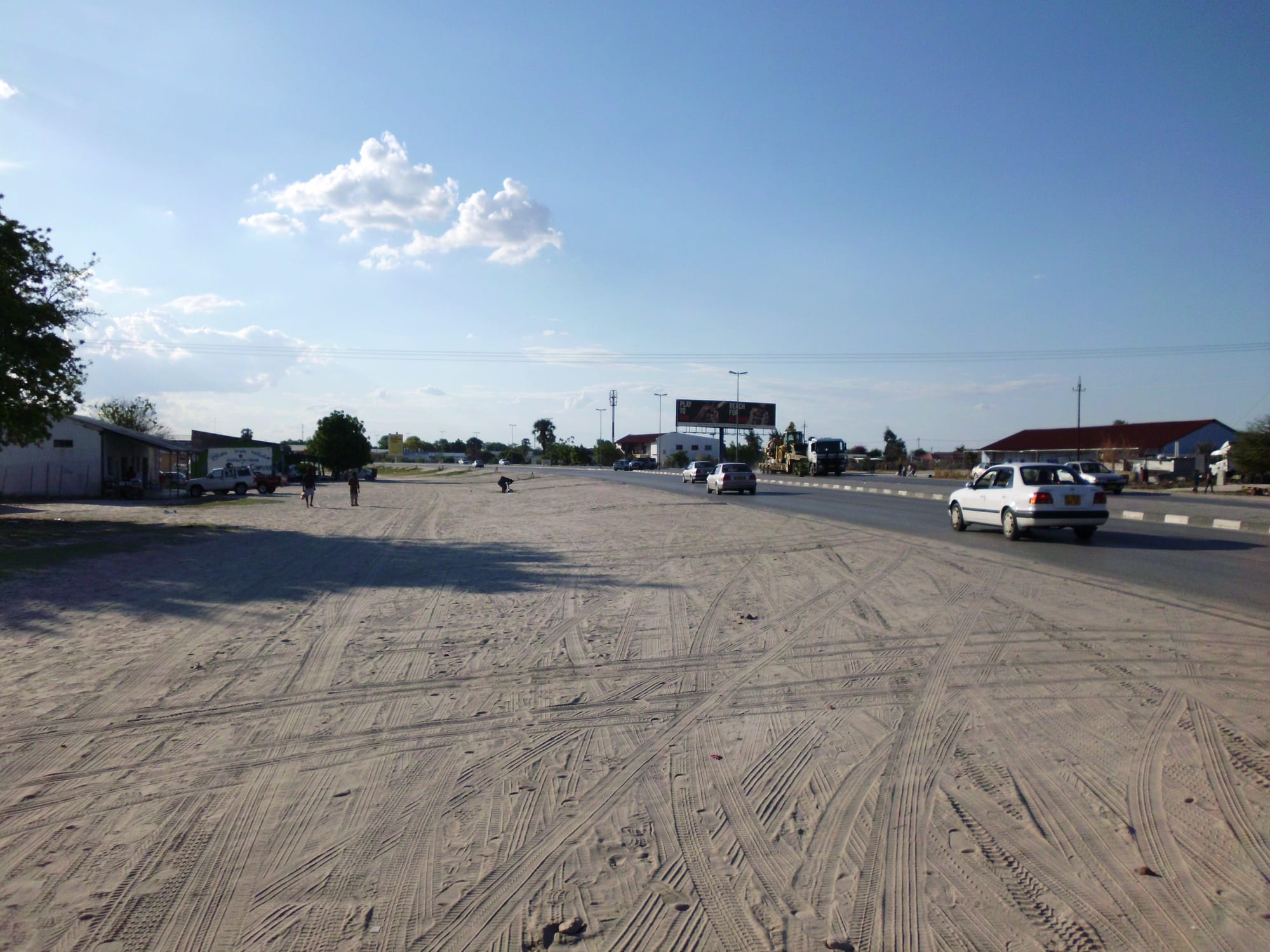
The centre is flat and walkable in the sense that the shops, market and guesthouses sit close together, but the town is strung out along a busy highway with sandy verges, little shade and few pavements. Most walking is short hops between shops and the market; anything further is done by shared taxi. Midday heat discourages walking for much of the year.
🛡️ Safety
Ondangwa is a generally calm town, with the petty theft and occasional bag-snatching normal to any busy market and transport hub, and more drinking-related trouble around bars at weekends. Traffic on the B1 is the main danger, and malaria is present in the rainy season. The oshanas hold water and mud that can hide deep channels after the rains.
Take malaria precautions in the Kavango and Zambezi, keep to Etosha's gate times, avoid swimming in the rivers and do not drive at night. Check current official travel advice before travelling.
🌦️ Climate
Hot and semi-arid, with a single rainy season from about November to April, when storms fill the oshanas, and a dry season from May to October. Being in the southern hemisphere, summer falls in December to February and winter in June to August. October is the hottest month, before the rains break.
- Summer
- hot, about 31–36°C by day, humid after rain, with heavy afternoon thunderstorms
- Winter
- dry and warm by day at about 25–29°C, with cool nights of 7–12°C
🤝 Local Customs
Oshiwambo in its dialects is the language of daily life, and English is used in offices and shops; a greeting and a handshake come before any request, and elders are greeted first. Lutheran and Anglican churches are central to community life and Sunday is quiet. Traditional authorities still matter in matters of land and custom, and homesteads are private family space.
Ask before photographing people, homesteads or market stalls; dress modestly in churches and villages, and accept that business is done slowly and politely rather than briskly.
💳 Common Payment Methods
The currency is the Namibian dollar, pegged one to one with the South African rand, which is also accepted. Banks and ATMs are along the main road, and cards work in supermarkets, filling stations and hotels. Market stalls, shared taxis and roadside grills are cash only, and small notes are useful.