💰 Budget
Lillehammer costs a little less than Oslo but is still expensive by European standards, and prices for rooms climb in the ski season and for big events. The town centre and Maihaugen are easily covered on foot, and supermarket picnics keep costs down on days in the mountains.
- Daily Budget Midrange
- USD 200–380 (mid-range hotel, restaurant dinners, museum tickets, a ski pass or a hire car)
- Daily Budget Shoestring
- USD 85–140 (hostel or cabin bed, supermarket food, local buses)
Wine, spirits and strong beer are sold only at the state Vinmonopolet shops; book rooms early for the Birkebeinerrennet weekend and the literature festival.
📅 Best Time to Visit
December to March for skiing at the Olympic venues, Hafjell and the mountain plateaus, with the Birkebeinerrennet in March. June to August brings long days for walking and the Skibladner's sailings on the lake, and the literature festival falls in late spring.
⏳ Suggested Number of Days
One or two days are enough for the town and its museums. Three to five allow for skiing or walking in the hills and further up the Gudbrandsdal valley.
- First Visit
- 1–2 days
- With Surroundings
- 3–5 days
🚆 Transportation
The town centre is small enough to walk. Buses to regional destinations and the outlying sights leave from outside the railway station, and the ski resorts and mountain areas are easiest to reach by car or by ski bus in season.
Mountain roads can be icy from autumn to spring; winter tyres are needed in winter conditions.
🛬 Airport & Station Connections
Lillehammer has no airport of its own. Trains on the Dovre Line from Oslo towards Trondheim run about hourly and take around two hours from Oslo and about an hour and 40 minutes from Oslo Airport, Gardermoen. Buses also run from Oslo and the airport, and the drive from Gardermoen takes at least two hours.
🚶 Walkability
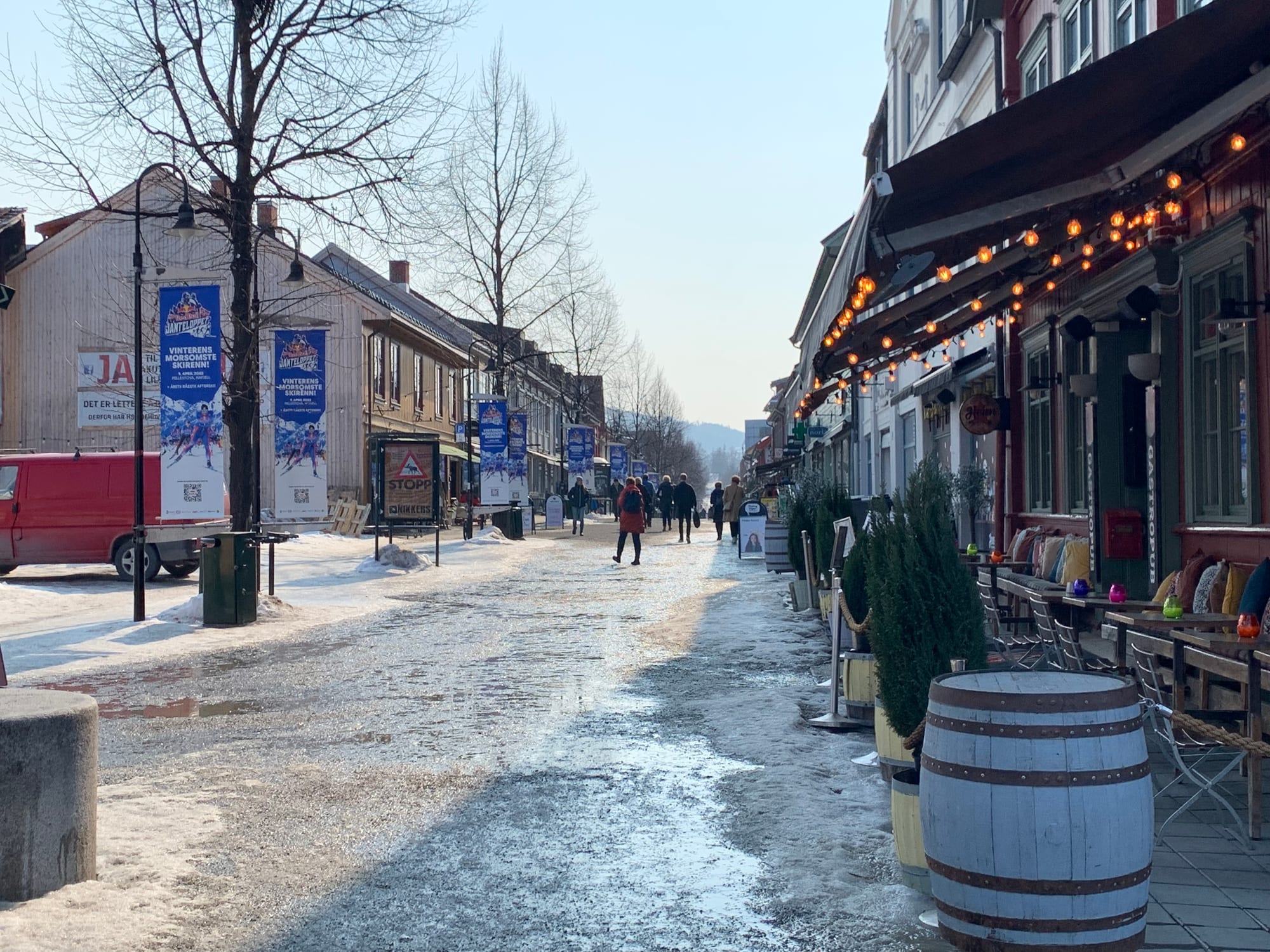
The centre is compact: the station is two blocks below Storgata, and Maihaugen and the Olympic Park are within walking distance up the hillside. Streets climb steeply from the lake, and pavements are icy in winter. The ski resorts and Nordseter need a bus or a car.
🛡️ Safety
Norway has among the lowest crime rates in the world. The town itself is quiet; the risks are outdoors — fast-changing weather and cold on the mountain plateaus, avalanche terrain away from the pistes, and moose on the roads at dusk.
Check the weather and the avalanche forecast before skiing or walking in the mountains, and drive carefully through the forests at dawn and dusk. Check current official travel advice before travelling.
🌦️ Climate
An inland climate with a shorter frost-free season than Oslo. Night frost usually ends around 10 May and returns around the end of September, giving about 142 frost-free days a year; summers can be hot.
- Summer
- mild to warm, with hot spells — the record high is 34°C, and there has been no overnight frost in August since 1978
- Winter
- cold — the lowest reading since 2000 is −26.2°C, and the record low is −31°C
🤝 Local Customs
Skiing is part of local identity: the town's coat of arms shows a Birkebeiner skiing down the mountain. On 17 May the town turns out for Constitution Day, when many wear the bunad, the national costume. Payment by card is the norm everywhere.
Wine, spirits and strong beer are sold only at Vinmonopolet shops; ask before photographing people in national dress.
💳 Common Payment Methods
The currency is the Norwegian krone (NOK). Cards and the Vipps app are used for almost everything, although staffed shops have been required by law to accept cash since October 2024. Contactless card payment is widespread.