💰 Budget
Reine is small and remote, and prices for food and fuel are high even by Norwegian standards. Rorbu cabins fill and rise in price in summer, and village shops cost more than the supermarkets in the larger Lofoten towns. Self-catering and walking keep costs down; boat trips and guided tours add a good deal.
- Daily Budget Midrange
- USD 270–530 (rorbu cabin, restaurant dinners, a guided boat trip, a hire car)
- Daily Budget Shoestring
- USD 95–150 (campsite or hostel, supermarket food, buses and local ferries)
Book cabins well ahead for summer, and stock up at a supermarket in a larger town before driving to the southern end of Lofoten.
📅 Best Time to Visit
June to August for the midnight sun, hiking and long evenings, when the village is at its busiest. January to April brings the cod-fishing season and the drying racks, and the darker months a chance of the Northern Lights. From 9 December to 3 January the sun does not rise.
⏳ Suggested Number of Days
A night or two is enough for the village itself. Most visitors stay longer as part of a trip through Lofoten, and settled weather is the main thing that changes how long a stay needs to be.
- First Visit
- 1–2 days
- With Surroundings
- 3–5 days
🚆 Transportation
The village is small and walkable. The E10 runs through it on a chain of bridges and continues a short way south to Å, where the road ends. Several buses a day run from Moskenesøya through Leknes, where travellers change for Svolvær. A car gives the most freedom, but around Reine the road becomes very narrow.
Drive slowly on the narrow E10, and park only in proper places — not in passing bays or on the bridges.
🛬 Airport & Station Connections
Several car ferries a day cross from Bodø to Moskenes, just south of Reine, and the coastal ferry and other boats link Bodø with Lofoten ports. The nearest airport is at Leknes, with short flights from Bodø, and there are buses from Narvik. By road, the E10 runs the length of the islands from the mainland.
🚶 Walkability
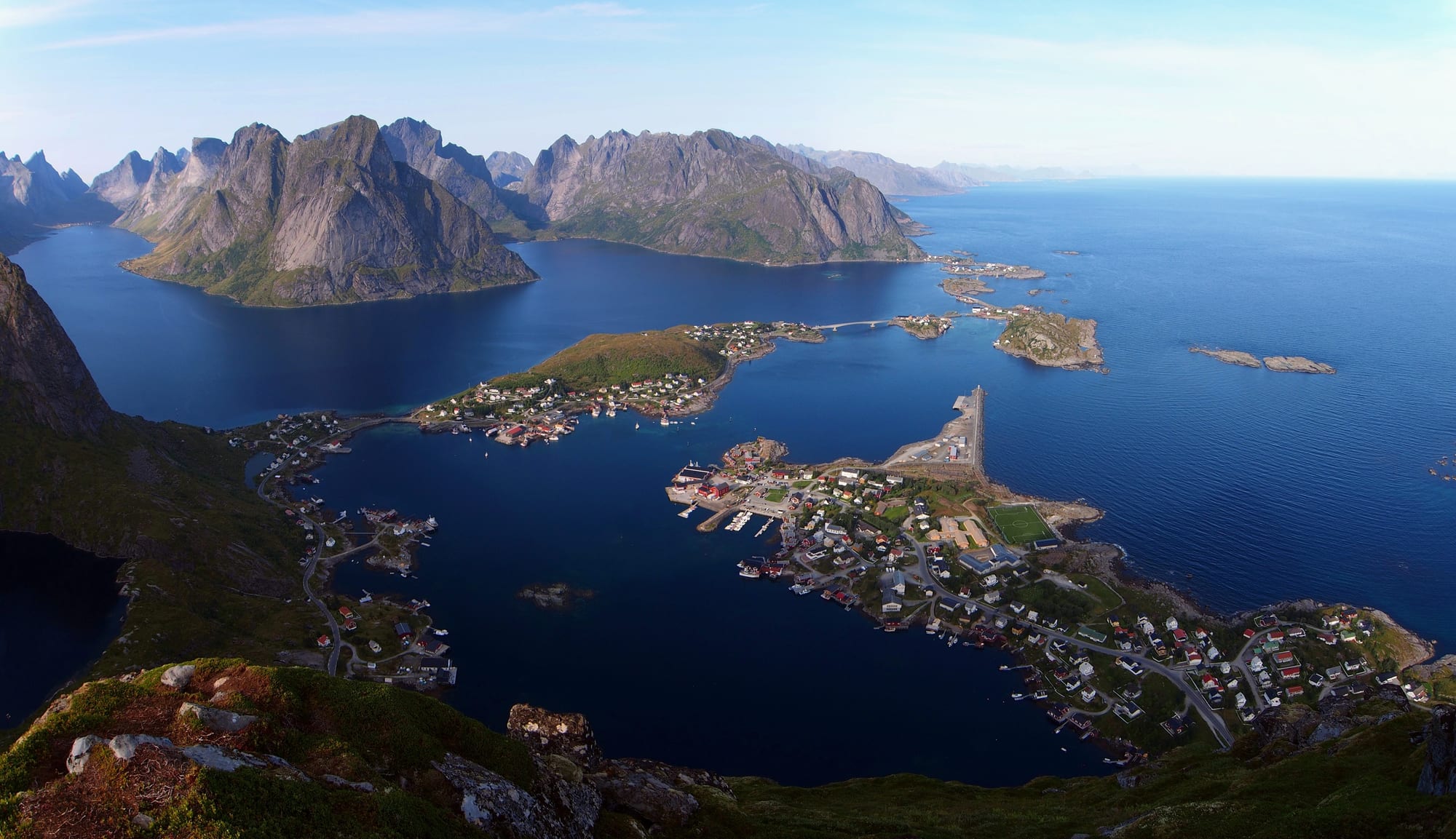
Reine itself is easy on foot, and Hamnøya and Sakrisøya are walkable along the road, though the E10 is narrow and busy in summer. The Reinebringen staircase starts close to the village, and Å and the ferry terminal are better reached by bus or car.
🛡️ Safety
Norway has among the lowest crime rates in the world. Around Reine the risks are natural: steep, slippery mountain trails, sudden changes in weather, cold water and the narrow, busy road with little room for walkers.
Keep to the staircase and marked trails, check the forecast before climbing or going out on the water, and walk the road with care. Check current official travel advice before travelling.
🌦️ Climate
Subarctic, but kept relatively mild by the Gulf Stream. Across Lofoten winter temperatures hover around freezing and begin to climb in April, and the weather changes fast at any time of year. There is 24-hour daylight from May to early August, while the sun stays below the horizon from 9 December to 3 January.
- Summer
- cool and changeable; across Lofoten temperatures up to 23°C are not uncommon, but it can turn cold even in summer
- Winter
- dark, windy and wet, with temperatures across Lofoten hovering around 0°C
🤝 Local Customs
Reine is a working fishing village as well as a destination. The harbour, fish-processing buildings and drying racks are workplaces, and the village's few hundred residents live among the visitors. Norway is informal and egalitarian, and alcohol is sold through a state monopoly and is expensive.
Leave fish racks and boats alone, keep away from private houses and jetties when taking photographs, and use toilets and proper parking rather than the roadside.
💳 Common Payment Methods
The currency is the Norwegian krone (NOK). Norway is close to fully cashless: cards and the Vipps app are used for everything, although staffed shops have been required by law to accept cash since October 2024. A contactless Visa or Mastercard works everywhere, including on Lofoten's buses.