History
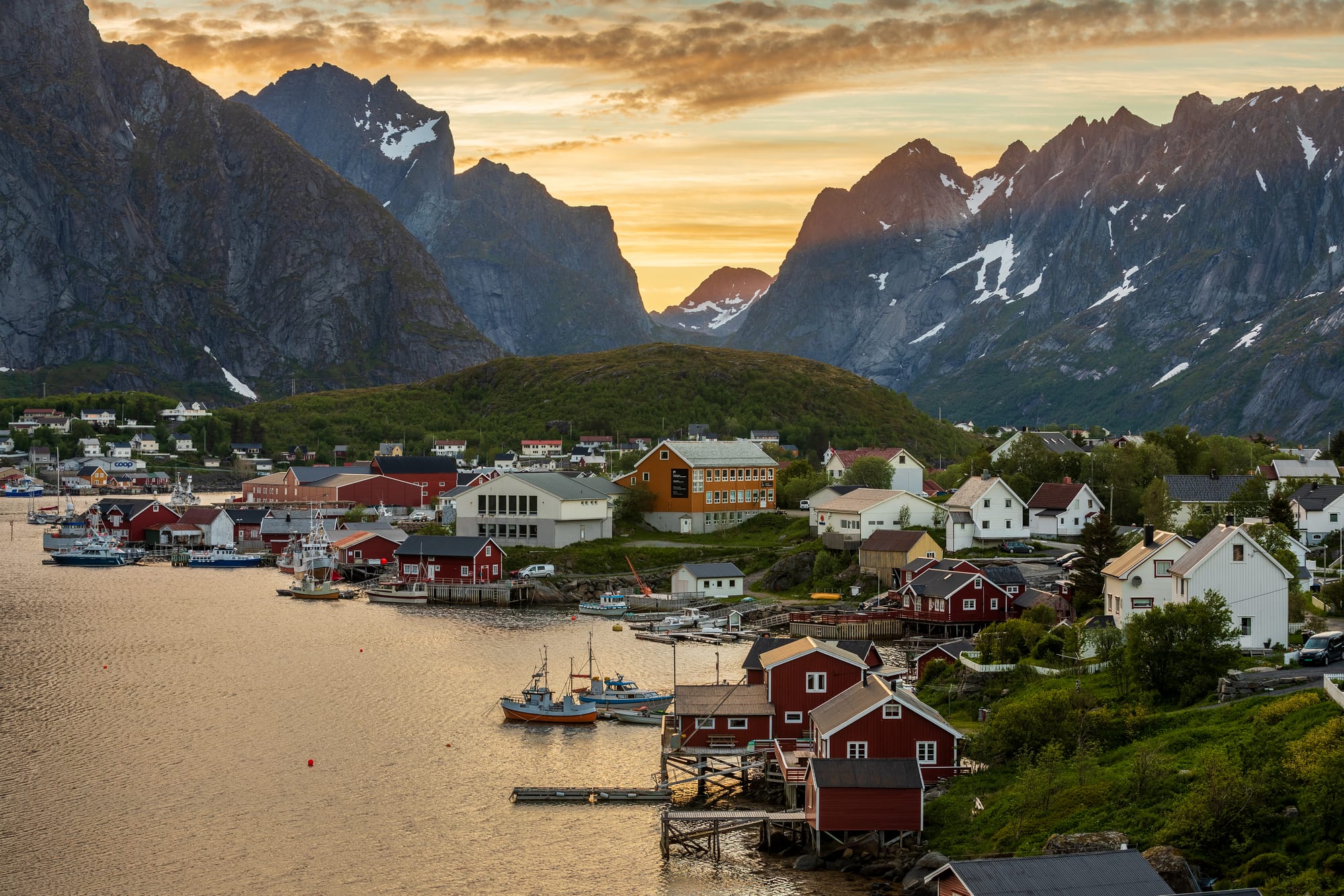
People have lived on the northern coast since the end of the last ice age, and the rock carvings at Alta record hunters and fishermen from several thousand years ago. The Sámi have inhabited the north for millennia, herding reindeer inland and fishing along the fjords, while Norse chieftains settled the outer coast; the reconstructed longhouse at Borg in Lofoten marks one of the largest Viking-Age chieftains' halls found in Norway.
From the Middle Ages the great winter cod fishery in Lofoten fed a trade in stockfish, dried on wooden racks and shipped south to Bergen and on to Europe. Vardø's fortress guarded the far north-east against rival claims, and in the 17th century Finnmark saw some of Europe's most intense witch trials, which struck Sámi and Norwegian women and men alike. In the 18th and 19th centuries Pomor traders from the White Sea exchanged grain for fish, Kven settlers came from Finland, and Tromsø grew into the base for Arctic hunting and polar expeditions.
The Second World War brought devastation. Narvik, the export port for Swedish iron ore, was the scene of heavy fighting in 1940, and in 1944–45 the retreating German army forcibly evacuated Finnmark and northern Troms and burned almost every building, while the Soviet army liberated Kirkenes. The region was rebuilt after the war, and the Alta dam protests of the late 1970s and early 1980s became a turning point for Sámi rights, leading to the Sámi Parliament, opened in Karasjok in 1989.