💰 Budget
Tromsø is expensive even by Norwegian standards for eating out and drinking, and hotel prices rise in summer and in the Northern Lights season. Guided trips — aurora chasing, whale watching, dog sledding — are the biggest extra costs. Supermarkets, some of which sell hot food, and cafés keep the daily bill down.
- Daily Budget Midrange
- USD 270–530 (hotel, restaurant dinners, a guided excursion or the cable car, buses and taxis)
- Daily Budget Shoestring
- USD 95–150 (hostel or campsite, supermarket food, city buses)
Book winter rooms well ahead; a 24-hour or 7-day bus ticket is cheaper than single fares for anyone using the buses often.
📅 Best Time to Visit
Late autumn to March for the Northern Lights, which cannot be seen between late April and mid-August because the sky never darkens; January brings the film festival and the classical music festival. From late February the light returns over deep snow. Summer has the midnight sun, from about 19 May to 27 July, the marathon and the Bukta festival, though the weather varies greatly from year to year.
⏳ Suggested Number of Days
Two to four days cover the city and its museums. Aurora hunting needs several nights to allow for cloud, and trips to the islands and the mountains around the city add more days; winter visitors usually stay longer than summer ones.
- First Visit
- 2–4 days
- With Surroundings
- 5–7 days
🚆 Transportation
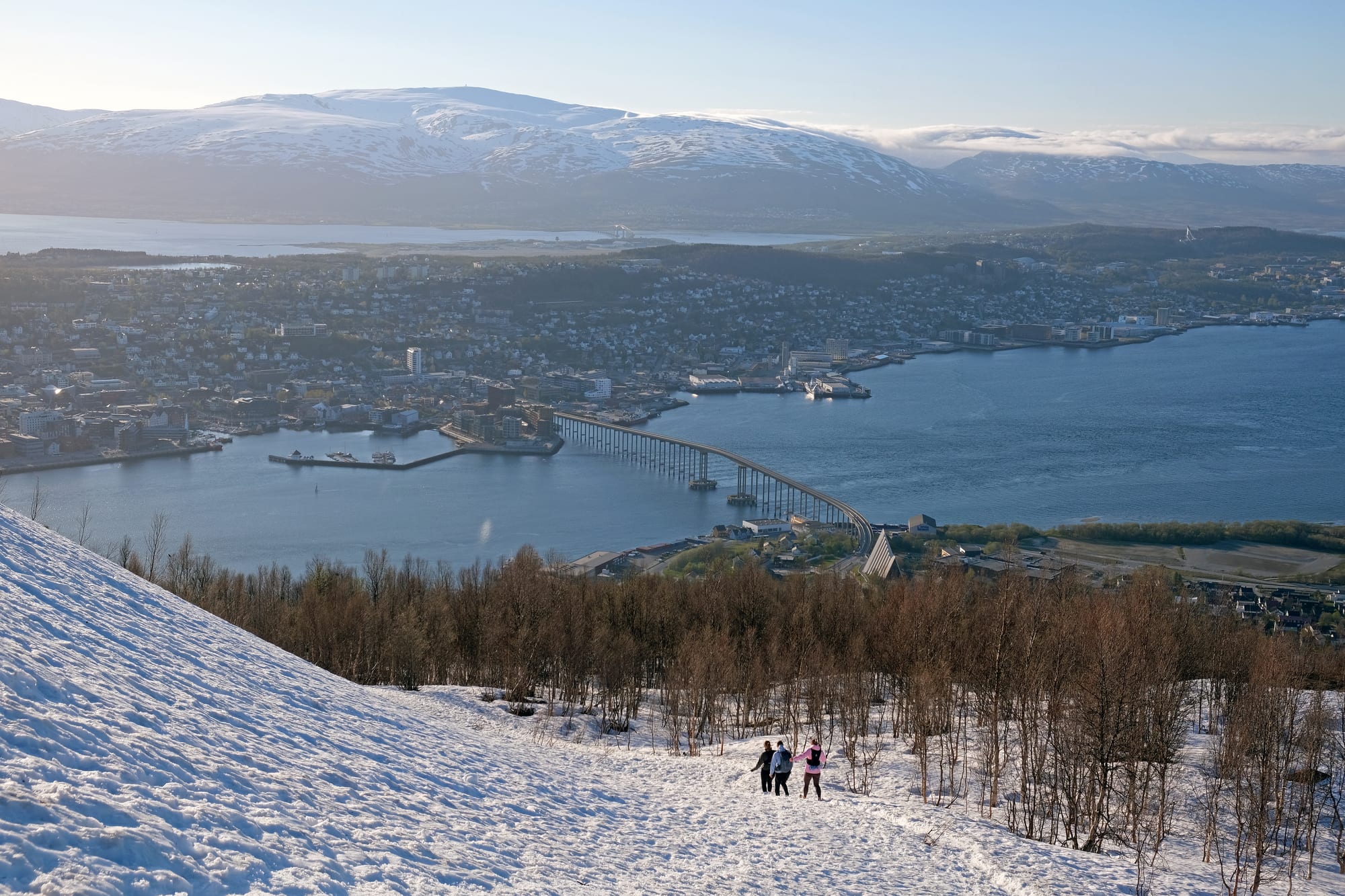
Most of the compact centre is within walking distance. City buses are plentiful and reliable, generally run until midnight and reach the airport, the cable car and the museums; cash is no longer accepted on board, so tickets are bought from machines, shops or the app. The Tromsø Bridge and the Tromsøysund Tunnel link the island with the mainland, and the Sandnessund Bridge with Kvaløya.
Streets are often icy in the first half of winter; studded shoe spikes help, and almost all cars use studded tyres.
🛬 Airport & Station Connections
Most visitors fly into Tromsø Airport at Langnes, on the western shore of the island, with frequent flights from Oslo and direct routes from many European countries. An airport express bus and city buses reach the centre in around a quarter of an hour. There is no railway: buses run from the railheads at Narvik and Fauske, and the coastal ferry calls on its way north. The drive from Oslo is about 1,700 km.
🚶 Walkability
The centre is small and easy on foot, with Storgata, the harbour, the cathedral and most museums close together. Crossing the bridge to the Arctic Cathedral is a walk with a view; the cable car, the university and the island's southern tip are easier by bus. In winter, ice on pavements is the main obstacle.
🛡️ Safety
Norway has among the lowest crime rates in the world. In Tromsø the hazards are natural: icy streets and roads, especially when thaws in the polar night are followed by cold winds, avalanches on steep slopes around the city, and driving in winter darkness.
Wear shoe spikes on icy days, check the avalanche and weather forecasts before mountain trips, and pull over only where it is safe when watching the Northern Lights. Check current official travel advice before travelling.
🌦️ Climate
Subarctic, but extremely mild for the latitude thanks to the ice-free Norwegian Sea, with the most precipitation in autumn and winter. The midnight sun lasts from about 19 May to 27 July and the polar night from about late November to mid-January, softened by a few hours of bluish twilight. Snow cover is long and deep, but it varies greatly from winter to winter.
- Summer
- rather cool and changeable, sometimes cloudy and rainy, sometimes sunny; the record high is 30.2°C, from July 1972
- Winter
- moderate for the Arctic — February averages about −2.4°C on the western side of the island, and the lowest temperature ever recorded is −18.4°C
🤝 Local Customs
Tromsø is a lively student and festival city with a strong nightlife, where weekdays are spent in cafés and weekends on the dance floors. The Sámi are part of the city's heritage, and its Sámi name, Romsa, appears alongside the Norwegian one at the university. Locals are loyal to Mack beer. Alcohol is sold through a state monopoly and is expensive.
Ask before photographing people in Sámi dress, and keep noise down in residential streets when out watching the Northern Lights at night.
💳 Common Payment Methods
The currency is the Norwegian krone (NOK). Norway is close to fully cashless: cards and the Vipps app are used for everything, although staffed shops have been required by law to accept cash since October 2024. A contactless Visa or Mastercard works everywhere; city buses no longer take cash.