History
The farmlands around the Trondheimsfjord supported powerful chieftains, the earls of Lade, in the Viking Age, and whoever held Trøndelag held much of Norway. King Olav Tryggvason founded a trading town at the mouth of the Nidelva in 997, and Olav Haraldsson, who pushed Christianity on the country, fell at the battle of Stiklestad in 1030. Within a year he was declared a saint, and his shrine in Nidaros, the old name of Trondheim, drew pilgrims from across northern Europe.
The cathedral built over his grave from about 1070 became the seat of an archbishopric in the 1150s whose province reached Iceland, Greenland, the Faroes and the Orkneys. Norway's kings were crowned there, and Trondheim remained the country's spiritual capital even after power moved south to Bergen and Oslo. The Reformation of 1537 ended the archbishopric and the pilgrimages.
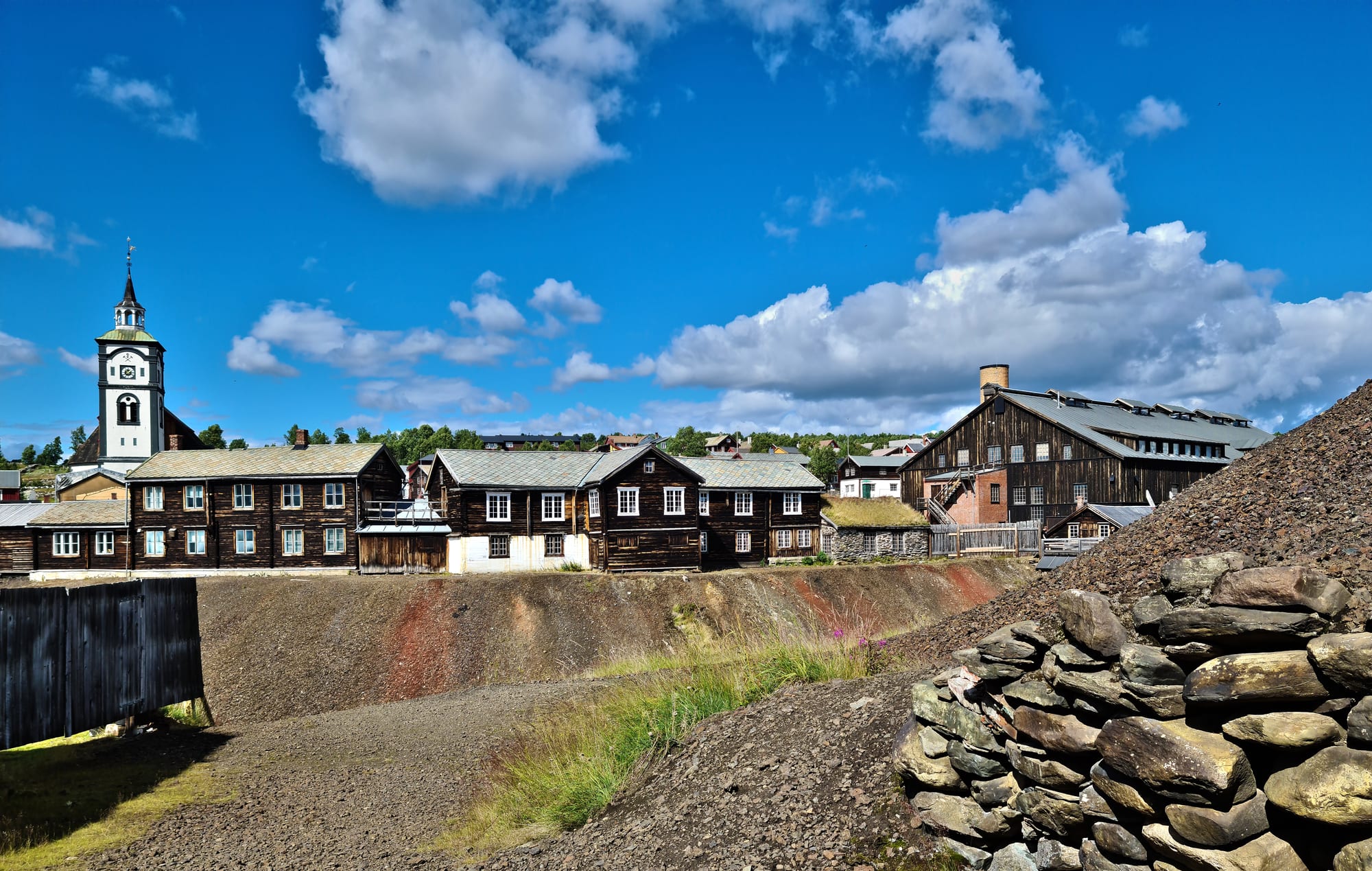
In 1644 copper was found at Røros, and the mining town that grew up on the bare plateau worked until 1977. After a fire in 1681 Trondheim was rebuilt with wide streets to stop fire spreading, and in 1718–19 a Swedish army invaded the region, only for thousands of its retreating soldiers to freeze to death in the Tydal mountains. During the Second World War the Germans made Trondheim a major naval and submarine base. Restoration of the cathedral, begun in 1869, lasted more than a century, and in 2018 the two counties of Nord- and Sør-Trøndelag merged back into a single Trøndelag.