💰 Budget
Ibri is inexpensive and geared to Omani travellers and lorry traffic rather than tourists. A handful of plain hotels sit along the highway, meals in local restaurants cost little, and the archaeological sites nearby charge nothing or very little. The main expense is a hire car, since nothing around the town can be reached without one.
- Daily Budget Midrange
- USD 130–310 (a hotel in Ibri or a guesthouse in the interior, restaurant meals, a 4x4 hire)
- Daily Budget Shoestring
- USD 40–80 (simple hotel or camping, local restaurants, a shared car)
Hotel choice is limited, so book ahead around public holidays; many visitors stay in Nizwa instead and come out for the day.
📅 Best Time to Visit
October to April. The plains around Ibri are among the hottest parts of northern Oman in summer, with daytime temperatures above 40°C that make walking around ruins and tombs unwise, while winter days are warm and dry and the nights cool. Air travel and events across the region have been disrupted by the war since late February 2026.
⏳ Suggested Number of Days
Half a day is enough for the town itself. A day or two suits anyone combining it with the archaeological sites on the plains or breaking a longer drive between the interior and the border. Heat and driving times matter more here than the number of sights.
- First Visit
- Half a day
- With Surroundings
- 1–2 days
🚆 Transportation
Ibri sits on the highway between Nizwa and Buraimi, and intercity buses from Muscat stop here, as do shared taxis along the same road. Within the town, taxis and private cars are the only real options; there is no useful local bus network. Reaching the tombs, the oases and the villages of the plains requires a vehicle, and rough tracks at some sites are easier with four-wheel drive.
Distances between sites on the plains are long and signposting is thin, so download offline maps and keep the tank full.
🛬 Airport & Station Connections
Most visitors drive. Muscat International Airport is roughly three hours away, by expressway to Nizwa and then west along the highway; Buraimi and the UAE border are about an hour and a half to the north-west, which makes Ibri a common stop for traffic between Oman and Al Ain. Intercity buses connect the town with Muscat, Nizwa and Buraimi.
🚶 Walkability
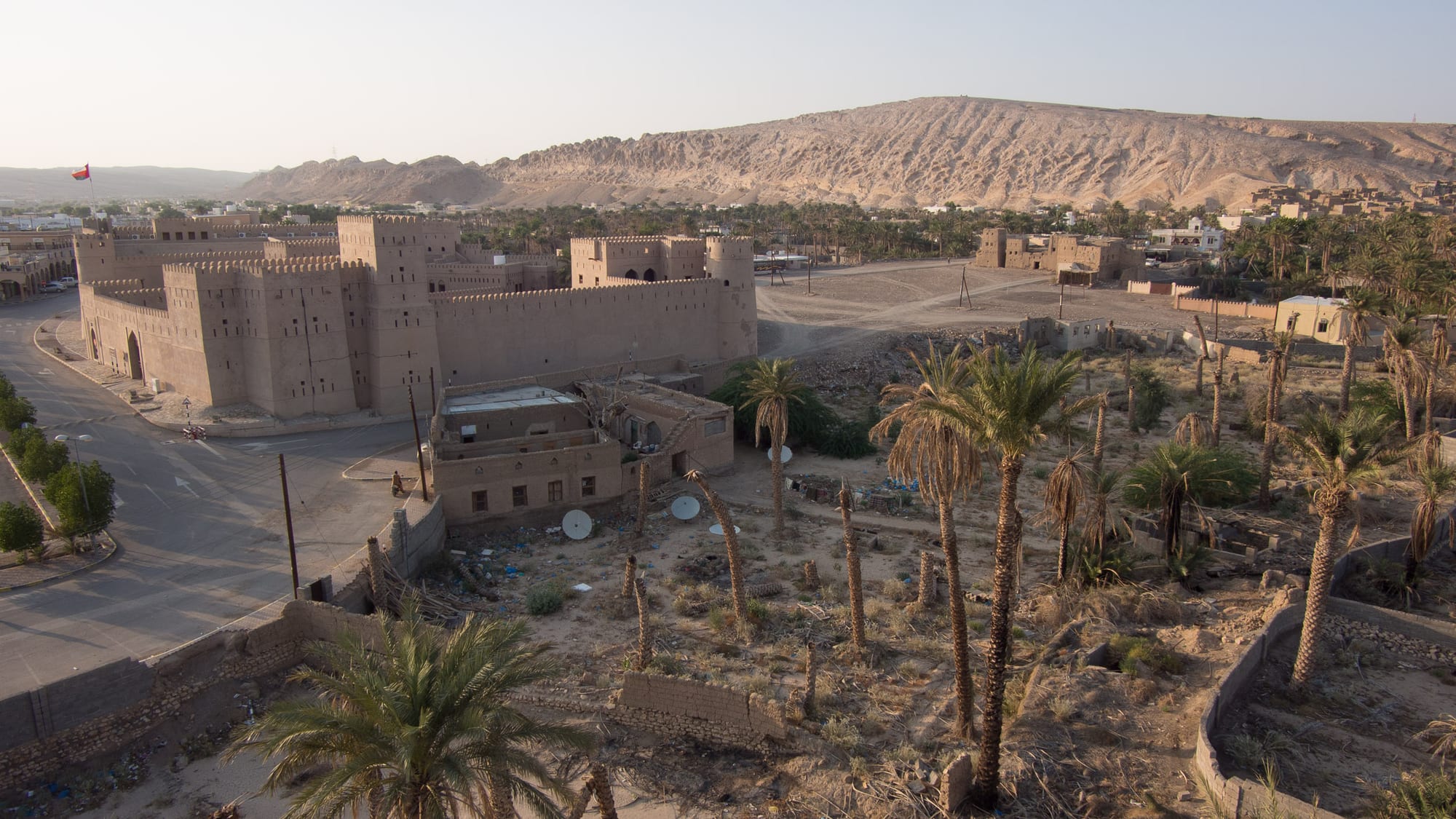
The fort, the old centre and the souq are close enough to walk between, and Al Sulaif is walked on foot once parked, on uneven ground among collapsing walls. Beyond that the town is spread out along wide roads built for cars, with little shade, and summer heat rules out walking for much of the day.
🛡️ Safety
Ibri is a safe, quiet town with very little crime affecting visitors. The hazards are practical: unstable mud-brick ruins at Al Sulaif, heat and dehydration on open ground, long desert drives, flash floods in the wadis after rain, and camels and goats on the roads at night. A war in the region since late February 2026 has closed the Strait of Hormuz to commercial shipping and disrupted air travel across the Gulf.
Keep out from under leaning walls in the ruins, carry more water than seems necessary, drive the desert roads in daylight, and dress modestly in town. Check current official travel advice before travelling.
🌦️ Climate
Hot desert climate on an inland gravel plain, dry, with very hot summers and mild winters. Rain is rare and falls in brief storms, mostly in winter, that can fill wadi beds within minutes.
- Summer
- extremely hot and dry — commonly 42–46°C by day, with warm nights
- Winter
- warm days of about 20–28°C and cool nights, occasionally close to 10°C
🤝 Local Customs
This is a conservative interior town where few visitors are seen, and modest dress covering shoulders and knees matters for men and women alike; a headscarf is useful for women. Greetings are long and formal, guests are offered kahwa and dates, and the right hand is used for eating and giving. Friday midday prayers empty the shops for an hour or two. Photographing people, and especially women, needs permission.
Do not enter the ruins of Al Sulaif or village houses without asking locally, avoid photographing military or border installations near the highway, and expect no alcohol to be sold in the town.
💳 Common Payment Methods
The currency is the Omani rial, divided into 1,000 baisa. Hotels, petrol stations and supermarkets take cards, while the souq, small restaurants and roadside stalls run on cash. ATMs are easy to find in the town centre, and less so once on the desert roads towards Bat or the border.