💰 Budget
Coron costs more than most of the Philippines and a little less than El Nido. Boat tours, dive packages and the fees charged for entering Coron Island and its lakes are the real expenses; rooms in the town proper are reasonable, and market and carinderia food is cheap. Almost everything sold here arrives by ship or plane, which lifts prices generally.
- Daily Budget Midrange
- USD 90–190 (hotel or beach resort, restaurant meals, diving or a private boat, transfers)
- Daily Budget Shoestring
- USD 35–60 (dorm or fan room, market meals, a group island tour, tricycles)
Carry cash, since machines in town are few and often empty; community and environmental fees are collected for Coron Island and other sites, so keep small notes and receipts.
📅 Best Time to Visit
December to May, with March to May the calmest and clearest for boats and diving. January and Holy Week are the busiest weeks. From about June to October the southwest monsoon brings heavy rain and rough seas, tours are cancelled on bad days and ferries are delayed, though prices drop and the lakes are quiet.
⏳ Suggested Number of Days
Three or four days covers the town and more than one day on the water, allowing for weather. Divers and anyone going further out into the Calamian Islands generally want five to seven.
- First Visit
- 3–4 days
- With Surroundings
- 5–7 days
🚆 Transportation
Tricycles are the town transport and run to the hot spring and the nearer barangays; vans and jeepneys cover the road to the airport and across Busuanga, and motorbikes are widely rented. Everything else is by outrigger boat, on shared island tours or hired privately with a crew. Ferries link Coron with Manila, El Nido and Batangas.
Fix tricycle and boat prices before setting out, and allow extra time on the airport road, which is long and sometimes rough.
🛬 Airport & Station Connections
Francisco B. Reyes Airport, generally called Busuanga airport, takes flights from Manila, Cebu and Angeles and lies about 18 km north-west of the town, roughly an hour by shared van. Fast ferries run from El Nido in three to four hours in calm weather, and overnight ships come from Manila and Batangas. Weather cancels boats and small-aircraft flights fairly often.
🚶 Walkability
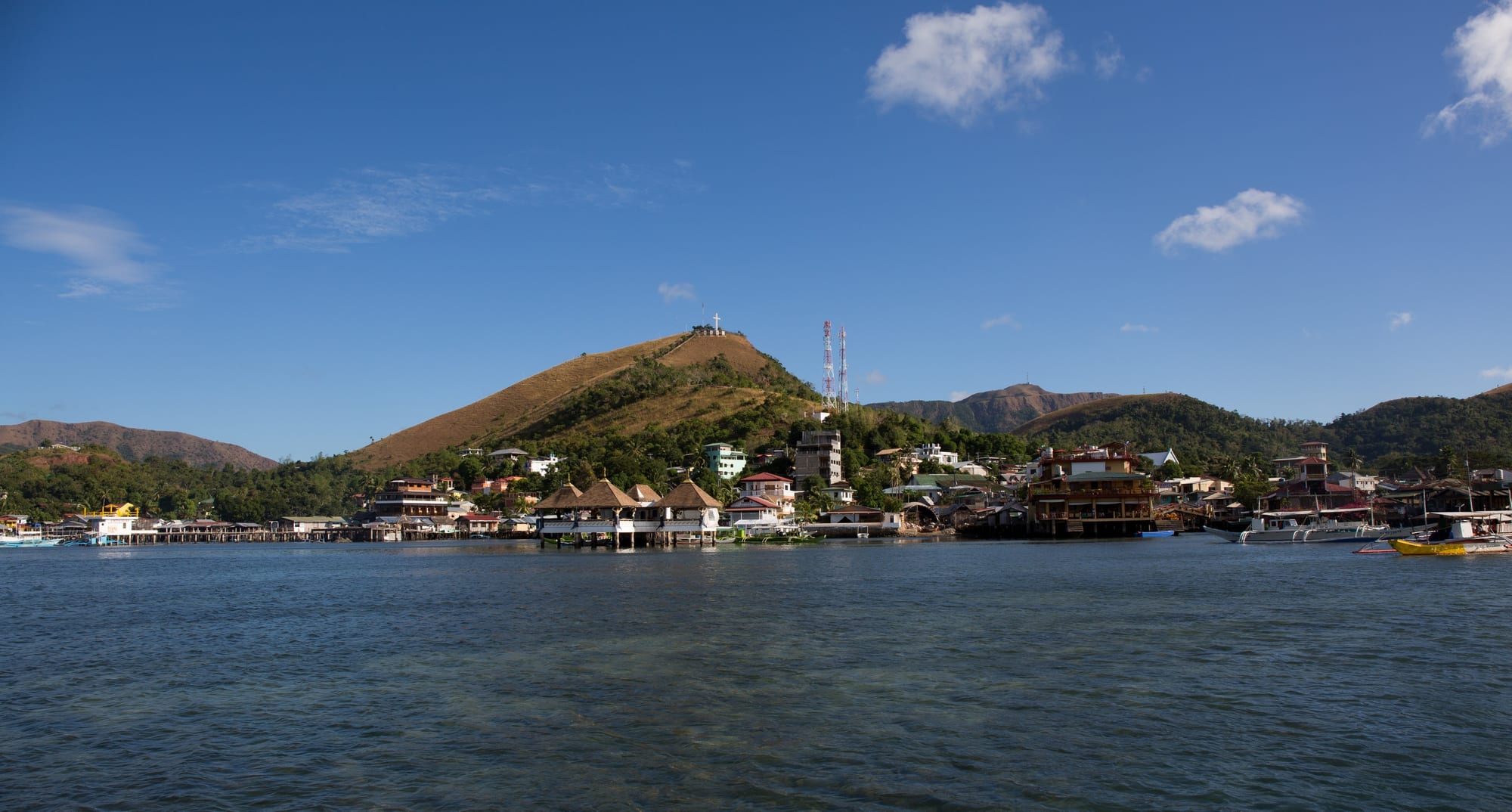
The town proper is small and flat and can be crossed on foot in fifteen minutes, market to church to waterfront, though the streets are narrow and full of tricycles. The staircase up Mount Tapyas is a steep climb of several hundred steps from the edge of town. Anything beyond — the hot spring, the airport, the resorts — needs a vehicle or a boat.
🛡️ Safety
Coron is an easy-going town with little crime against visitors beyond occasional theft. The risks are mainly on and in the water: rough crossings in the monsoon, sun exposure on open boats, sharp limestone and coral, and diving on wrecks, which requires appropriate training and a reputable operator. Medical facilities are limited, and decompression treatment is not available locally.
Dive within training and with an established operator, use boats with life jackets, and respect the access rules set by the Tagbanwa community on Coron Island. Monitor PAGASA for storms, keep away from volcanic danger zones, take dengue precautions year-round, and do not travel to the Sulu provinces or the Zamboanga peninsula. Check current official travel advice before travelling.
🌦️ Climate
Tropical and humid, with a dry season from about December to May and a wet southwest monsoon from June to October. The Calamian Islands lie at the northern end of Palawan and are more exposed to storms than the south of the province; Typhoon Rai, locally called Odette, crossed Palawan in December 2021.
- Summer
- hot and humid, typically 28–34°C, driest and calmest from March to May
- Winter
- warm and mostly dry, 24–31°C, with stronger winds and choppier crossings from December to February
🤝 Local Customs
The Calamian Islands are home to Tagbanwa communities who hold ancestral rights over Coron Island, where several lakes are sacred and some areas are closed to outsiders altogether; guides explain what may and may not be visited, and that should be taken at face value. In town, dress modestly away from the beach, greet people before asking questions, and use po and opo with elders.
Do not enter closed parts of Coron Island or swim in lakes that are off limits, take rubbish away, and ask before photographing people or houses in Tagbanwa villages.
💳 Common Payment Methods
The currency is the Philippine peso. Dive shops, hotels and larger restaurants often take cards, sometimes with a surcharge, but boats, tricycles, market stalls, small eateries and the fees charged at island sites are cash only. The town's cash machines are few and run dry in busy weeks, so bring enough pesos from Manila or Puerto Princesa.