💰 Budget
Cascais is one of the wealthiest municipalities in Portugal and among the costliest places to stay in the country, especially in summer. The train from Lisbon is cheap and many of the museums are free or charge a small fee, which helps balance the price of rooms and restaurants. The municipality has charged a small tourist tax since 2017.
- Daily Budget Midrange
- USD 170–320 (hotel or apartment, restaurant dinners, museum tickets, bike hire)
- Daily Budget Shoestring
- USD 70–110 (hostel bed, market food and simple lunches, the train and buses)
Modest restaurants away from the seafront, where local people eat, are often better value and more traditional than those on the main promenade.
📅 Best Time to Visit
June to September is beach season, warm and dry, with the town at its busiest. Spring and autumn are quieter and still mild, good for walking the coast. Winter is cool and wet but rarely cold, with bigger waves at Guincho for surfers and empty museums.
⏳ Suggested Number of Days
The town and its museums take a day or two. Staying longer allows time for the beaches, the wild coast and the hills behind the town, and many visitors use Cascais as a quieter base for Lisbon.
- First Visit
- 1–2 days
- With Surroundings
- 3–4 days
🚆 Transportation
The centre is compact and the town's sights are close together. A looped local bus serves the town and nearby sights such as the Boca do Inferno, and longer bus routes leave from the station beneath the shopping centre opposite the railway station. A cycle lane and footpath run about five kilometres along the coast from the marina to Guincho, and taxis are common.
Bike hire is available near the station; the coastal path to Guincho is the easiest ride, while the hills towards Cabo da Roca and Sintra suit only fit cyclists.
🛬 Airport & Station Connections
Frequent commuter trains on the Cascais Line run along the coast from Lisbon's Cais do Sodré station, ending in the town centre. By road the A5 motorway and the slower coastal Marginal link the town with the capital. Most visitors fly into Lisbon's airport and continue by train or taxi; the small Cascais Aerodrome at Tires handles general aviation.
🚶 Walkability
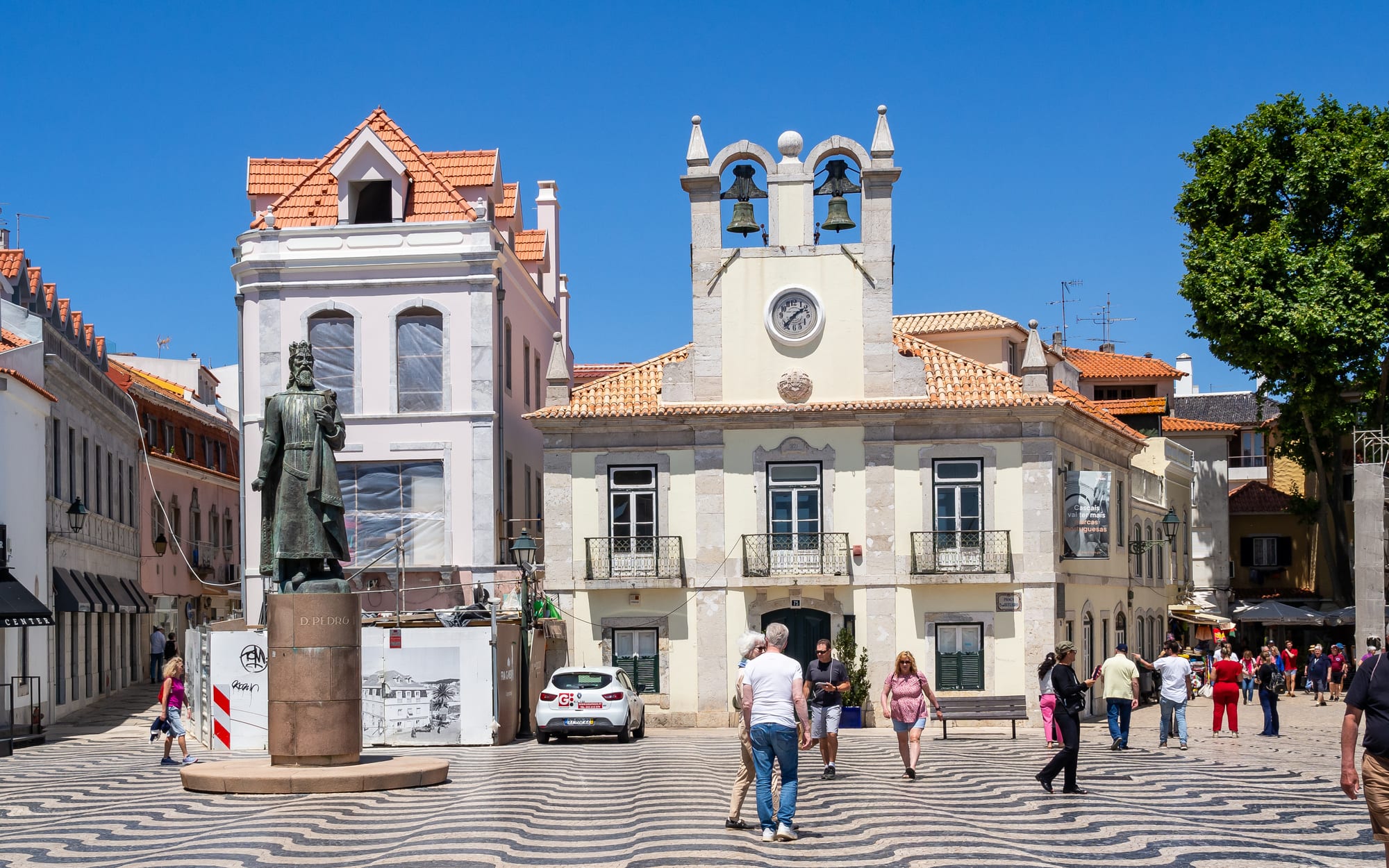
The historic centre, the bay, the marina and the Museum Quarter are all easy to walk, on wave-patterned cobbles that can be slippery when wet. The seaside esplanade makes the walk to Estoril pleasant, and the coastal path continues past the Boca do Inferno towards Guincho.
🛡️ Safety
Portugal is one of the safest countries in Europe, with low violent crime. In Cascais the main risks are pickpocketing in the summer crowds and on busy trains, and break-ins at beach and viewpoint car parks. Guincho's beach has strong currents, and the cliffs west of the town are unstable at the edges.
Leave nothing visible in a parked car, swim only where lifeguards are on duty, and keep back from cliff edges at the Boca do Inferno. Check current official travel advice before travelling.
🌦️ Climate
A warm-summer Mediterranean climate, with cool, wet winters and warm, dry summers. The Atlantic moderates the extremes, and the open coast towards Guincho is much windier than the sheltered bay, especially in summer when northerly winds prevail.
- Summer
- warm and dry — temperatures rarely rise above 30°C
- Winter
- cool and wet — temperatures rarely fall below 5°C
🤝 Local Customs
Tipping is not generally expected in Portugal, though a euro or two after a full meal is appreciated when service has been good. Bread, olives and other starters put on the table are charged if eaten, and can be refused. A greeting in Portuguese before switching to English is well received.
The legal drinking age is 18. Beachwear belongs on the beach and promenade; cover up in town, in churches and in museums.
💳 Common Payment Methods
Portugal uses the euro. Cards and contactless payment are accepted almost everywhere; carry a little cash for beach bars, market stalls and small cafés. Multibanco ATMs are common throughout the town.