💰 Budget
Andong is inexpensive. Motels in the centre cost little, hanok rooms in Hahoe and in restored head houses are the mid-range option, and meals in the market are cheap even when shared. Prices climb only during the mask festival in autumn, when rooms in the town fill early.
- Daily Budget Midrange
- USD 90–160 (hanok stay or hotel, jjimdak and set-meal dinners, site admissions, taxis to the villages)
- Daily Budget Shoestring
- USD 35–60 (motel or guesthouse, market meals, city buses)
Book well ahead for the autumn festival weeks, the one time of year when accommodation here is tight.
📅 Best Time to Visit
Late September and October, for the mask dance festival, clear skies and autumn colour along the river, and late April and May, when the academies and village lanes are green and quiet. Summer is hot, humid and wet. Winters are cold and very quiet, though the frozen reservoir and the empty villages have their own appeal.
⏳ Suggested Number of Days
One to two days suits the town and the main village. Longer stays allow the outlying academies, temples and mountain parks, which are scattered and slow to reach. Travelling by rural bus rather than car adds time.
- First Visit
- 1–2 days
- With Surroundings
- 3 days
🚆 Transportation
City buses run from the town centre to Hahoe, Dosan and the other villages several times a day, and taxis are affordable for short hops. Services to the outlying sites are infrequent, so many visitors hire a car or use a taxi for the round of academies and temples. The centre itself is small enough to walk.
Check bus return times before heading out to Hahoe or Dosan; the last services back to the town are early by city standards.
🛬 Airport & Station Connections
Trains from Seoul reach Andong in about two hours on the line through Jecheon, arriving at a station a short ride from the centre. Express buses run from Seoul, Daegu and Busan to the intercity terminal beside it. The nearest airports are at Daegu and Cheongju, both roughly two hours away by road.
🚶 Walkability
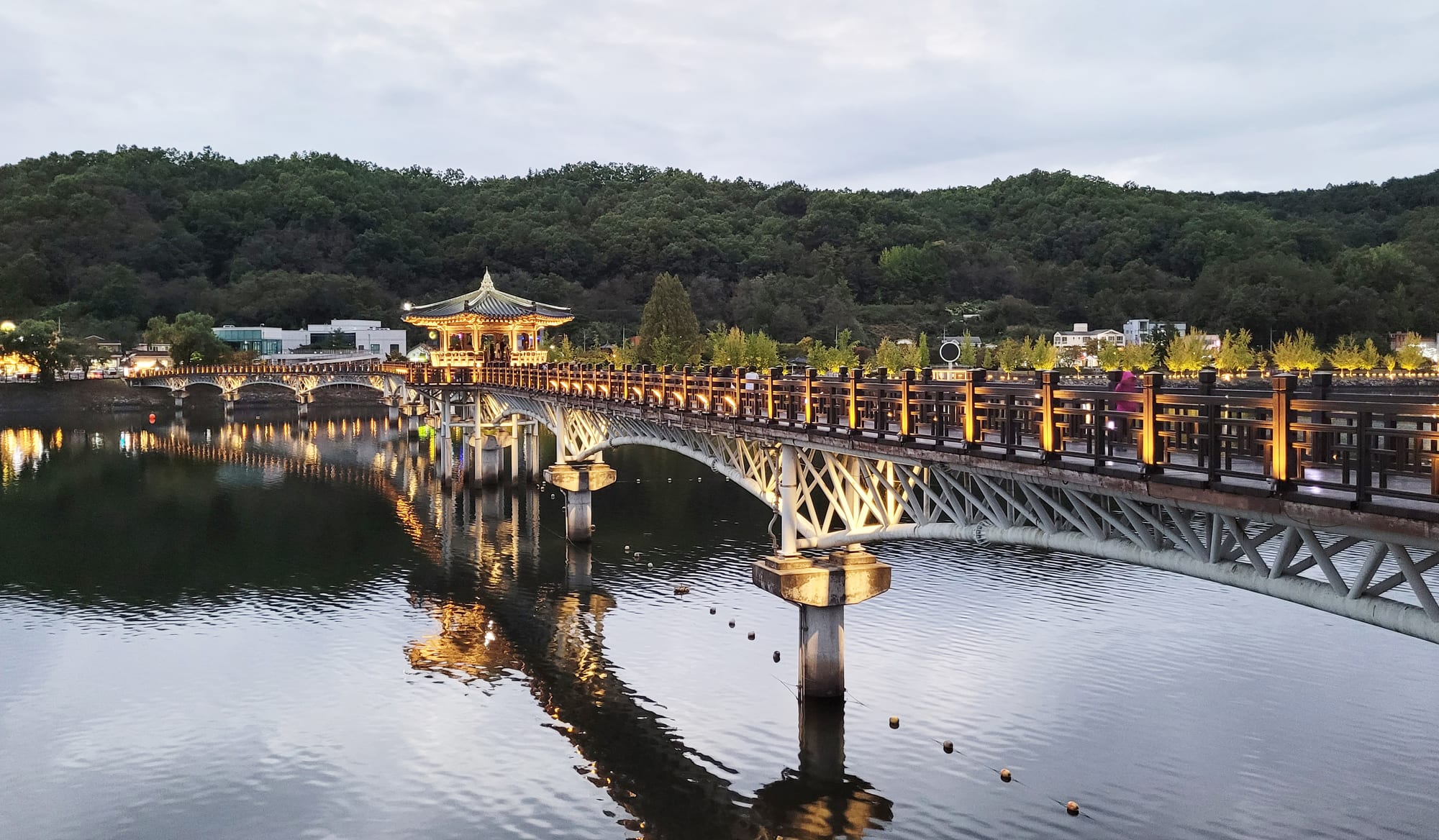
The town centre is flat, compact and easy on foot, with the market, the food alleys and the bus and train stations close together, and a riverside path leading east to the footbridge and the folk village. The villages and academies that most visitors come for are ten to twenty-five kilometres out and need a bus, taxi or car; inside Hahoe everything is walked on unpaved lanes.
🛡️ Safety
Andong is a quiet, very safe place with minimal crime. Hazards are mainly natural and seasonal: heat and humidity in midsummer, heavy monsoon rain, icy paths in winter, and steep rock steps on the climb to the Buyongdae cliff and on mountain trails. Rural roads are narrow and unlit at night.
Take care on the cliff path above Hahoe in wet weather, and remember that Hahoe and the head houses are people's homes rather than exhibits. Check current official travel advice before travelling.
🌦️ Climate
A sharply continental inland climate, colder in winter and hotter in summer than the coast, with most rain falling in the summer monsoon and frequent river mist on autumn mornings.
- Summer
- hot and humid, commonly 30–33°C in the afternoon, with heavy rain in July
- Winter
- cold and dry, often below −5°C at night and near freezing by day, with light snow
🤝 Local Customs
Tipping is not practised. This is the most Confucian corner of the country, and manners matter more than in the cities: greetings involve a slight bow, both hands are used when giving or receiving, and elders are served first. Shoes come off at the doorstep of hanok houses and floor- seated restaurants, and doorsills are stepped over rather than on.
In Hahoe and the other clan villages, stay on the lanes, do not enter courtyards or open doors unless a house is marked as open, and keep quiet during memorial rites.
💳 Common Payment Methods
The currency is the South Korean won. Cards and phone payments are accepted in shops, restaurants and taxis, and ATMs in convenience stores take foreign cards. Cash is worth carrying for market stalls, village admission kiosks and rural buses.