💰 Budget
Tongyeong is cheaper than Busan for rooms and food, though prices rise in summer and on spring and autumn weekends, when the city fills with domestic visitors. Ferries to the islands, the cable car and boat tours are the main extra costs; markets and small harbour restaurants keep eating inexpensive.
- Daily Budget Midrange
- USD 110–200 (sea-view hotel or pension, seafood dinners, island ferries, cable car and boat trips)
- Daily Budget Shoestring
- USD 45–80 (guesthouse or motel room, market meals and chungmu gimbap, local buses)
Weekday stays are markedly cheaper and quieter than weekends, and market stalls serve the same seafood as the quayside restaurants for less.
📅 Best Time to Visit
April to June and September to November are the most comfortable months, with mild air, clearer water and reliable ferry sailings. Winter is cool but bright and is the oyster season. July and August are hot, humid and crowded, and the late-summer typhoon season can cancel island boats at short notice.
⏳ Suggested Number of Days
The harbour, the two mural hills and the cable car fit comfortably into a day or two. Adding island ferries, the Sanyang coast road or a trip along the Hallyeosudo channel takes it to three or four; ferry timetables and weather decide the pace more than distance does.
- First Visit
- 1–2 days
- With Surroundings
- 3–4 days
🚆 Transportation
There is no railway to Tongyeong. Local city buses run from the bus terminal in the north of town through the centre to Mireukdo and the outlying villages, and taxis are plentiful and cheap over short distances. Passenger ferries from the terminal beside the harbour serve the inhabited islands, and sightseeing boats work the channel. A hire car helps for the Sanyang coast road and the quieter bays.
Island ferry sailings are reduced in rough weather and in winter; check the day's departures before committing to a return trip.
🛬 Airport & Station Connections
Most visitors arrive by express bus. The intercity terminal is about four kilometres north of the harbour and has frequent services from Busan and Seoul, with journeys of roughly one and a half hours from Busan and around four hours from Seoul. The nearest airports and KTX stations are in Busan and at Jinju, both reached by bus, and the coastal road from Geoje island crosses by bridge.
🚶 Walkability
The old town is small and easily walked: the harbour, the markets, the naval headquarters and the foot of Dongpirang are all within about a kilometre of each other. The mural hills are short but steep climbs on stepped lanes, and the cable car station, the beaches and the island roads are too far to walk and need a bus or taxi.
🛡️ Safety
Tongyeong is a quiet city with very low levels of crime against visitors. The real hazards are at sea and on the slopes: sudden swell and fog in the channel, fast tides around the tidal causeways on the outer islands, slippery quaysides and steep stepped lanes in the mural villages. Typhoons between August and October can bring heavy rain and cancel sailings.
Keep to marked paths on the island cliffs, watch the tide on causeways, and allow spare time before onward travel in typhoon season. Check current official travel advice before travelling.
🌦️ Climate
A mild, maritime version of the Korean climate, warmer in winter than inland cities and wetter in summer. Rain is concentrated in the June and July monsoon, and the coast is exposed to typhoons in late summer and early autumn. Sea fog is common in spring.
- Summer
- hot and humid, generally around 26–31°C, with monsoon rain in June and July and typhoon risk in August and September
- Winter
- mild for Korea, usually around 0–9°C, windy on the water and with little snow
🤝 Local Customs
Tipping is not practised and is best not attempted. Shoes come off in guesthouses, temples and traditional restaurants with floor seating. At fish markets it is normal to choose a fish and have it prepared for eating upstairs or at a nearby table. Older residents may speak little English, but written signs at the main sights are usually translated.
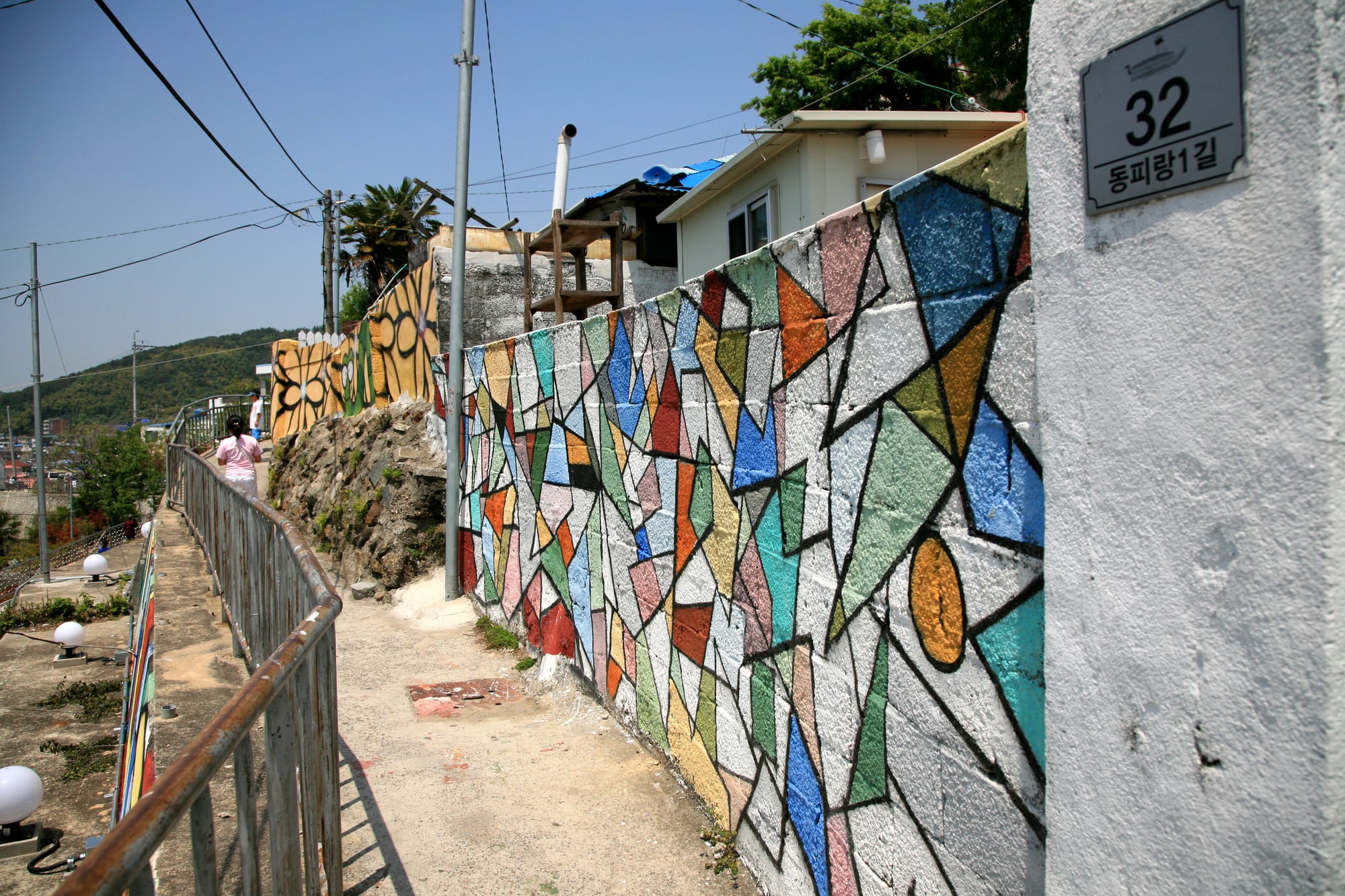
Ask before photographing people in the mural villages, where the painted lanes run past ordinary homes, and keep noise down in those streets at night.
💳 Common Payment Methods
The currency is the South Korean won. Cards and phone payment are accepted almost everywhere, including in taxis and at most restaurants. Small market stalls, ferry kiosks and older shops may want cash, so a modest amount is worth carrying; ATMs accepting foreign cards are found at banks and convenience stores in the centre.