History
Palma began as a Roman camp, founded after the conquest of Mallorca in 123 BC on the remains of a Talayotic settlement, and served as the island's port for Africa and Hispania. Vandal raids and Byzantine rule followed, and from 902 the city was under Muslim control as Madina Mayurqa, capital of the island under the emirate of Córdoba, the taifa of Dénia and later the Almoravids, growing rich on trade and on piracy. A Catalan-Pisan expedition sacked it in 1115, and the Almohads took it in 1203.
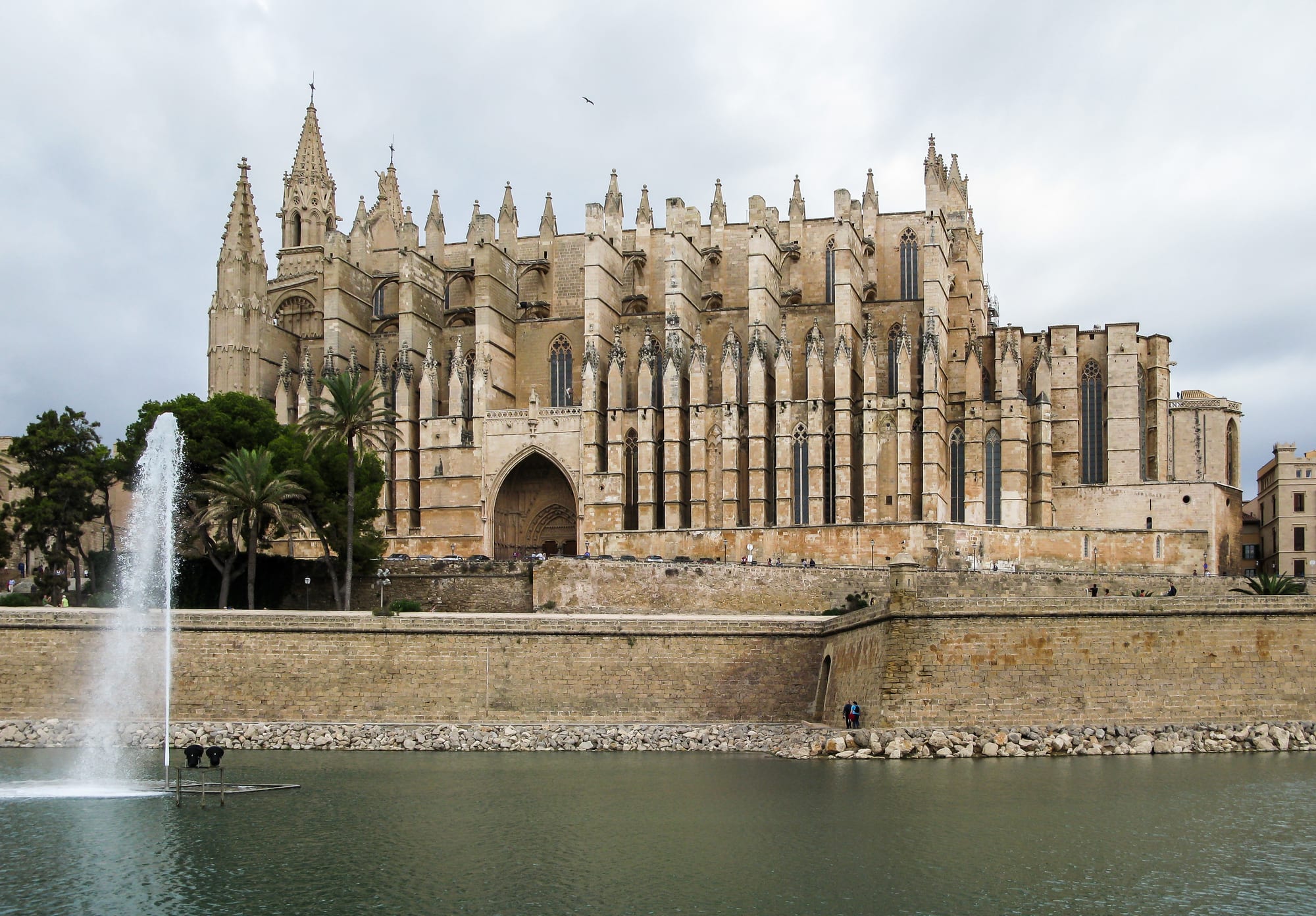
On 31 December 1229, after a three-month siege, James I of Aragon captured the city and named it Ciutat de Mallorca. As capital of the Kingdom of Majorca it entered a golden age of trade with Catalonia, Provence, the Maghreb and the Italian republics, and James II of Majorca built Bellver Castle and rebuilt the Almudaina. Majorcan mapmakers flourished: the Jewish cartographer Cresques Abraham produced the Catalan Atlas. In 1391 anti-Jewish riots swept the island, and later the Inquisition persecuted the descendants of converts, the xuetes.
Pirate raids and the Revolt of the Brotherhoods began a long decline in the 16th century, and the 17th was torn by feuding factions known as Canamunt and Canavall. The Nueva Planta decrees of 1715 followed the defeat of the Crown of Aragon in the War of the Spanish Succession. Trade with the Americas revived it in the 18th century, and in 1833 it became capital of the new Balearic province. Mass tourism from the 1950s transformed it, as hotels went up along Platja de Palma and charter flights brought organised groups of holidaymakers from Germany and elsewhere.