💰 Budget
Daily costs in Kiruna are those of a small Swedish town, but winter excursions — dog-sledding, snowmobile trips, northern-lights tours and the mine tour — add a great deal, as do flights and the long train journey north. Rooms fill and prices rise in the winter season.
- Daily Budget Midrange
- USD 190–400 (hotel, restaurant dinners, a guided winter excursion or the mine tour)
- Daily Budget Shoestring
- USD 75–120 (hostel bed or campsite cabin, supermarket food, buses and walking)
Northern lights can be seen from just outside town on clear winter nights by walking into the nearest forest, away from the street lights, without paying for a tour.
📅 Best Time to Visit
Late winter, from February to April, brings snow, longer days and the chance of the northern lights; the snow cover usually lasts from late September to mid-May. Midsummer brings the midnight sun, from late May to mid-July, for hiking and the mountains. In December the sun does not rise at all for about three weeks.
⏳ Suggested Number of Days
Two or three days cover the town itself. The mountains, the villages on the Torne River and the national park along the railway to Norway add several more days, and winter activities depend on weather and light.
- First Visit
- 2–3 days
- With Surroundings
- 4–6 days
🚆 Transportation
The town is small and most sights are within walking distance. Local buses run across town and regional buses go to the mountain road ends and nearby villages, and long-distance buses link Kiruna with Luleå, Gällivare, Jokkmokk and Haparanda. Taxis should be booked ahead. Roads around the old centre are sometimes closed while buildings are moved.
Moose, reindeer and hares are often on the roads, and the E10 is narrow in places; drive with care, especially in winter.
🛬 Airport & Station Connections
Kiruna Airport lies south-east of the town, about 8 kilometres by road, with direct flights from Stockholm Arlanda and Umeå and a bus for every arrival and departure. Night trains from Stockholm take about 17 hours; the station moved out of the centre in 2013 and a free shuttle bus meets the trains. By road, Narvik is 178 kilometres away and Luleå 344.
🚶 Walkability
The centre is compact and walkable, but the split between the old and new centres and the railway station two kilometres out means some longer walks. Pavements are snowy or icy for much of the year, and proper winter clothing is needed even for short distances.
🛡️ Safety
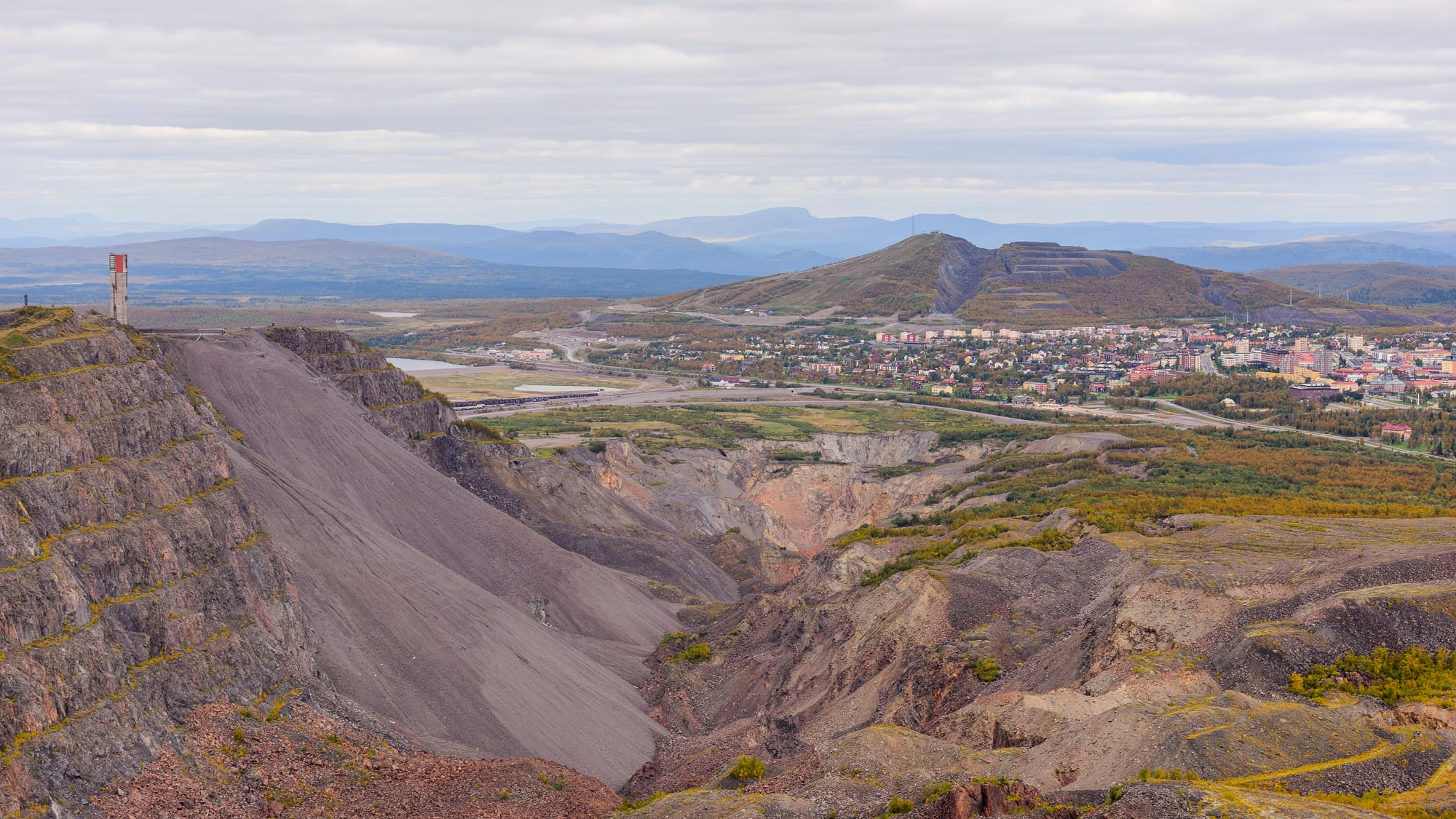
Sweden is a very safe country for visitors. In Kiruna the hazards are natural ones: deep cold, ice, the polar night in December and fast changes of weather in the mountains. The mine and the ground being cleared for the town's move are fenced off and are not places to wander.
Dress for real winter cold, keep away from fenced-off ground near the mine, carry the emergency number 112 and leave a route plan before heading into the mountains. Check current official travel advice before travelling.
🌦️ Climate
A subarctic climate, with short, mild summers and long, cold winters, though the town on its hill can be milder than the surrounding forest. Snow can fall in any month. The midnight sun lasts from about 28 May to 16 July, and the polar night from about 11 December to 1 January.
- Summer
- mild and light — July averages about 12°C
- Winter
- long and cold — January averages about −14.5°C, and the nearby weather station recorded −43.3°C in January 1999
🤝 Local Customs
Tipping is not customary in Sweden; some people round up the bill for good service. Alcohol stronger than 3.5 per cent is sold only in the state Systembolaget shops. Sámi culture is part of town life.
Take all rubbish back from the fells and forests.
💳 Common Payment Methods
The currency is the Swedish krona. Sweden is one of the world's most cashless countries: most stores, restaurants and bars accept all major credit cards, PIN pads are used instead of signatures, and businesses that do not accept cash at all are common. Some small vendors take only Swish or cash, so a small amount from an ATM can be useful.