💰 Budget
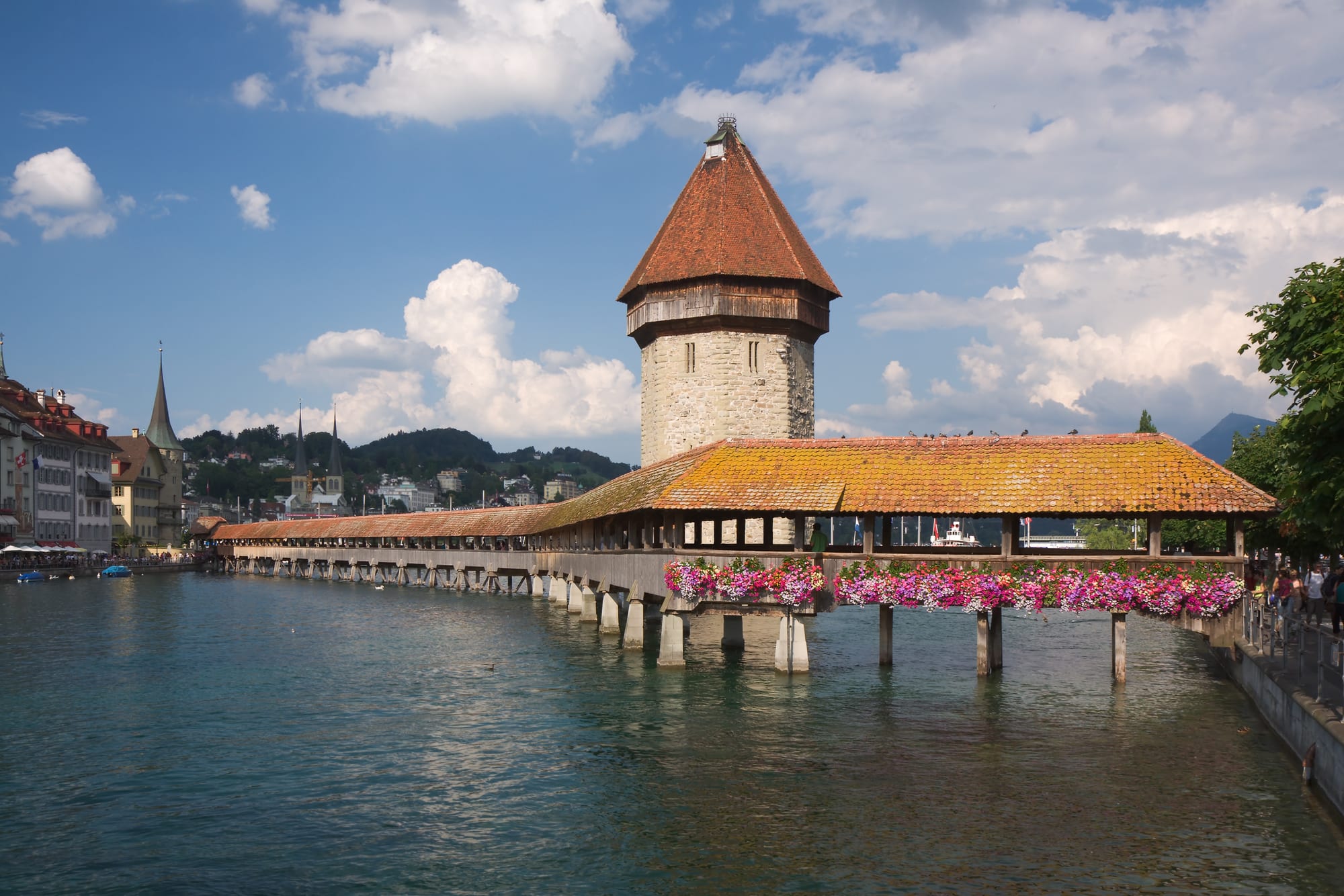
Lucerne is expensive, and rooms are in high demand in summer. The mountain railways and cable cars to Pilatus and Rigi are the biggest extra costs; walks along the lake and through the old town, the bridges and the Lion Monument are free, and large supermarkets keep food costs down.
- Daily Budget Midrange
- USD 340–610 (hotel, restaurant dinners, a mountain railway or cable car most days)
- Daily Budget Shoestring
- USD 130–210 (hostel bed, supermarket meals, half-fare card on trains and boats)
The half-fare card or a regional pass cuts the cost of the Pilatus, Rigi and lake-boat trips; check the summit weather before paying for the ride up.
📅 Best Time to Visit
June to September for the lake boats and the mountain railways at full service, with July and August the busiest months; the Lucerne Festival fills the summer with concerts. Fasnacht takes over the city before Lent. Winters are cold and often grey in the city, but the old town is quieter.
⏳ Suggested Number of Days
Two days cover the old town, the bridges and a museum. Four or five leave time for the mountains and the lake, which need good weather, so a spare day helps.
- First Visit
- 2 days
- With Surroundings
- 4–5 days
🚆 Transportation
The centre is compact, and city buses reach the outer districts. Lucerne station is a main rail hub, and the Zentralbahn runs to Interlaken and Engelberg. Scheduled boats sail roughly hourly across the lake from in front of the station, linking the lakeside villages and the mountain railways.
Combine boat, cogwheel railway and cable car for the classic round trips to Pilatus or Rigi; a car is not needed.
🛬 Airport & Station Connections
Lucerne has no airport of its own: there are hourly trains from Zurich Airport, half-hourly trains from Zurich and an hourly direct train from Bern. Trains from Interlaken and Ticino also arrive at the main station, which stands beside the lake and the boat landings.
🚶 Walkability
The old town, the bridges, the Lion Monument and the station are all close together and easy on foot. The Musegg wall and the hillside quarters involve a climb, and the Lido and the transport museum are a 30–40 minute walk along the lakeshore.
🛡️ Safety
Switzerland is very safe, with low crime. Pickpockets work the summer crowds around the bridges and the station, and Fasnacht brings large, late-night crowds. The lake is cold, and mountain weather on Pilatus and Rigi can change quickly.
Keep bags close in crowds, carry warm layers to the summits and stay on marked paths. Check current official travel advice before travelling.
🌦️ Climate
The city lies against the edge of the Alps, with warm summers and cold winters and an annual mean temperature of about 10°C.
- Summer
- warm — July averages about 20°C over day and night, with around 50 days a year reaching 25°C and about 9 reaching 30°C
- Winter
- cold — January averages about 1°C over day and night
🤝 Local Customs
By law a service charge is included in the bill, so tips are modest and never required. The everyday language is Lucerne German, a variety of Swiss German. The city is historically Catholic, and its Fasnacht follows the church calendar.
Dress modestly and keep quiet in the churches, and keep noise down in residential streets at night and on Sundays.
💳 Common Payment Methods
The currency is the Swiss franc. Switzerland is more cash-oriented than many European countries, but credit and debit card payments are common and it is easy to go for days without needing cash. Some supermarkets, restaurants, ticket counters, railway ticket machines and hotels accept euro notes (but not coins). ATMs accept foreign cards, and money can be exchanged at train stations and most banks.